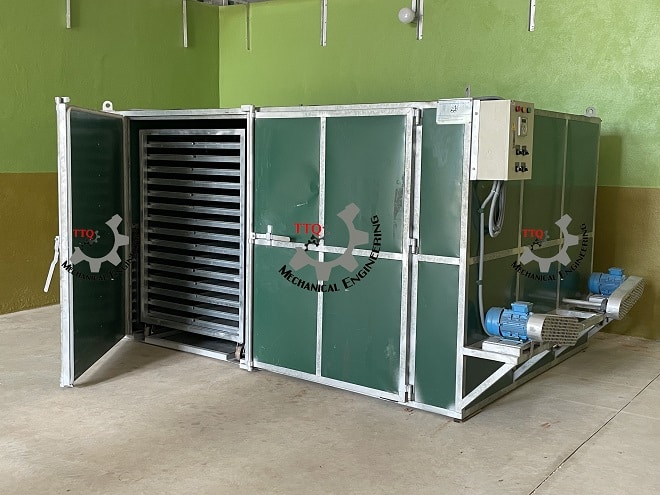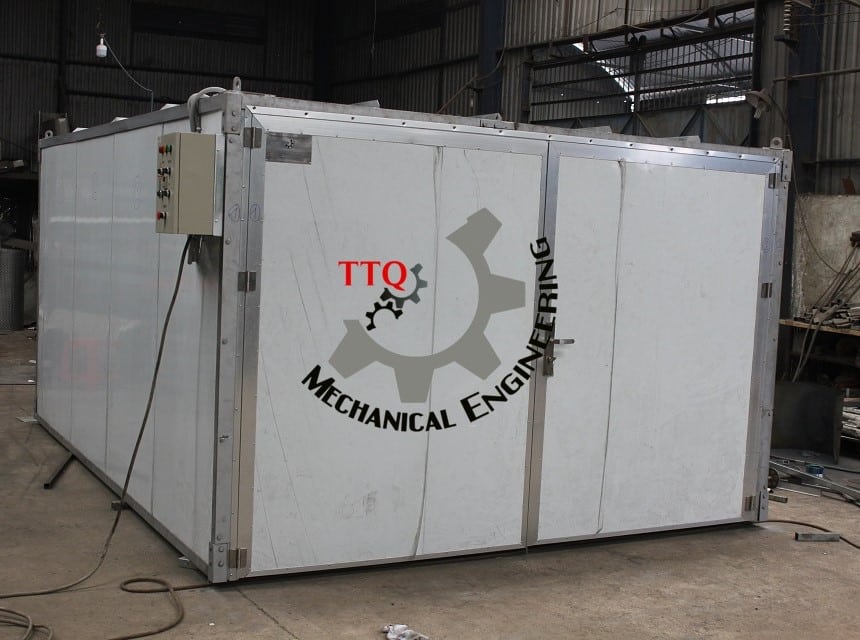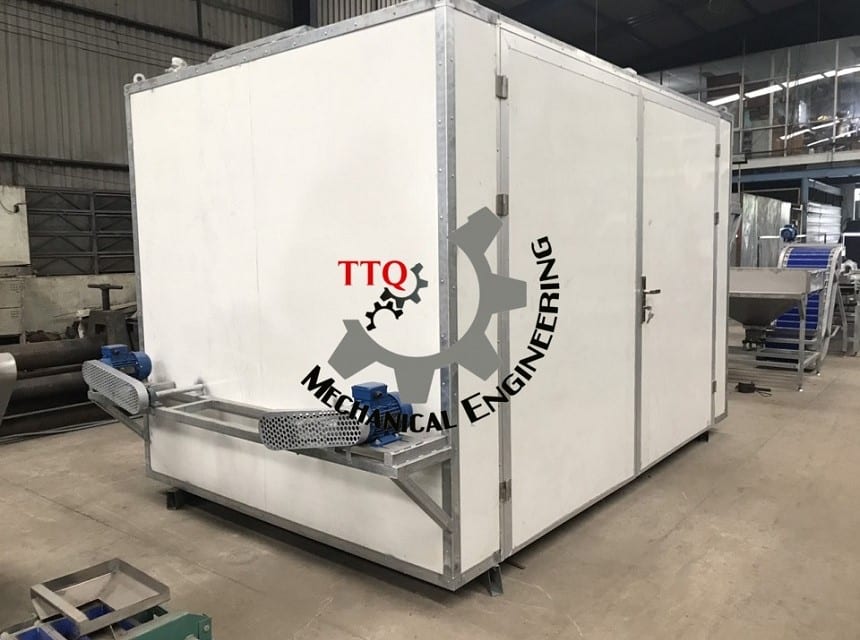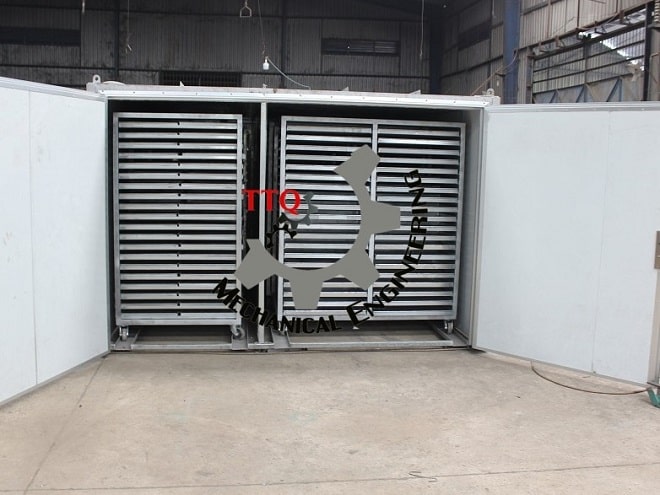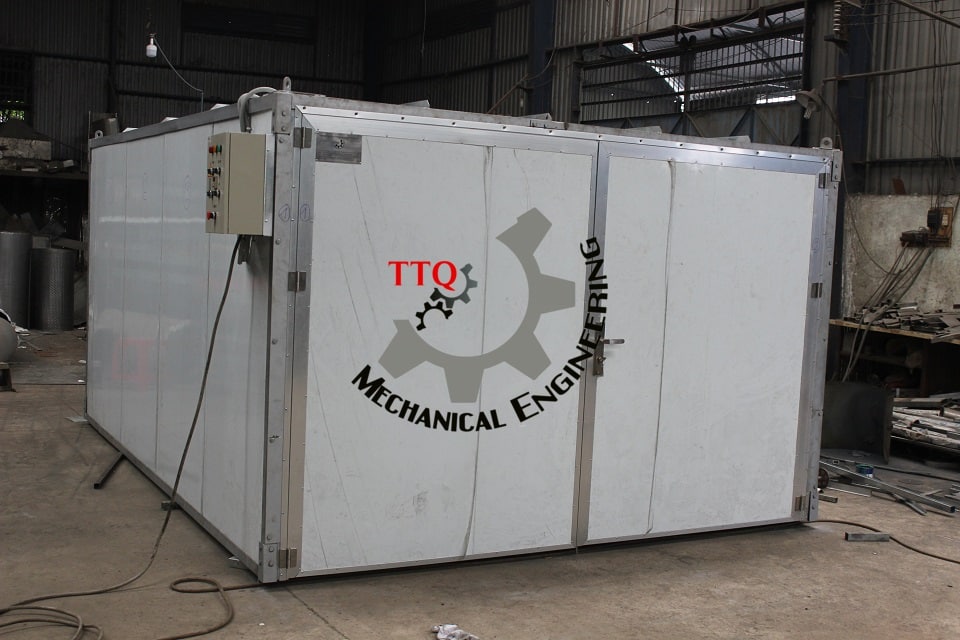
A cashew dryer machine brings the nuts down to the right moisture at two points in the line: after shelling, so the skin lifts cleanly at peeling, and again at the very end, so the finished cashews store and ship without spoiling. It is a warmed, tray-based chamber — the borma — through which warm air is circulated at a controlled temperature until the cashews reach their target moisture. CASHEW TECH supplies dryers holding 500 to 2,000 kg per batch, heated by steam from the factory boiler or by electric heaters, complete with trays and trolleys. This page explains how the drying works, the borma design, capacity, and where the stage sits in the line.
The stage is quiet but decisive: too little drying and the skin will not peel and the cashews mould in storage; too much and they turn brittle and break. The whole job is holding the middle, batch after batch.
What a Cashew Dryer Machine Does
The job is moisture control, not warmth for its own sake. Freshly shelled cashews carry too much moisture to peel cleanly — the testa clings and tears — so the dryer drives that moisture down until the skin turns brittle and lifts away in the peeler. The same equipment does a second job at the end of the line: finished cashews are dried to a low, stable moisture so they keep their crispness and resist mould through months of storage and transit. In both roles the dryer protects whole-nut grade, because a cashew dried to the right level breaks far less at every stage that follows.
How Cashew Drying Works
The principle is gentle, even, controlled warmth over time. The nuts are spread on trays inside an insulated chamber, and warm air is circulated around them at a steady temperature — 50 to 70°C — so moisture leaves each cashew slowly and uniformly. A full batch takes 10 to 12 hours, long enough to dry the nuts right through without case-hardening the surface. The temperature is kept modest on purpose: push it higher to save time and the outside dries hard while the inside stays damp, which cracks the cashews and ruins grade. Even airflow matters as much as temperature — every load must see the same warm air, which is why a well-built chamber circulates warmth rather than just radiating it.
The Borma: Tray and Trolley Design
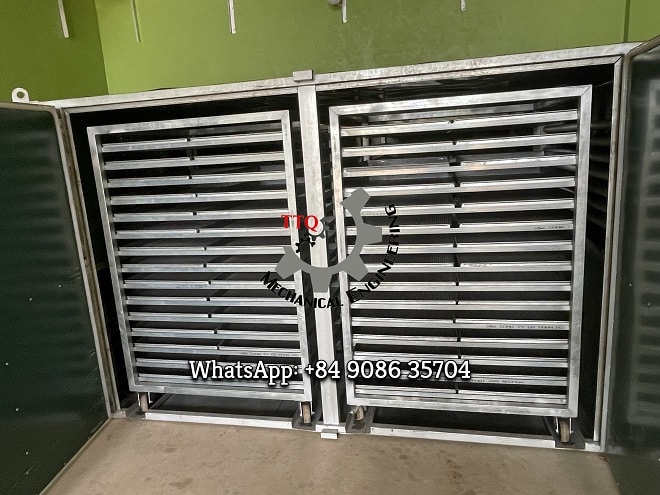
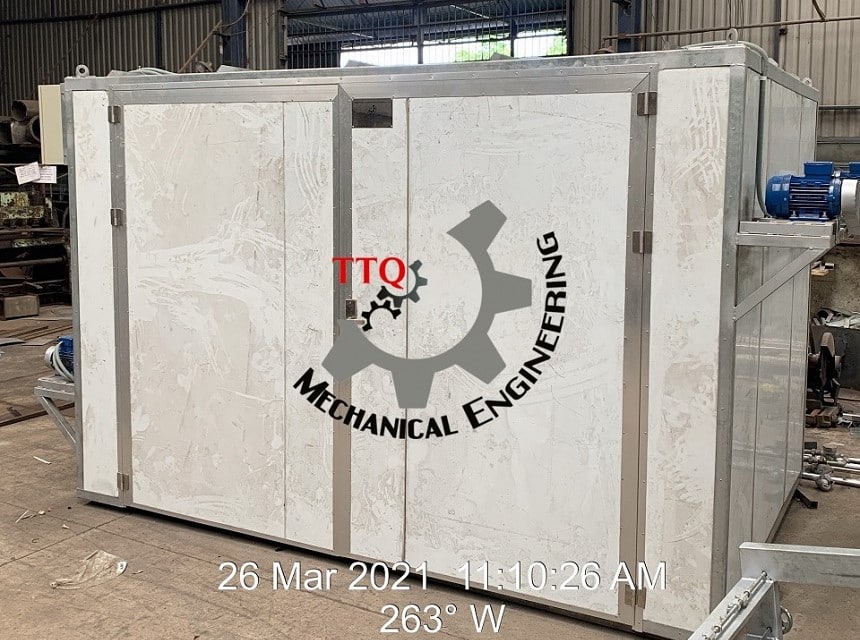
The borma is the traditional cashew drying chamber: an insulated room of stacked trays on trolleys, warmed by circulated air. Trolleys make loading and unloading quick, so the chamber is back in use with little idle time between batches. Steam from the factory boiler is the common heat source where one already runs for the cashew steaming machine; electric heaters suit smaller units or sites without steam. Whatever the source, the goal is identical — uniform, controlled warmth across every load, held steady by automatic temperature control so an operator is not nursing the heat source for twelve hours.
Capacity and Sizing
CASHEW TECH’s dryers run 500 to 2,000 kg per batch, with heat source and tray count matched to your throughput. Because a batch takes hours, drying is planned around the day’s volume, not the hour’s — a factory sizes enough tray space and heat to turn the batches it needs per shift. When sizing, leave a little spare room: a dryer run at its absolute limit dries less evenly than one with room to breathe, and even drying is the whole point of the machine.
Where Drying Fits in the Line
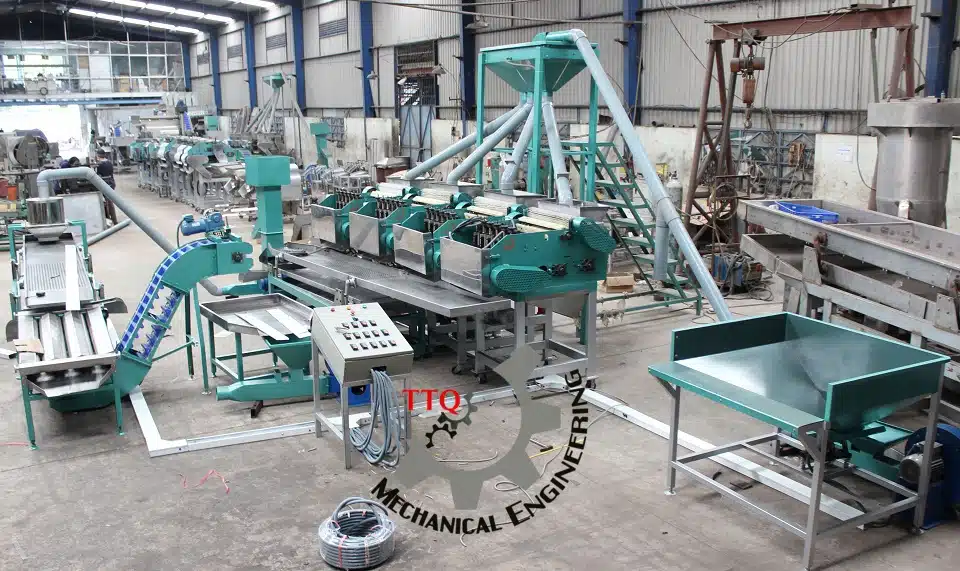
Drying appears twice in the cashew processing flow. The first pass comes after the automatic cashew shelling machine: shelled nuts are dried so the testa turns brittle and the cashew peeling machine can strip it cleanly. The second pass is the final step before packing, bringing the finished cashews to a low, stable moisture so they hold grade through the vacuum packing stage. For the full sequence from raw nut to packed cashew, see the cashew manufacturing process; for the grades that well-dried cashews reach, the cashew kernels reference; and for planning a whole factory, the cashew nut processing plant cost guide and the cashew machines hub.
Frequently Asked Questions
How do you dry cashew nuts? Spread the cashews on trays inside a warmed chamber and circulate warm air at about 50 to 70°C for roughly 10 to 12 hours, until the moisture is low enough for peeling or for safe storage. Even airflow and a modest temperature are what keep the cashews whole rather than case-hardened.
What temperature and how long does drying take? Around 50 to 70°C for about 10 to 12 hours per batch. The temperature is kept low on purpose: drying too hot dries the outside while the inside stays damp, which cracks the nuts and lowers grade.
What capacity of dryer should I choose? CASHEW TECH’s dryers run 500 to 2,000 kg per batch, sized to your line with steam or electric heating. Because a batch takes hours, size the chamber and heat source for the batches you need per shift.
Is a cashew processing business profitable? It can be, and drying is one of the quiet levers: a cashew dried to the right moisture breaks less and stores longer, protecting the whole-nut grades that carry the margin. Overall profitability depends on scale, raw-nut supply, and labour cost — see how to start a cashew processing business.
Request a Quote
Tell us your batch size, your heat source, and your daily volume, and we’ll size the right dryer and quote it. Request a quote or book a consultation, or message us directly on WhatsApp from the button in the corner of any page.