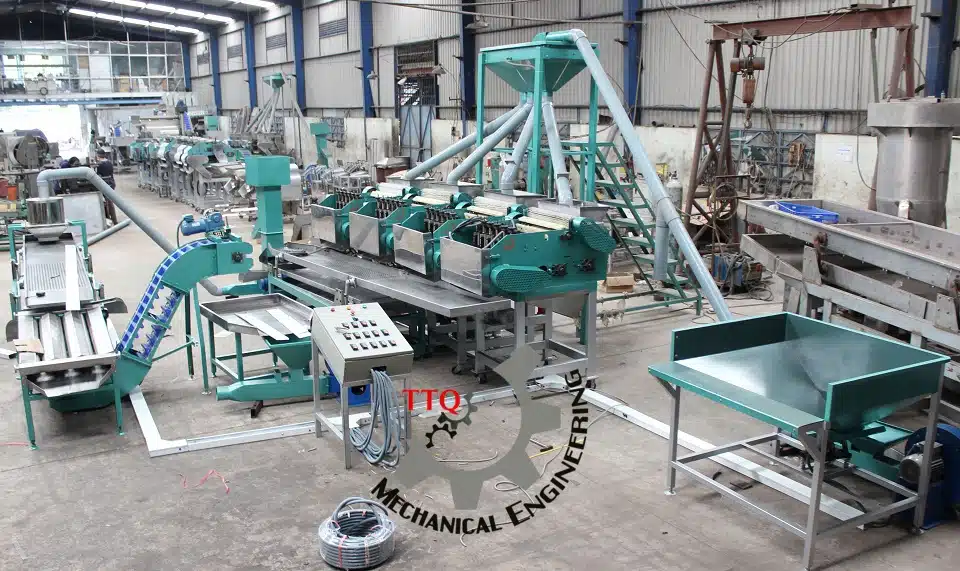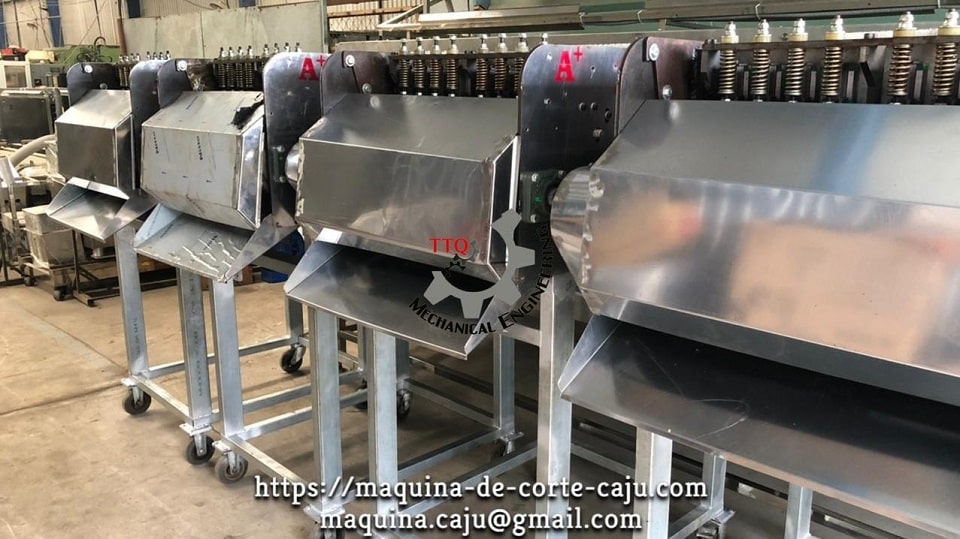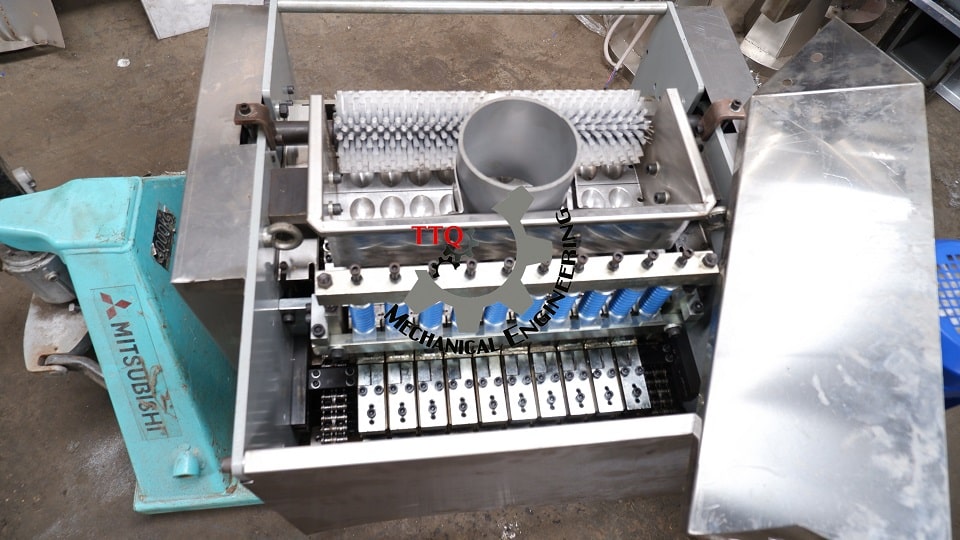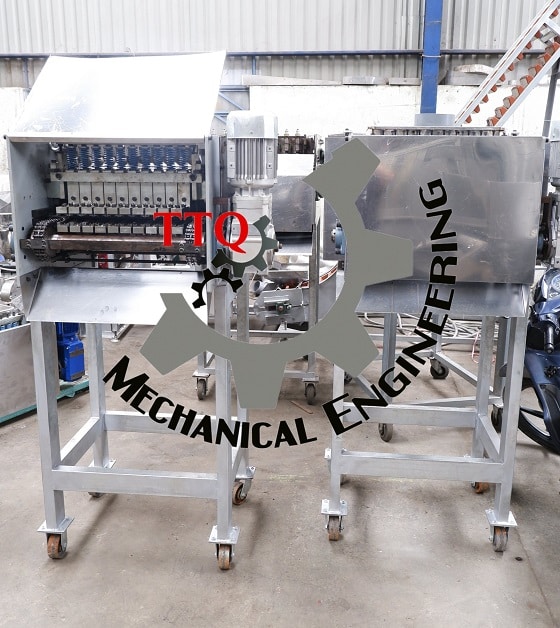
Cashew Cutting Machine
Blade-based shelling — from a single hand-cutter to fully automated lines.
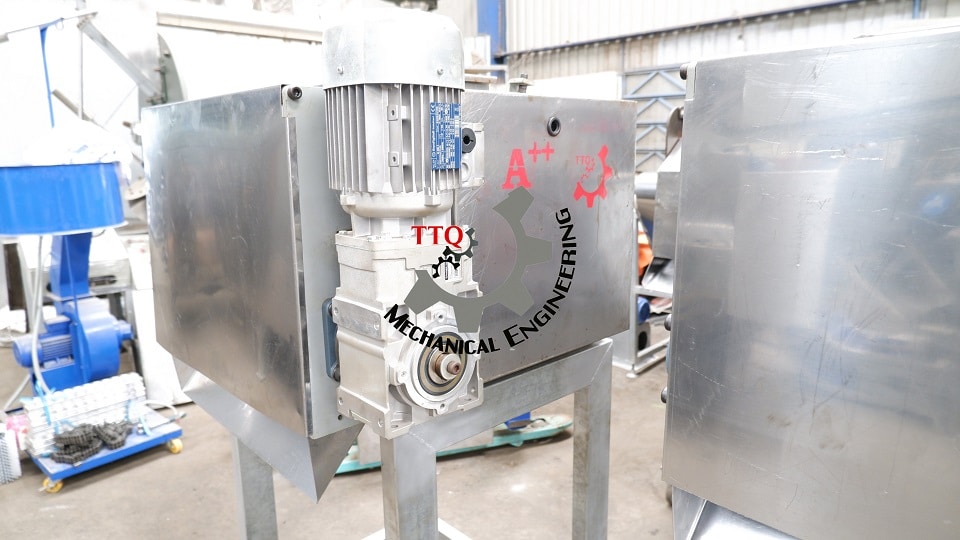
A cashew cutting machine splits the steamed raw nut open along its natural seam so the whole kernel lifts out unbroken — the single step that decides how much of your output sells as high-value wholes. CASHEW TECH supplies the full range, from a manual kaju cutter worked one nut at a time to multi-head powered cutters and fully automatic lines. This page covers how the cutter works, real throughput by configuration, and how to match one to your processing operation.
Because cutting is where kernel value is won or lost, the right choice depends on your raw-nut supply, your labour market, and the whole-kernel recovery you need — not simply the biggest machine on the list.
What a Cashew Cutting Machine Does
The job is precise, not brutal: open the shell without crushing the kernel inside. After steaming has softened the shell, the cutter shears each nut along its curve and drops the opened nut to a tray, where the kernel is scooped away from the shell. Done well, a modern cutter reaches up to 95% cutting efficiency with a final kernel yield of up to 98% perfect cashew kernel, feeding cleaner wholes into downstream processing. Feed it poorly sized or under-steamed nuts, though, and even the best cutter turns wholes into pieces — which is why sizing and steam conditioning upstream matter as much as the cutter itself.
Manual to Fully Automatic
There are three automation tiers, and most plants blend them:
Manual hand cutter (kaju cutter): a foot- or lever-operated cutter that opens one nut at a time. Cheapest to buy and gentle on the kernel in skilled hands, but labour-heavy — reaching real daily volume needs a sizeable trained crew.
Powered multi-head cutter: a motor-driven cutter with multiple cutting heads; an operator feeds calibrated nuts and the heads shear them continuously. CASHEW TECH’s standard configurations run 8 heads (16 blades) at around 250 kg of raw nuts per hour, and 10 heads (20 blades) at around 300 kg per hour.
Fully automatic line: an automatic feeder paired with multiple cutting units and a vibration screen for shell separation, running as a single-, double-, or triple-sieve line under one control panel — see the throughput table below.
For a deeper comparison, see the guide to automatic vs manual cashew cutting and the manual hand-cutting machine and its price.
Capacity by Configuration
| Configuration | Capacity | Notes |
|---|---|---|
| 8-head cutter | ~250 kg/hr raw nuts | 8 heads / 16 blades |
| 10-head cutter | ~300 kg/hr raw nuts | 10 heads / 20 blades |
| Single-sieve line | 300–350 kg/hr | 1 cutter, automatic feed |
| Double-sieve line | 600–1,000 kg/hr | 2–3 cutters, 2 screens |
| Triple-sieve line | 1,200–1,500 kg/hr | Fully automated, 3 sieves |
Figures are per standard configuration; exact throughput is confirmed per project.
How the Cutter Shears Each Nut
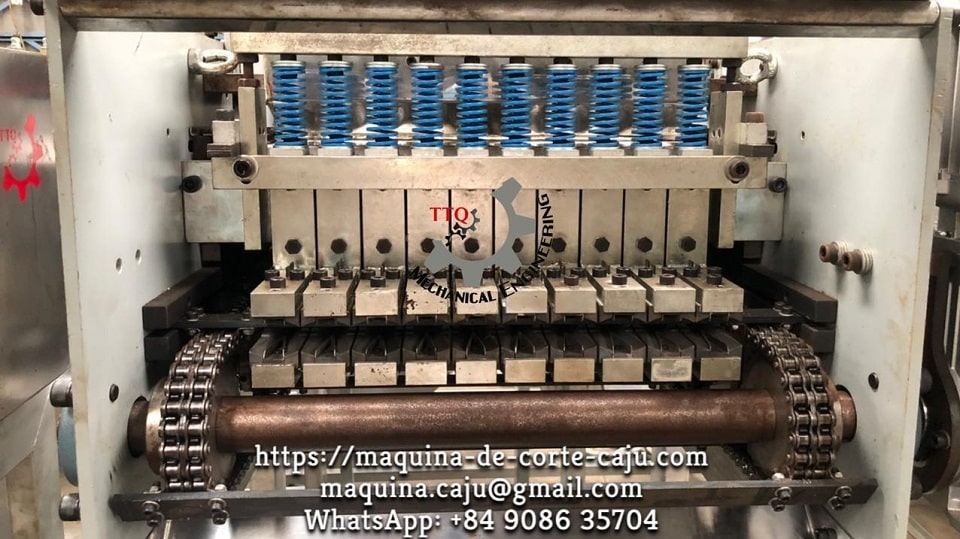
The mechanism is a shear, not a blade drop. Two hardened blades made from a special imported alloy ride on sliding Vee-shaped guides; as they close, they grip the nut along its seam and split the shell with a clean impact, and the opened nut falls by gravity into a tray. Spring-adjustable guides accommodate different nut sizes, so a well-calibrated cutter protects the whole kernel rather than crushing it — the same reason skilled hand cutters have long been prized, now delivered at machine speed. All kernel-contact parts are SS 304 stainless steel.
Manual vs Automatic Cutting
The core trade-off is labour against capital.
| Factor | Manual kaju cutters | Powered / automatic line |
|---|---|---|
| Labour needed | High — many operators for real volume | Low — one operator per multi-head cutter |
| Output consistency | Varies with workforce skill | Steady, repeatable |
| Upfront cost | Low | Higher |
| Best for | Low-wage, small units | Scale, tight labour markets |
Where wages are low and volumes small, manual kaju cutters can still make sense; where labour is scarce or expensive and output must stay consistent, a powered or fully automatic line wins on cost per kilo and grade stability.
Build and Maintenance
Build quality matters more than horsepower here. A single cutter runs on a modest 1 Hp motor, robust frames, hardened replaceable cutting blades, and simple spring adjustment keep breakdowns low and maintenance quick — blades are the main wear item, and swapping a worn set takes minutes rather than a service call. That is what lets a line hold its rated output shift after shift.
Where the Cutter Fits in Processing
In the cashew processing flow, cutting sits between steam conditioning and shelling. Nuts arrive from the cashew steaming machine, pass through the cutter, and then move to the automatic cashew shelling machine for shell-and-kernel separation, followed by the cashew dryer machine, peeling, and grading. Many plants run cutting and shelling as one combined stage — browse the automatic cashew cutting line for that integrated setup, or see the full cashew machines hub and the end-to-end cashew manufacturing process to place every stage in order.
Choosing the Right Cutter
Match the cutter to raw material first, throughput second. More heads only pay off if upstream sizing keeps every nut in the blade’s working range, so a smaller, well-fed cutter often out-yields a larger, poorly-fed one. Weigh your local wage rates against a powered line’s smaller crew, and factor whole-kernel recovery into the maths — a few points of recovery can outweigh the machine price within a single season. The complete guide to choosing your first cashew cutting machine, the cutting-time reference, and the cashew nut processing plant cost guide walk through the numbers before you commit.
Request a Quote
Tell us your target daily capacity, your raw-nut origin, and your automation preference, and we’ll size the right cutter and quote it. Request a quote or book a consultation, or message us directly on WhatsApp from the button in the corner of any page.
Frequently Asked Questions
What is the cost of a cashew nut cutting machine? It depends on the automation level. A manual kaju cutter is inexpensive per station but needs many operators; a powered multi-head cutter or a full automatic line costs more upfront but cuts labour and steadies output. Because pricing moves with configuration, steel, and freight, we quote per project — see the cashew nut processing plant cost guide and request a quote.
Which cutter is best? The one matched to your raw material and labour market. Manual cutters suit small, low-wage units; an 8- or 10-head powered cutter fits growing plants; a multi-sieve automatic line wins where labour is scarce or expensive and throughput must stay consistent.
How much can one cutter process per hour? An 8-head cutter runs around 250 kg/hr and a 10-head cutter around 300 kg/hr. As a full line, a single-sieve setup runs 300–350 kg/hr, a double-sieve line 600–1,000 kg/hr, and a triple-sieve line 1,200–1,500 kg/hr.
Is a cashew processing business profitable? It can be, and cutting is a key lever: higher whole-kernel recovery means more revenue per kilo of raw nuts. Scale, raw-nut supply, and labour cost decide overall margins — see how to start a cashew processing business.
Does this cutter need much power? No — a single cutter runs on around 1 Hp, small enough for a modest connection or generator.
Watch it in action