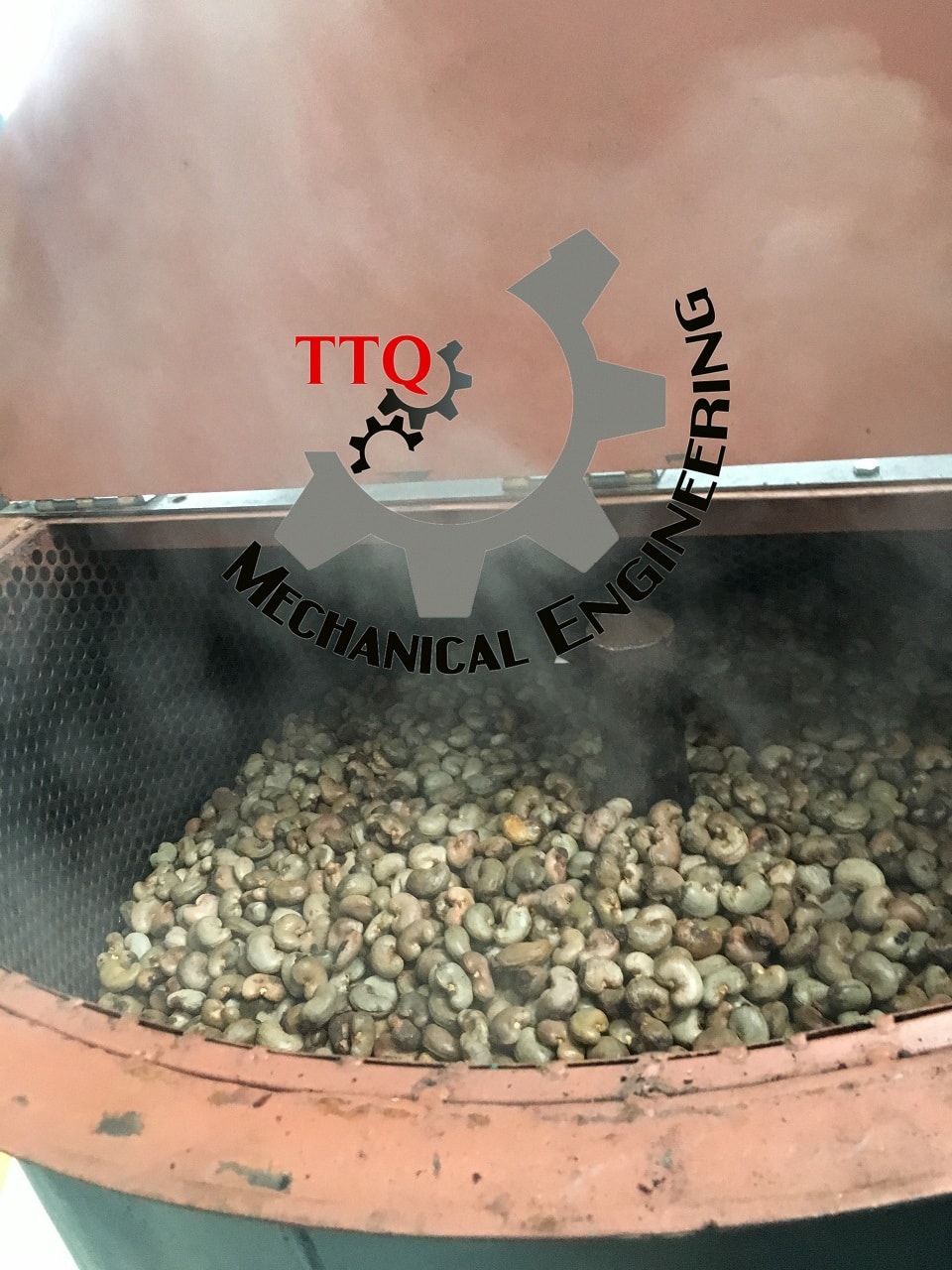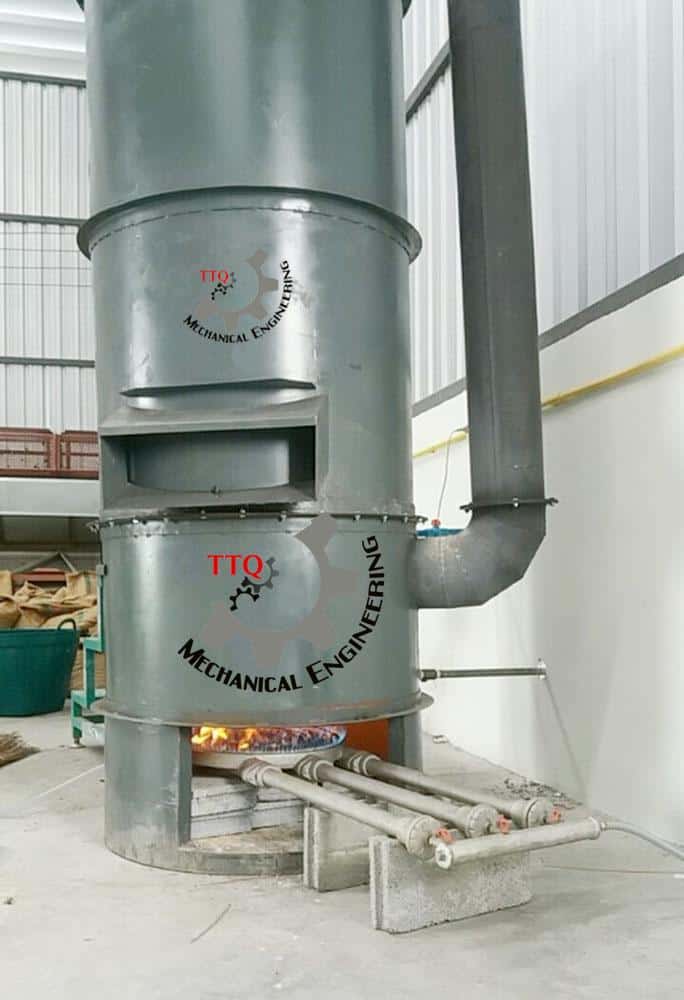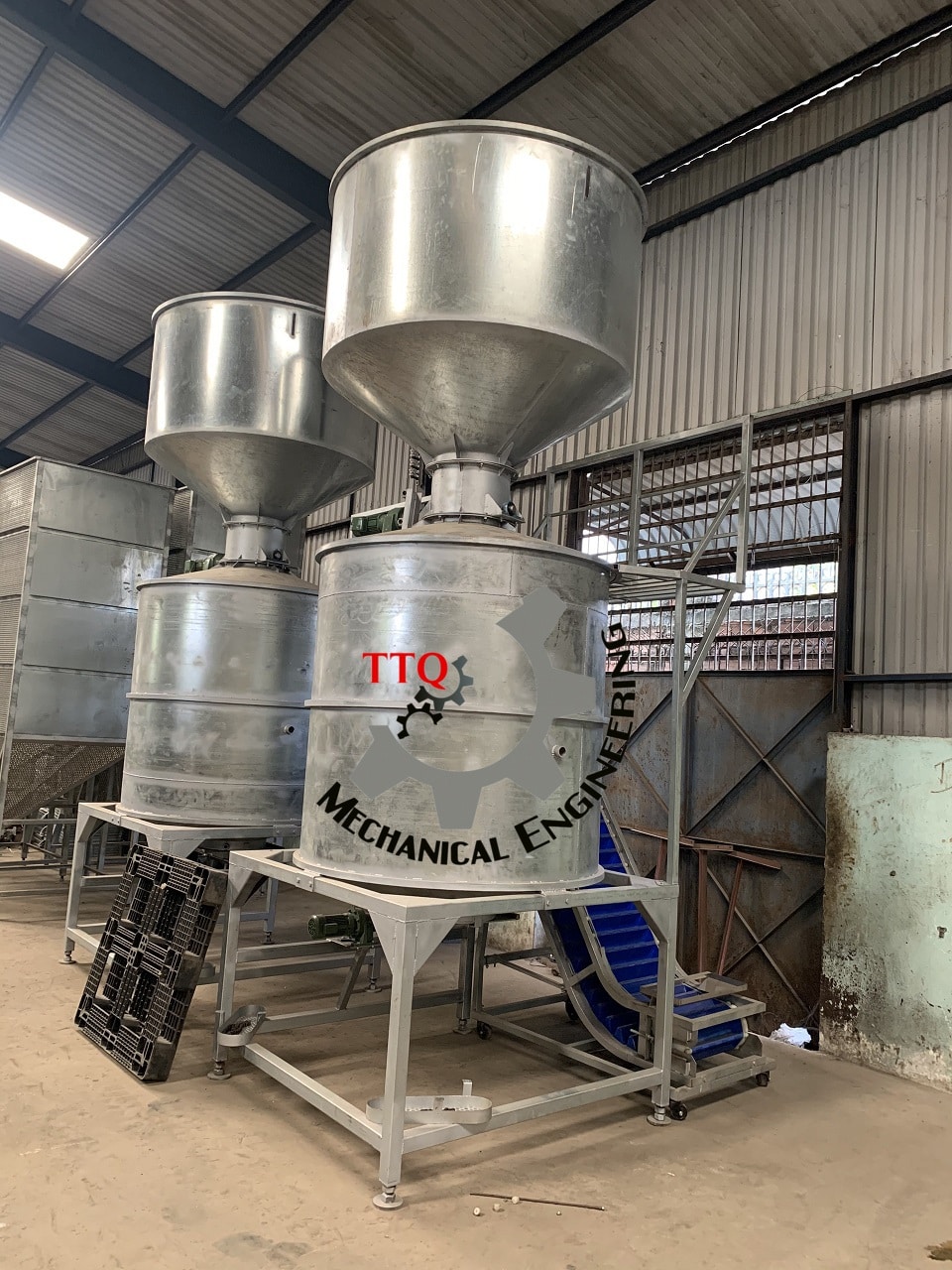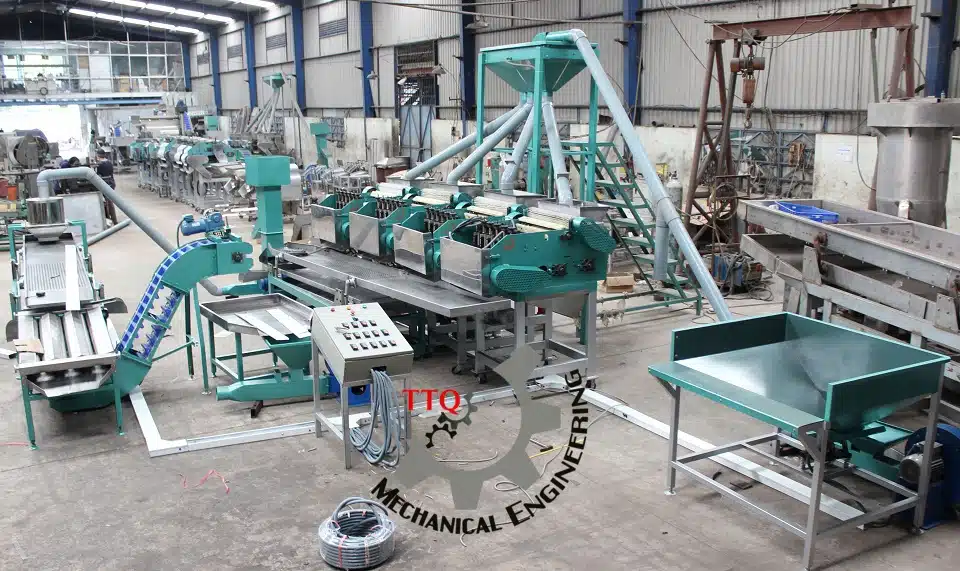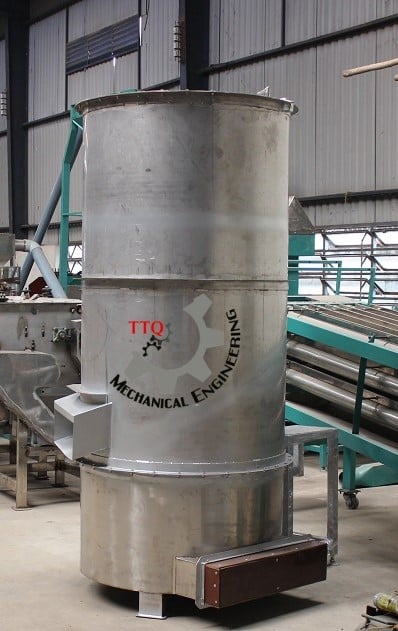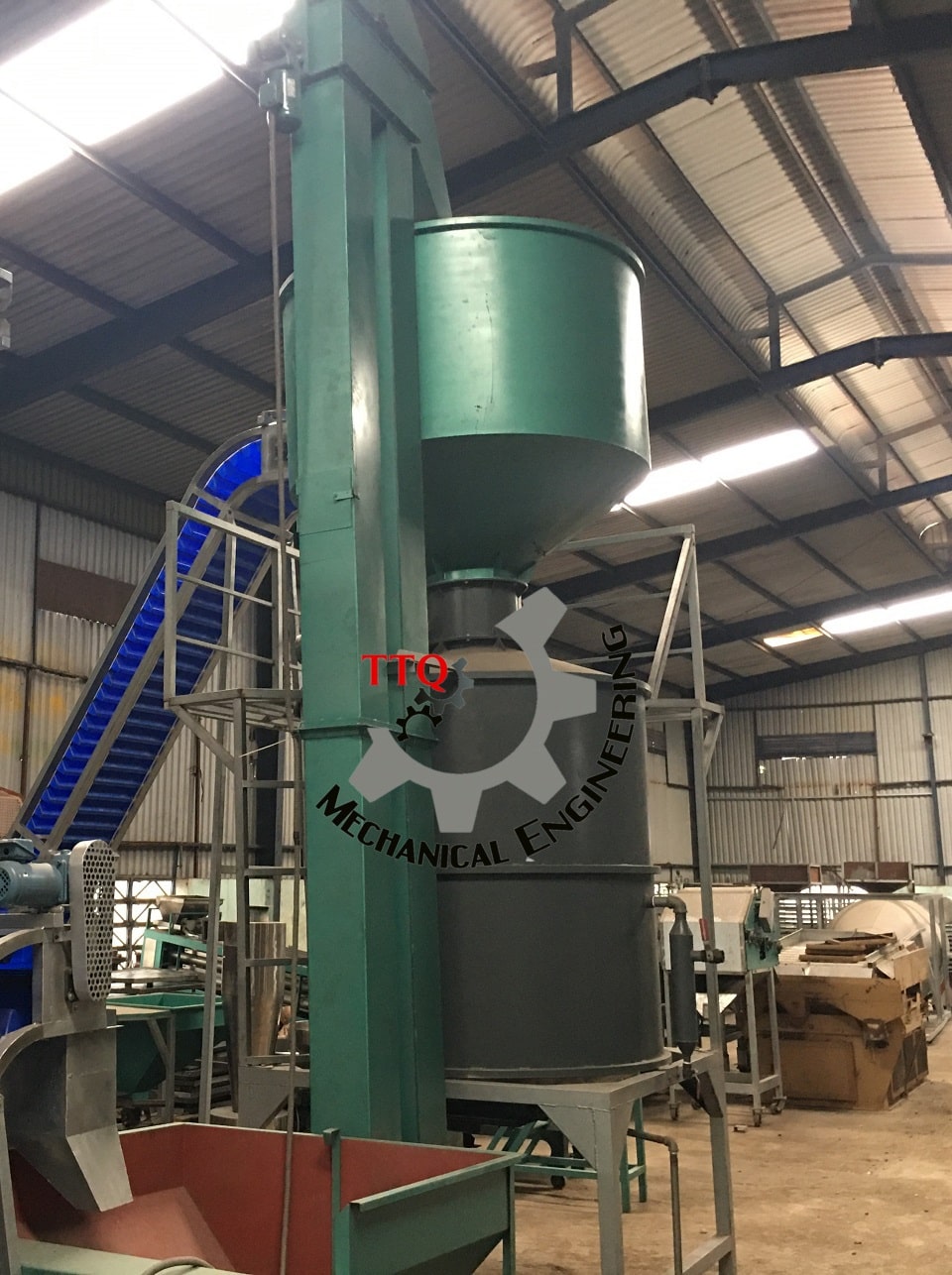
An automatic steam cooker that conditions raw cashew nuts before they reach the cutter. Also called a cashew nut cooker or kaju steam cooker, the machine holds around 1 ton of raw nuts per batch and softens the hard shell with low-pressure steam so it splits cleanly and the whole kernel comes out unbroken. CASHEW TECH supplies it as a steam-fed or direct-fired build, both made for continuous plant use with minimal manual handling.
Why Raw Cashews Are Steamed Before Shelling
Steaming is the conditioning step that decides how much output ships as high-value whole grades. Even, moist heat softens the leathery shell and loosens the kernel from the shell wall, so the cut releases a whole nut instead of shattering it. Done right, steam cooking lifts the whole-kernel ratio and reduces the breakage that pushes kernels into low-priced pieces. It also keeps the cashew nut shell liquid (CNSL) inside the shell intact for later extraction — unlike drum roasting, which scorches the oil and can taint the kernel. That is why steam has become the standard front end of modern cashew processing.
How the Steam Cycle Works
The machine runs a short, repeatable cycle. Raw nuts are elevated automatically into a vertical stainless-steel chamber, sealed, and dosed with low-pressure saturated steam. A typical steaming cycle runs in the region of 20–25 minutes, with the full cycle — feed, steam, pressure release, and discharge to the storage tank — closer to 30–35 minutes; exact timing depends on batch size and configuration. The steamed nuts are then rested and lightly dried so shell and kernel reach the right moisture for cutting. The machine handles elevation, steaming, and discharge on its own, so an operator supervises rather than handling hot nuts.
Heat Source Options
There are two ways to raise the steam. A boiler-fed build pairs the machine with a wood-chip or biomass baby boiler; a direct-fired build heats at the unit itself and needs no separate one. CASHEW TECH sizes the cashew boiler machine to the machine’s steam demand, or specifies a cleaner-burning biomass unit where fuel cost and emissions matter.
Steaming vs Boiling vs Roasting
Not every heat method protects the kernel equally. This table compares the common ways to condition raw nuts before shelling.
| Method | Shell softening | Whole-kernel recovery | CNSL preserved |
|---|---|---|---|
| Steaming | Even, controlled | High | Yes |
| Open-pan boiling | Uneven | Medium | Partly |
| Drum roasting | Harsh, burns oil | Lower | No |
For the manual method this machine replaces, see the cashew boiling process guide and the background on boiled cashews.
Where It Fits in the Cashew Processing Line
In a full line, steam conditioning sits between raw-nut intake and cutting. Conditioned nuts move to the cashew cutting machine and automatic shelling line, then on to the cashew dryer machine, peeling, and grading. Browse the full lineup on the cashew machines hub, or read the end-to-end cashew manufacturing process and cashew processing machine overview.
Frequently Asked Questions
How do you steam raw cashew nuts? Load raw nuts into the sealed chamber and apply low-pressure saturated steam for roughly 20–25 minutes, then rest and lightly dry them before cutting. The machine elevates, steams, and discharges the nuts to a storage tank automatically.
Why are cashews steamed before shelling? Steam softens the shell and loosens the kernel so it cuts out whole instead of breaking. That raises the whole-kernel grade you can sell and keeps the shell’s CNSL oil intact, unlike roasting.
How long does one load take? In the region of 20–25 minutes of steaming, or 30–35 minutes for the full feed-to-discharge cycle, so a single machine can turn several loads per shift. Exact cycle time is confirmed per project.
Is a cashew processing business profitable? It can be, and steam conditioning is one lever: better whole-kernel recovery means higher revenue per kilo. See how to start a cashew processing business for the wider economics.
Watch it in action