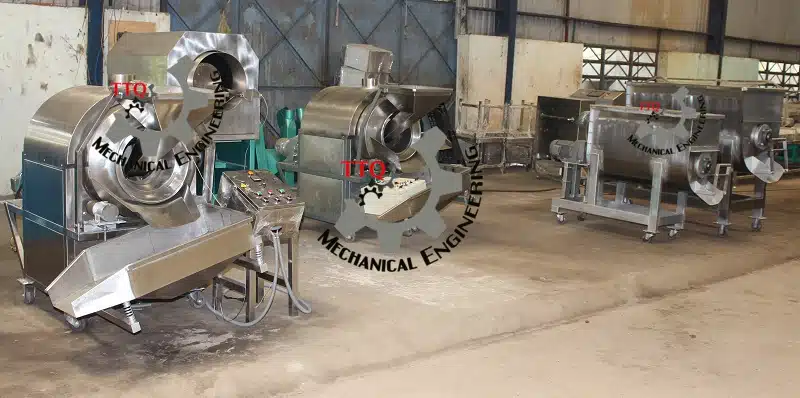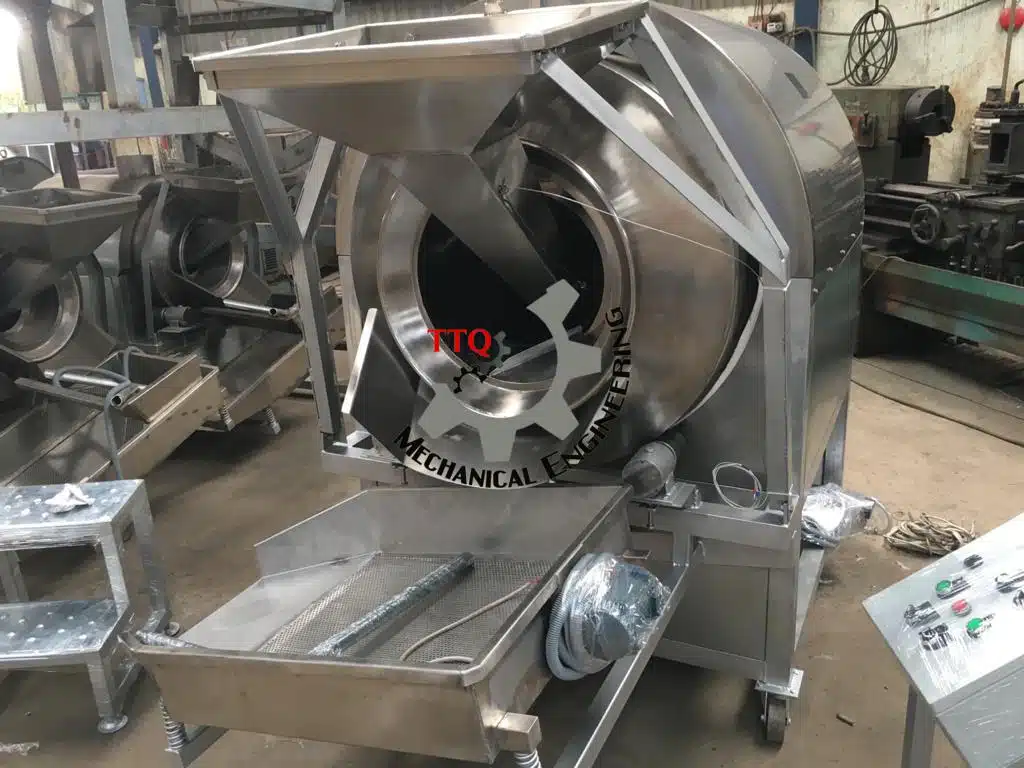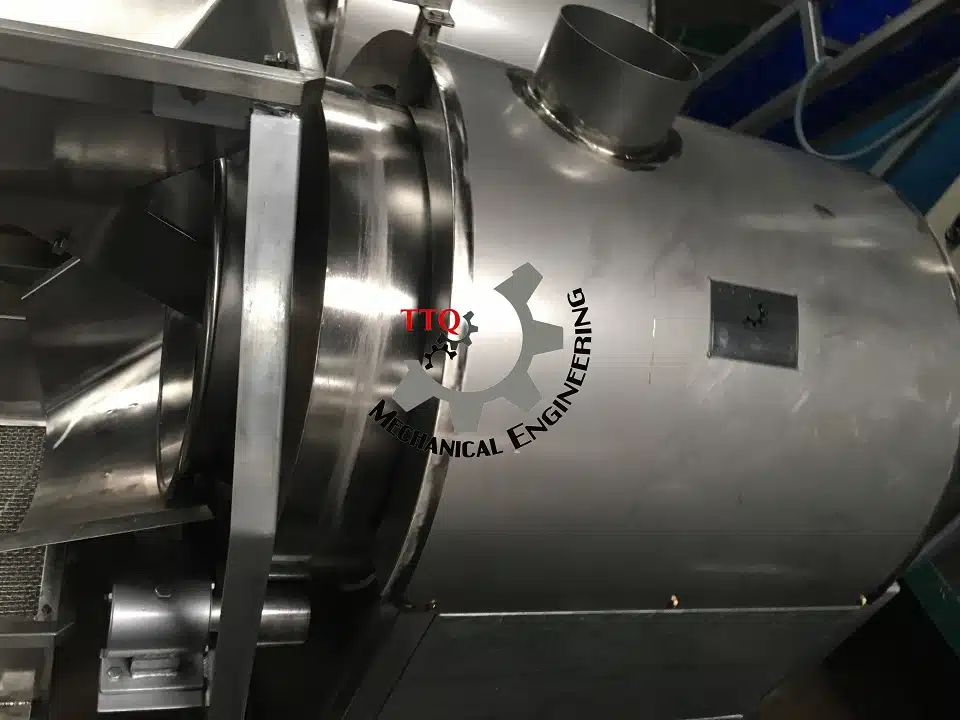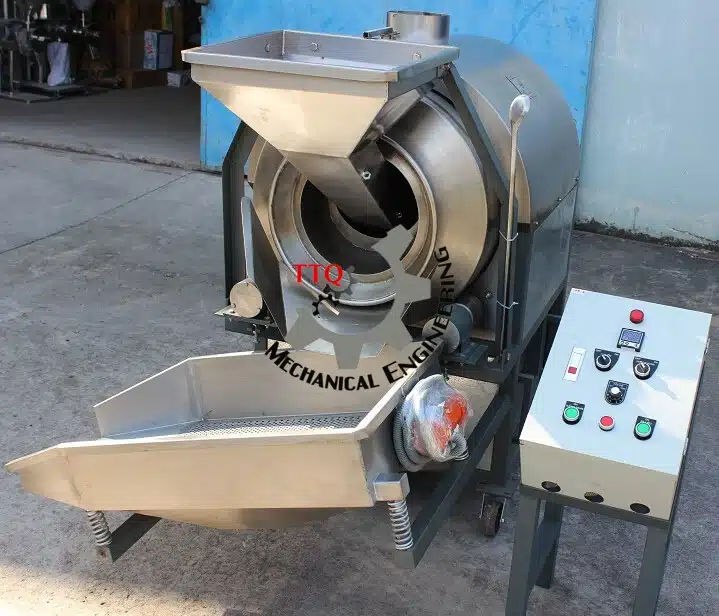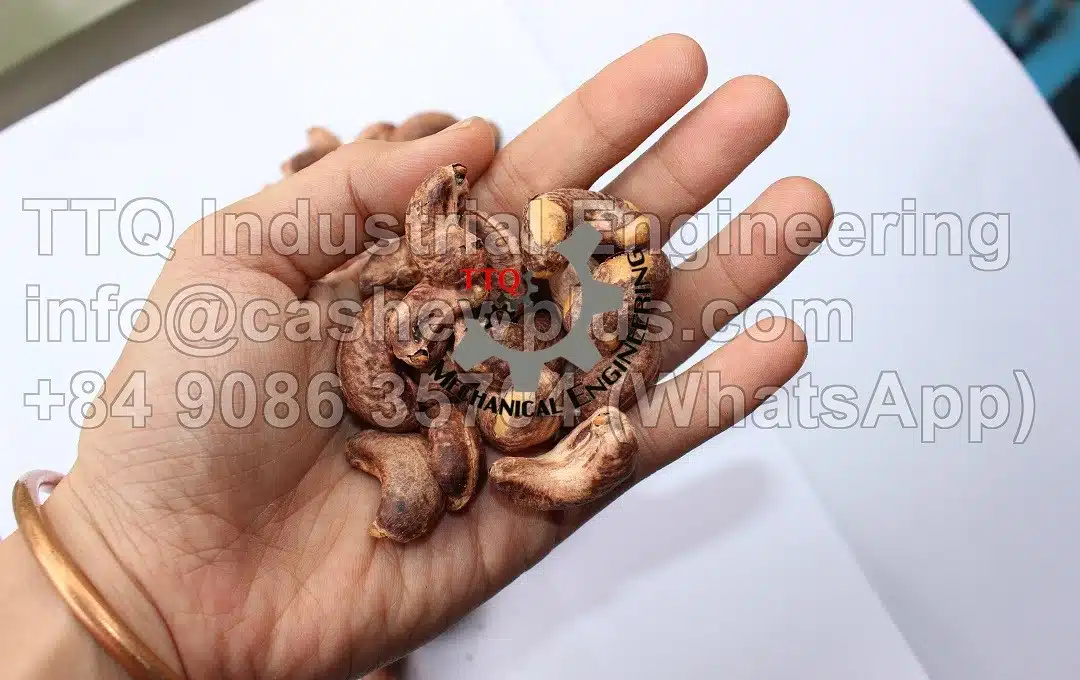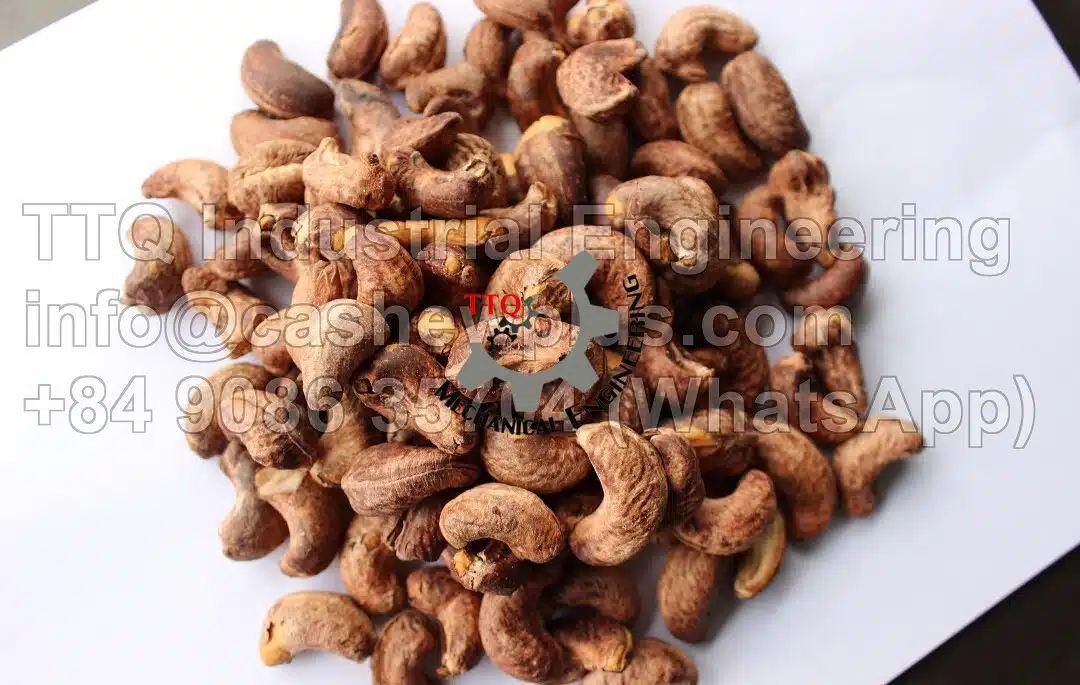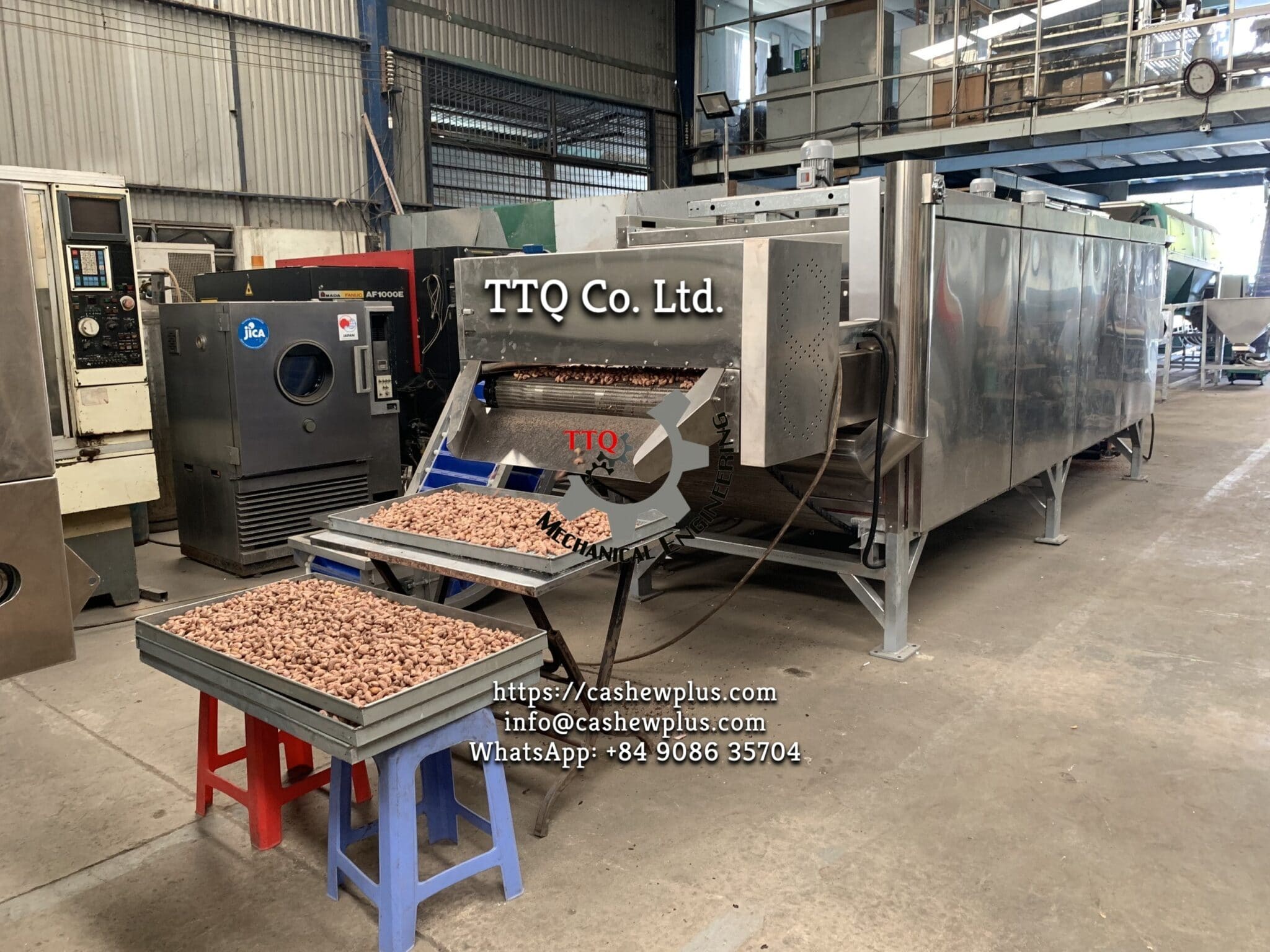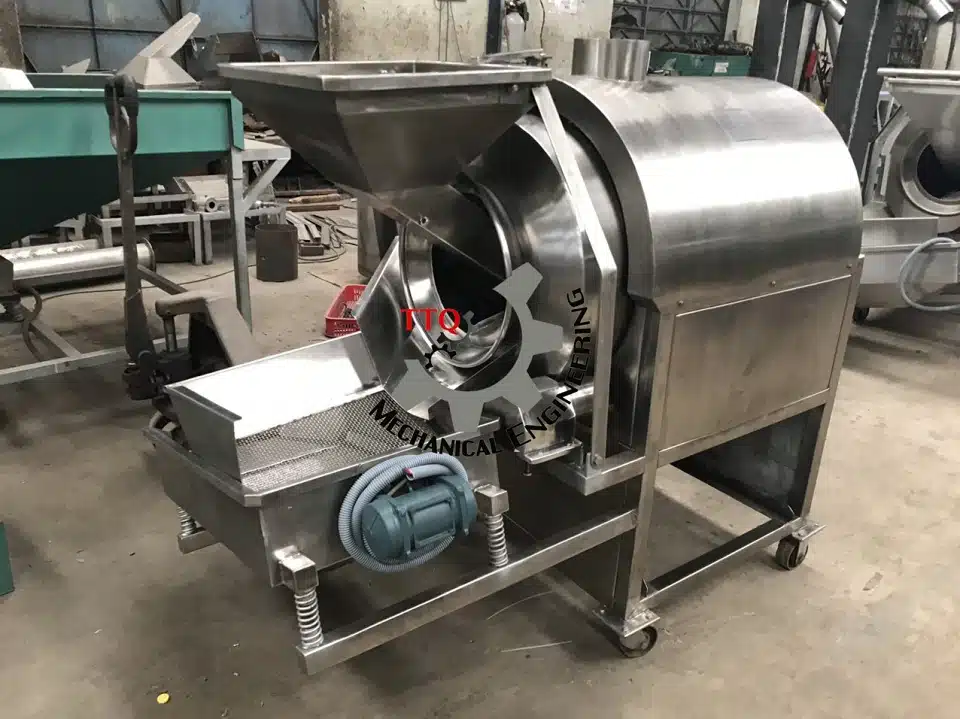
A cashew roasting machine turns finished cashew kernels into a crisp, evenly coloured, ready-to-eat snack — salted or unsalted — by roasting them under controlled heat that develops flavour and drives off moisture. It works on the kernel (the edible seed), not the raw in-shell nut, so it sits near the end of the line as a value-addition step. CASHEW TECH supplies it in two configurations: a batch drum roaster (50 / 70 / 100 kg per batch) and a continuous tunnel roaster (40–60 kg/h), both in a full stainless-steel body.
Batch vs continuous — the two types
| Type | Capacity | Heat source | Best for |
|---|---|---|---|
| Batch (drum) | 50 / 70 / 100 kg per batch | Electricity, gas or wood | Flexible, recipe-varied runs; salted roasting |
| Continuous tunnel | 40–60 kg/h | Gas or electric heaters | Steady, higher-volume output; unsalted or salted |
The batch roaster gives fine control over each lot and handles salt roasting at a 60/40 salt-to-kernel ratio for even colour without burn marks. The continuous tunnel automates the flow for consistent, higher throughput — the same product, made steadily rather than lot by lot.
Salt roasting and even colour
Salt is used as a heat-transfer medium so kernels roast evenly, without scorch marks — the machine holds a steady, controlled heat and constant tumbling so every kernel colours the same. The result is a uniform golden roast, whether you finish salted or plain.
Fuel options
The batch machine runs on electricity, gas or wood, so processors can pick the cheapest reliable energy for their location; the tunnel type uses gas or electric heaters. This flexibility matters most where grid power is costly or intermittent.
Beyond cashew, and beyond plain roasting
The same machine roasts almonds, peanuts, pistachios, Brazil nuts and other seeds, so a processor can run more than one product line on it. Roasted-and-salted cashews are the most popular value-added form, and roasting pairs naturally with downstream steps — a sugar/chocolate coating pan for coated snacks, a cashew butter line for splits and pieces, and vacuum packing to lock in freshness. For the methods and settings behind roasting, see the roasting process guide; to price a roaster for your volume, contact us.
Frequently asked questions
What does a cashew roasting machine do?
It roasts finished cashew kernels — with or without salt — into a crisp, evenly coloured, ready-to-eat snack, developing flavour and driving off moisture under controlled heat. It roasts kernels for eating, not raw nuts for shelling.
Should I choose a batch or continuous roaster?
A batch (drum) roaster handles 50, 70 or 100 kg per batch and suits flexible, recipe-varied production; a continuous tunnel roaster runs 40–60 kg per hour for steady, high-volume output. The choice depends on your volume and product mix.
What fuel does the roasting machine use?
The batch roaster can run on electricity, gas or wood; the continuous tunnel type uses gas or electric heaters. Fuel choice usually follows local energy cost and availability.
Can it roast without salt, or roast other nuts?
Yes. The continuous tunnel can roast unsalted, and the machine also roasts almonds, peanuts, pistachios and other nuts and seeds, so it isn't limited to cashew.
Watch it in action