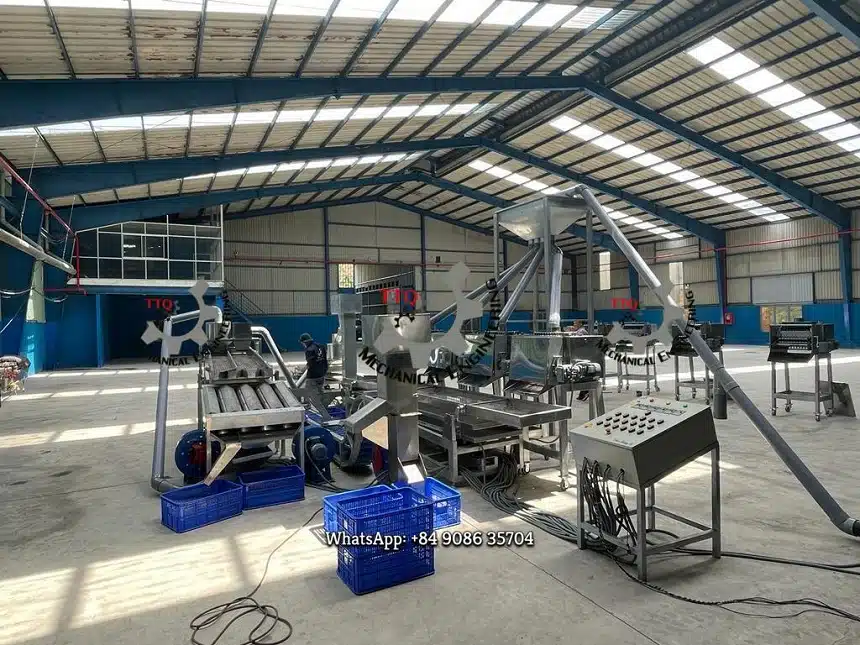
Cashew Scooping Machine
Separating fruit from nut at the point of harvest.
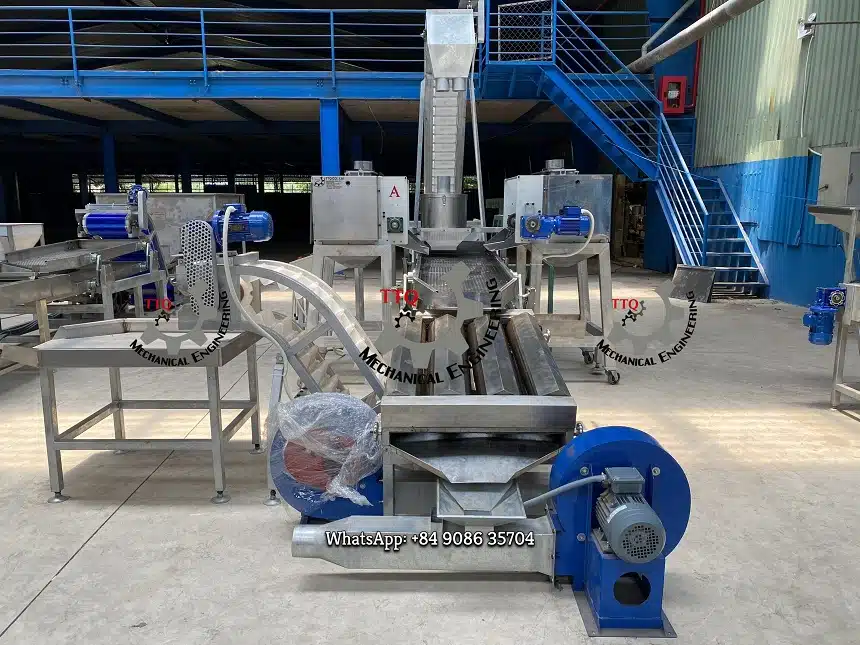
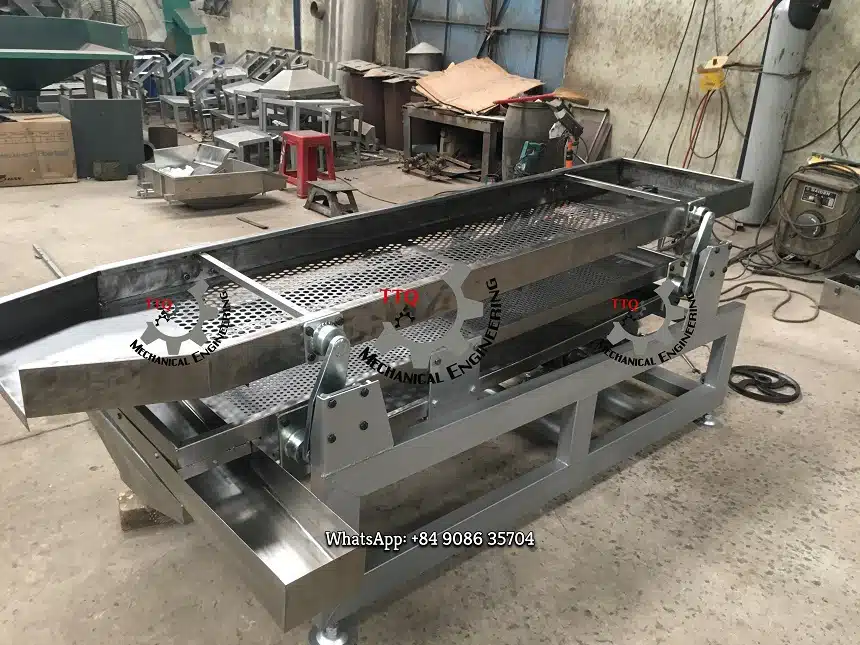
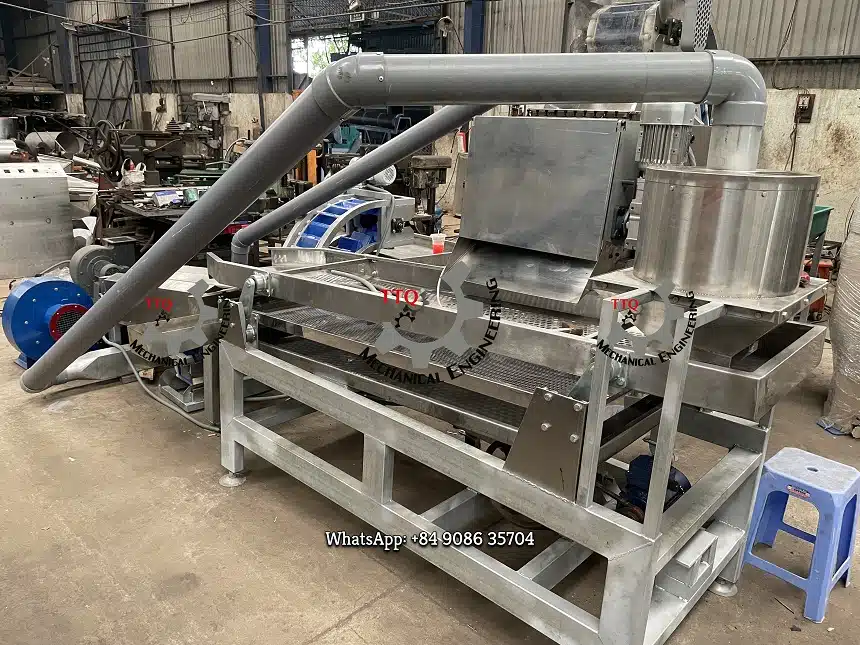
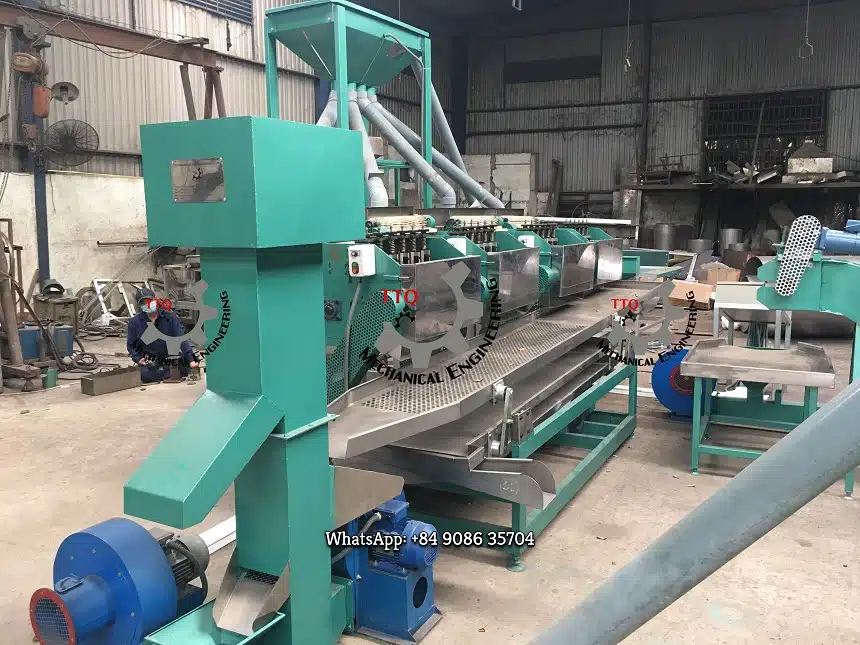
A cashew scooping machine lifts the cut kernel out of its shell halves right after cutting, using vibrating screens instead of a room full of hands. Once a cutter has split the shell, the kernel still sits loose inside it; the machine shakes the two apart, drops clean kernels onto a conveyor, blows away light shell debris, and routes any uncut nuts back for a second pass. CASHEW TECH supplies scooping machines running 150 to 300 kg per hour, and a well-set line cuts the manual labour of this stage by up to 85%. This page explains how the separation works, the automation grades, where the step sits after cutting, and how to choose one for your line.
Separation is the quiet stage that protects whole-kernel value: handled roughly, kernels chip and drop a grade; handled gently and mechanically, more of them stay whole and command a higher price. For a factory that already runs a cutter, it is usually the next machine to buy.
What a Cashew Scooping Machine Does
In a processing line, cutting and scooping are two halves of one job: the cutter opens the shell, and the scooper takes the kernel out. Before this second half was mechanised, it was done at long hand tables where workers picked each kernel from its shell one at a time — slow, labour-heavy, and hard on the whole-kernel rate when tired hands rushed late in a shift. A cashew scooping machine replaces that table with a vibrating screen that separates kernel from shell by size and weight, then a blower that clears the light shell fragments.
Clean kernels collect on a conveyor or in a container ready for drying; shell falls away to a waste chute; and partly cut or unscooped nuts are diverted back so nothing whole is lost. Because the action is mechanical and repeatable, a stage that once tied up dozens of people now runs with a handful, and the kernels that come off it are more consistent grade to grade.
Why Scooping Is a Delicate Process
The step looks simple, but the kernel is fragile at exactly this moment. Fresh from cutting, the cashew kernel is still slightly soft and sits wedged against sharp shell edges; force it and it splits into halves or pieces that sell for far less than a whole. Whole white kernels — the W-grades — earn a clear premium over splits and butts, so every percentage point of wholes protected here flows straight to the bottom line.
Hand picking can be gentle in skilled hands, but it is inconsistent and its quality sags as a shift wears on. A machine is built to be gentle every time, lifting the kernel with vibration and airflow rather than prying it out with a tool.
How It Separates Kernel from Shell
The mechanism is vibration plus air. Cut nut halves feed onto an inclined, vibrating screen deck whose apertures are set to the kernel size being run; as the deck shakes, whole kernels and shell halves stratify by size and weight and travel to different outlets. A blower positioned above or beside the deck lifts the lightest shell fragments clear, while the heavier kernels stay on the belt and move forward. Uncut or half-open nuts route back to a recirculation outlet for another pass through the cutter.
The screens are adjustable, so the same machine handles different kernel sizes as the raw-nut grade shifts through the season — an operator changes a setting rather than swapping equipment. In practice, the quality of separation is set as much by the cutting ahead of it as by the screen itself: clean cuts scoop cleanly, ragged cuts do not, which is why the two stages are always tuned together.
Manual vs Automatic Separation
There are three automation tiers for this stage, and the right one depends on labour cost and throughput.
| Automation level | How it works | Labour | Best for |
|---|---|---|---|
| Manual hand table | Workers pick kernels from shell by hand | Very high | Very small, low-wage units |
| Semi-automatic scooper | Vibrating screen separates; operators tidy edge cases | Moderate | Growing plants |
| Fully automatic line | Integrated feed, screen, blower, conveyor | Low — up to 85% less | Scale, tight labour markets |
Most plants move to a machine as soon as wages or volume make the hand table uneconomic. A mechanical stage does more than cut headcount — it steadies quality, because a screen holds its accuracy from the first hour of a shift to the last, where a picking crew slows and slips. For the manual-versus-mechanised trade-off across the whole cutting and separating stage, see the guide to automatic vs manual cashew cutting.
Build, Materials and Hygiene
Beyond throughput, build quality is what keeps a scooper earning year after year. Stainless steel contact parts are the standard here: they resist the acids in cashew shell liquid, wash down easily for hygiene, and hold up to continuous running without corroding or shedding into the product — food-safe construction that lets a factory pass buyer and regulatory audits without argument.
The vibrating decks are the working heart of the machine, so their mounts and drive need to run shift after shift on smooth, balanced motion. When comparing machines, weigh the screen adjustability and the ease of wash-down as heavily as the headline capacity, since those determine real output and hygiene across a full season rather than on a spec sheet.
Where It Fits After Cutting
Scooping has one fixed neighbour: cutting, immediately upstream. Nuts are conditioned in the cashew steaming machine, cut open by the cashew cutting machine or a full automatic cutting line, and then handed straight to the scooper, which lifts out the kernels. From there the separated kernels move to the cashew dryer machine, then to peeling and grading, while the automatic cashew shelling machine handles any nuts that need a second separation.
Because cutting and scooping are so tightly coupled — the quality of one sets the quality of the other — many plants buy them as one integrated stage rather than as two separate machines, with the scooper sized to match the cutting stage feeding it so it never becomes the bottleneck. To see the whole sequence from raw nut to packed kernel, browse the cashew machines hub or read the end-to-end cashew manufacturing process.
Choosing a Scooper
Choosing a scooper comes down to three questions. First, what throughput must it match? Size it to your cutting stage with headroom so it never dictates the pace of the line. Second, what automation level fits your labour market? Where wages are low and volumes tiny, a hand table can still pay its way; nearly everywhere else, a machine wins on cost per kilo and on the consistency of the grade it returns. Third, how well does it protect wholes? A gentle, well-adjusted scooper returns more whole kernels, and across a season that recovery can outweigh the purchase price several times over.
For buyers planning a whole factory rather than a single stage, the economics live in the cashew nut processing plant cost guide and the blueprint for a modern cashew processing unit.
Frequently Asked Questions
What is the cost of a cashew scooping machine? It depends on the configuration and how it’s paired with your cutting stage. Because pricing moves with capacity, steel, and freight, we quote per project — see the cashew nut processing plant cost guide and request a quote.
How does a cashew scooping machine separate kernel from shell? It uses a vibrating screen that stratifies kernels and shell by size and weight, plus a blower that clears light shell fragments. Whole kernels travel to a conveyor, shell falls to waste, and uncut nuts recirculate for another pass through the cutter.
How much manual labour does it save? A well-set machine can cut the manual labour of this stage by up to 85% versus a hand table, while steadying the whole-kernel grade because the screen works consistently through a full shift rather than slowing as a crew tires.
What capacity should I choose? Match it to your cutting throughput with a little headroom — CASHEW TECH’s scoopers run 150 to 300 kg/hr; larger multi-cutter lines are paired with a correspondingly sized scooper so it never throttles the cutters ahead of it.
How do you remove cashews from the shell at home? At home, people roast or steam the nuts, then crack the shell by hand and pry the kernel out, taking care with the caustic shell oil. A commercial plant does the same job at scale with a cutting machine and a separating machine, which is what makes shop-bought kernels affordable, uniform, and safe to handle.
Request a Quote
Tell us your cutting throughput and kernel grades, and we’ll size the right scooper and quote it. Request a quote or book a consultation, or message us directly on WhatsApp from the button in the corner of any page.
Watch it in action