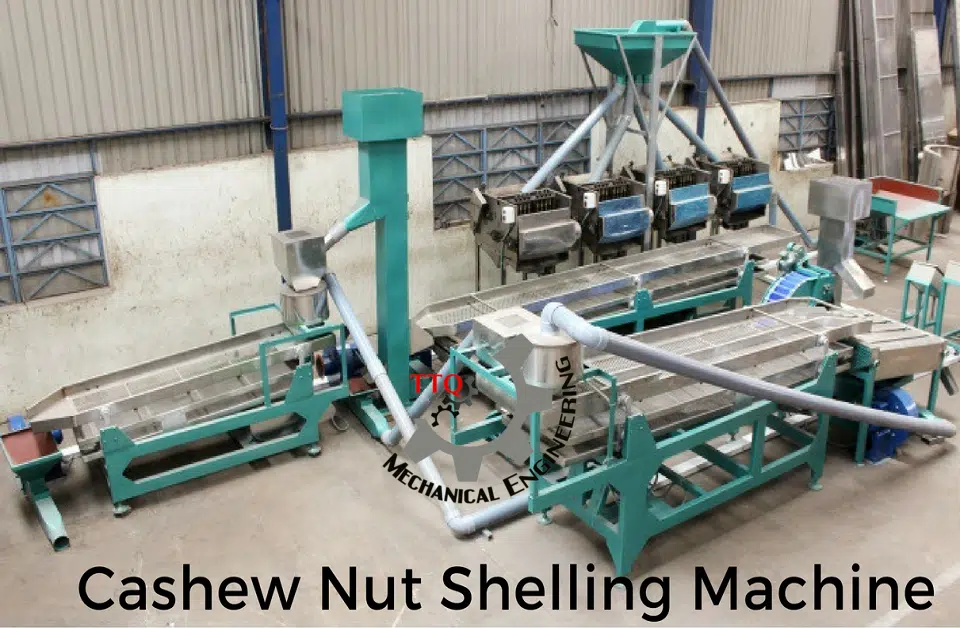
Automatic Cashew Nut Shelling Machines
Separating kernel from shell, then skin from kernel.
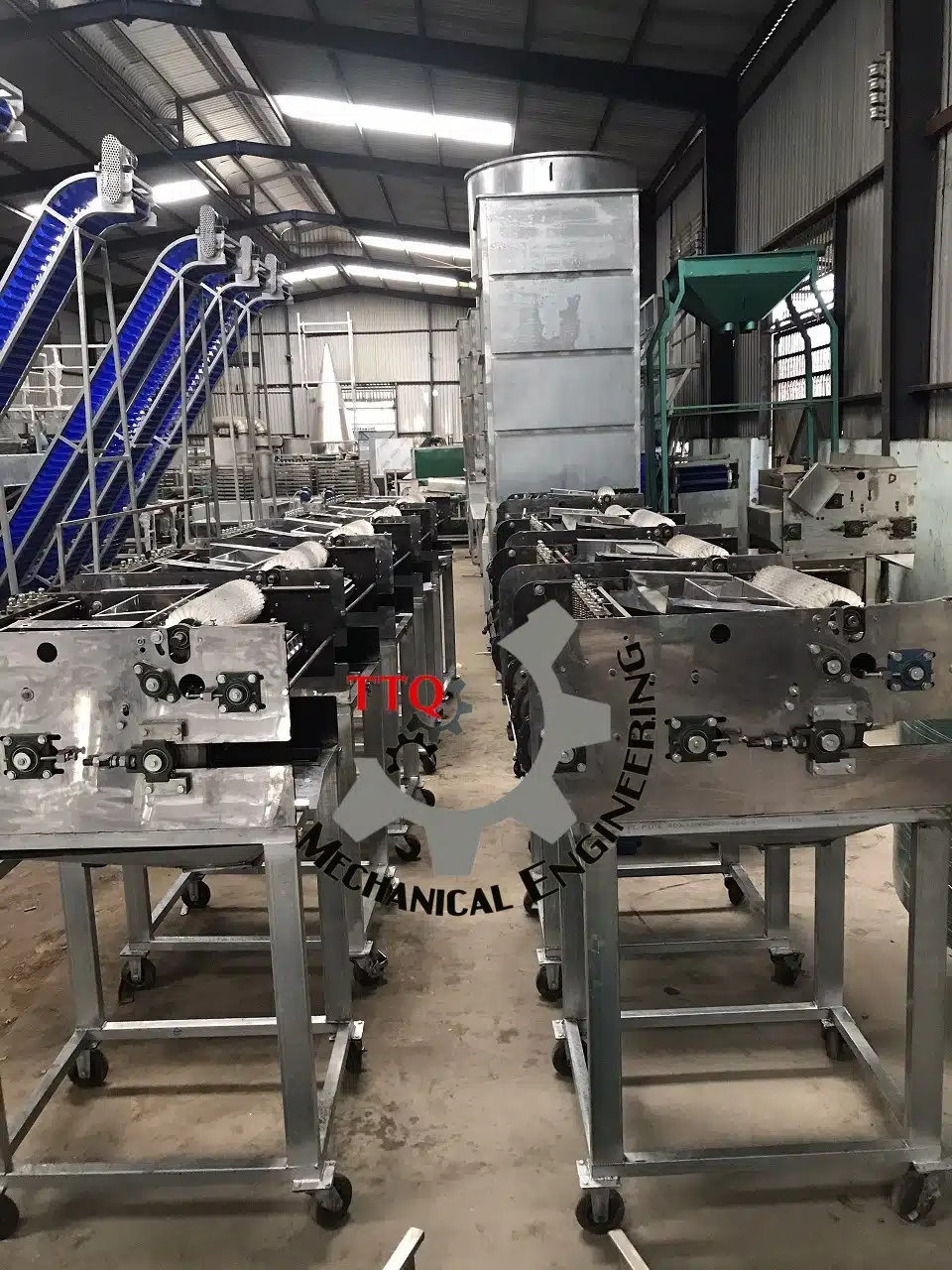
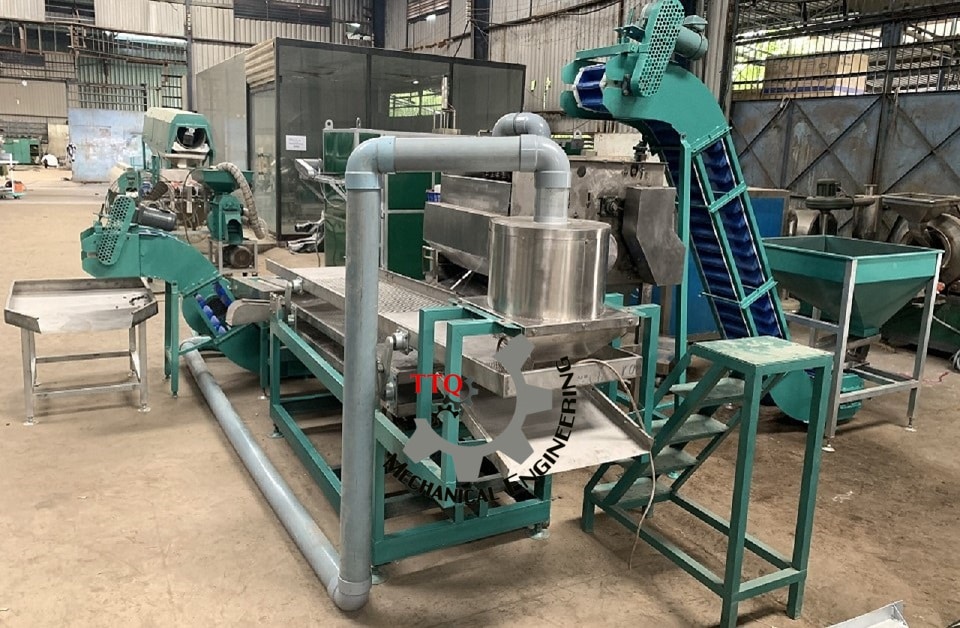
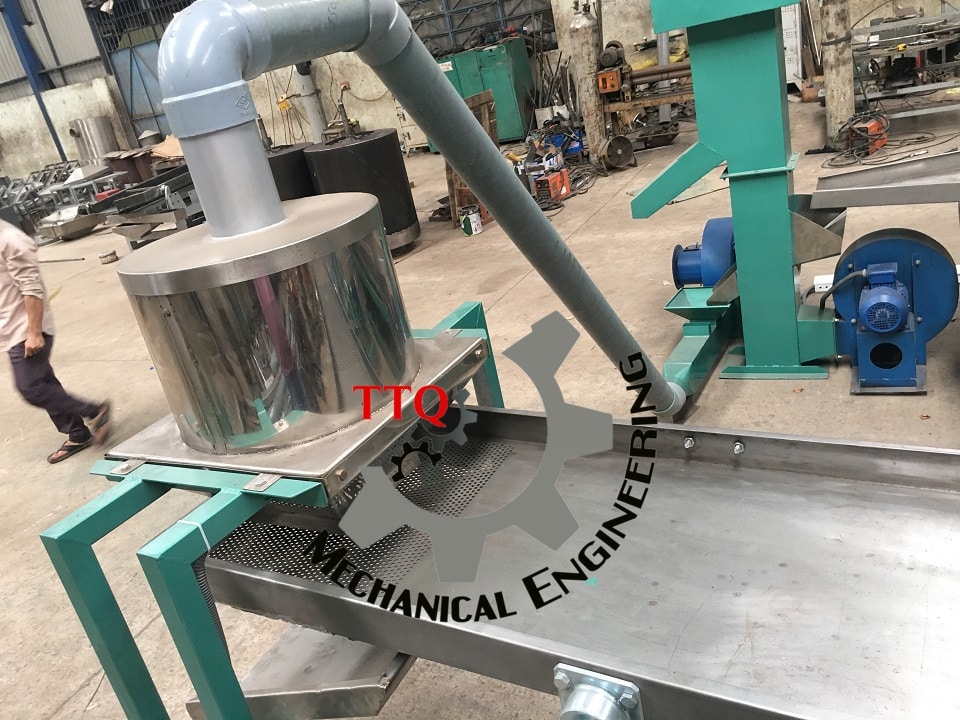
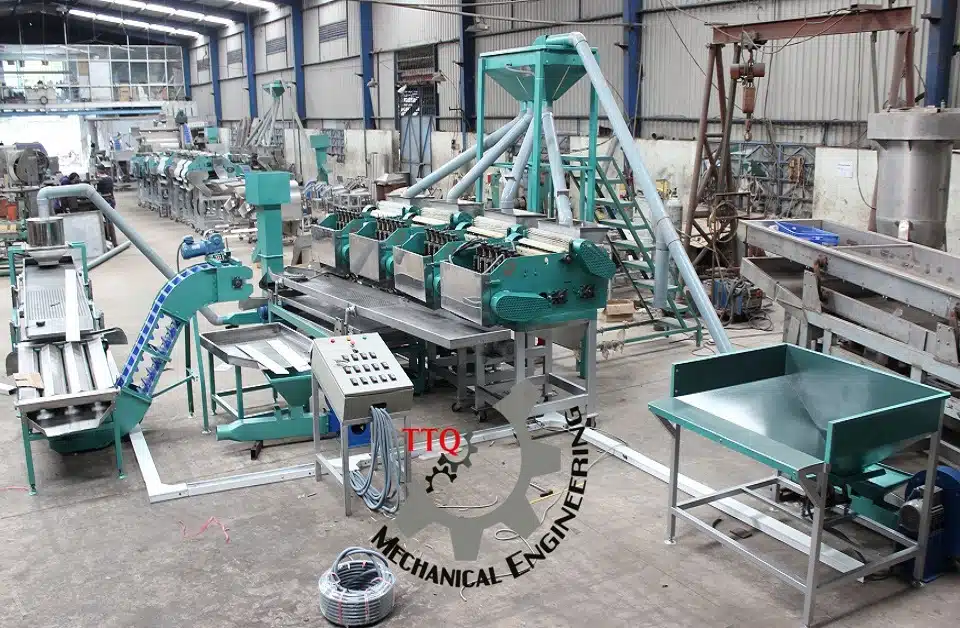
Automatic cashew shelling machines cut steamed raw cashew nuts and separate the kernel from the hard shell — the single most labour-heavy stage in a cashew factory, and the one that most decides your whole-kernel outturn. The core is a multi-head cutter (8 or 10 heads) that splits each nut along its seam; on a full line, vibrating sieves feed and separate automatically so the process runs continuously. Done well, 85–90% of kernels come out whole, with only 3–6% broken.
How automatic shelling works
Shelling is a sequence, not a single cut. Nuts must arrive size-sorted (so they match the blade setting) and conditioned — steamed or boiled so the shell is brittle and the kernel has pulled away from it. The cutter then splits the shell with matched blades; sieves separate kernels, shells and unshelled nuts; and the whole kernels move on to drying and peeling. The goal at every step is a clean split that doesn’t break the kernel or smear it with CNSL shell oil.
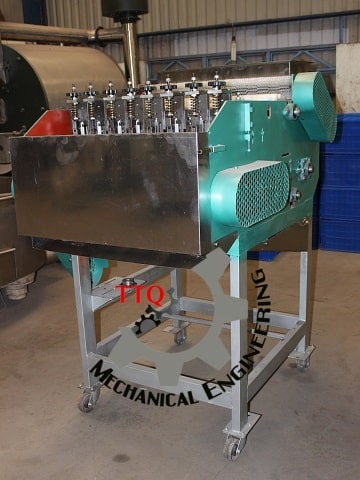
Cutters: 8-head and 10-head
The cutter is the heart of the line. Each head holds a pair of blades and splits one nut at a time; more heads mean more throughput.
| Cutter | Blades | Average capacity | Power |
|---|---|---|---|
| 8-head | 16 | ~250 kg/hour | 1.5 HP per cutter |
| 10-head | 20 | ~300 kg/hour | 1.5 HP per cutter |
Standalone machine vs a full automatic line
Capacity scales from a single cutter up to a sieve-integrated line running four cutters together.
| Configuration | Capacity |
|---|---|
| Standalone machine | 200–350 kg/hour |
| Single-sieve line (4 × 8/10-head cutters) | 1,000–1,200 kg/hour |
| Double-sieve line (4 × 8/10-head cutters) | 800–1,000 kg/hour |
| Triple-sieve line (4 × 8/10-head cutters) | 1,000–1,200 kg/hour |
| Full automatic shelling line | up to 1,200 kg/hour |
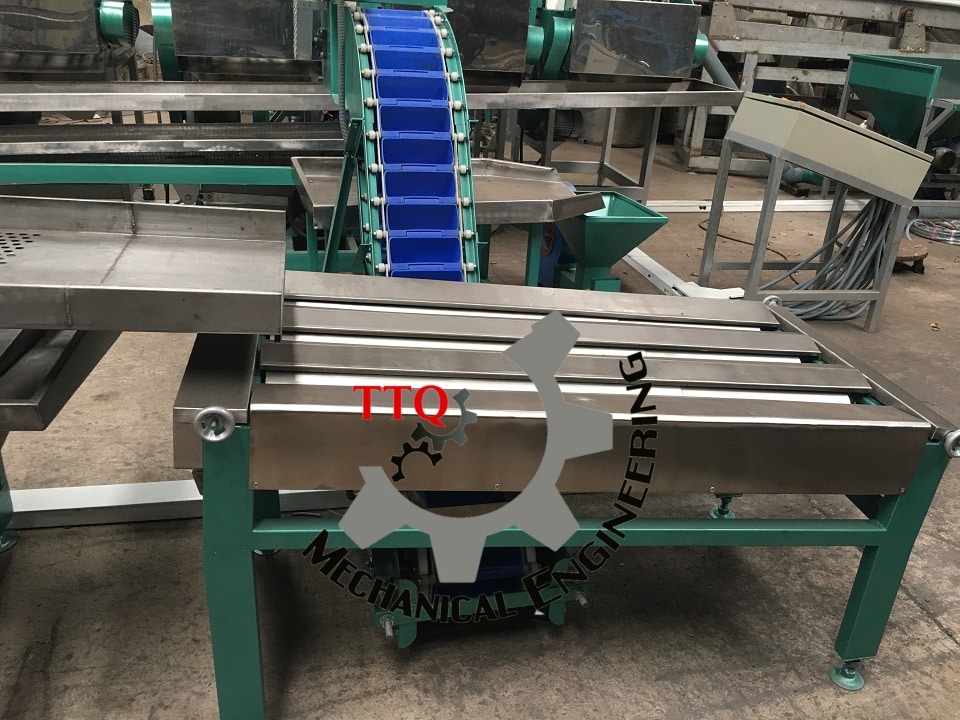
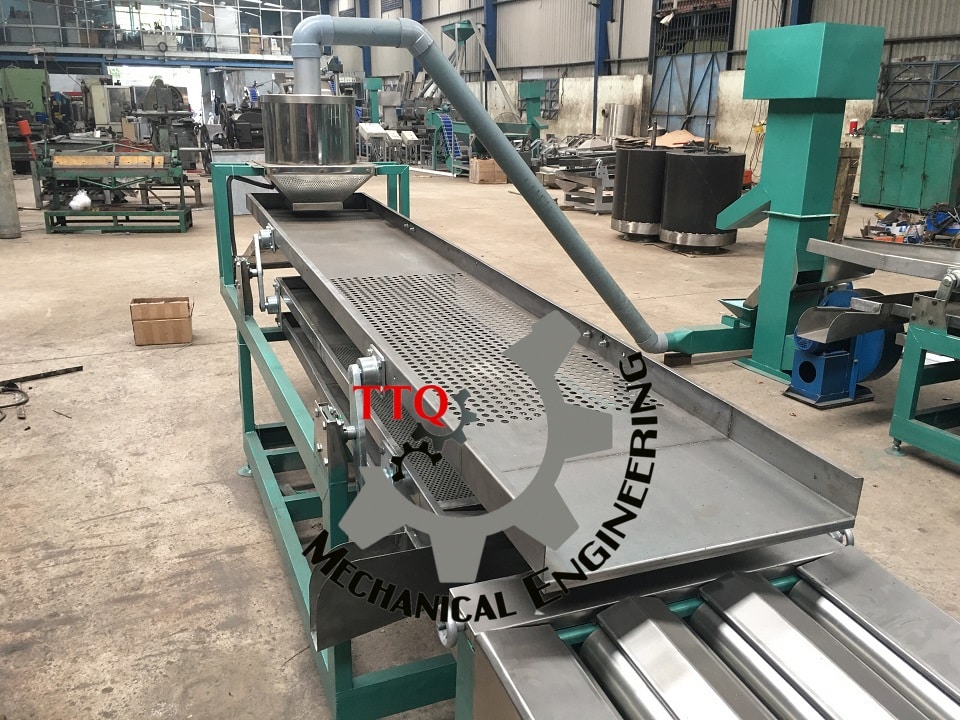
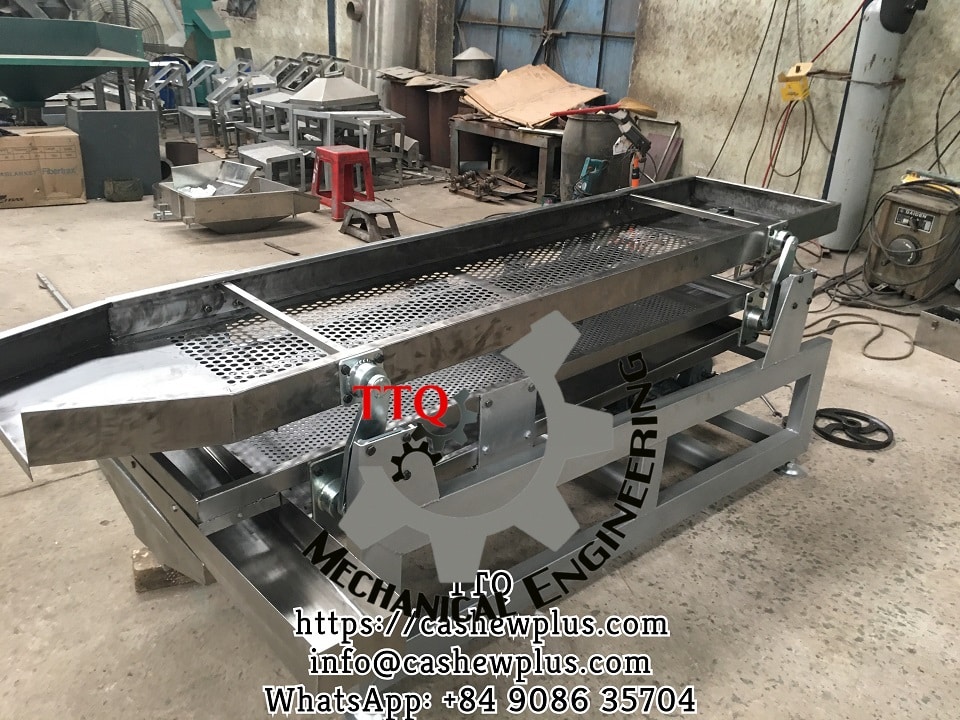
In Vietnam, most plants run complete automatic cutting-and-shelling lines — cutters integrated with vibrating sieves for scooping and de-shelling — which cuts labour substantially and lifts productivity. Kernel-contact parts are food-grade SS 304.
Quality: whole, unshelled and broken rates
| Metric | Typical range |
|---|---|
| Whole cutting rate | 85–90% |
| Remain unshelled | 5–8% |
| Broken nut rate | 3–6% |
These figures depend on getting the basics right: size-sort before cutting (the biggest single lever), keep blades sharp and matched, and steam the nuts correctly. Unsorted nuts fed to a fixed blade setting push both the broken and unshelled rates up.
Price
Pricing is configuration-driven, so treat these as indicative: an India-style cutter runs around USD 1,500 each, and a full automatic line spans roughly USD 4,000–40,000 (about Rs. 1–30 lakh) depending on capacity and automation level. Blades are a consumable spare to budget for. Because price moves with configuration and freight, we quote per setup — tell us your target capacity and location for a firm number.
How a good shelling machine increases profits
The more efficient the shelling operation, the higher the profit and the lower the labour cost — which is why shelling sits at the centre of plant economics. For where it fits the full flow see the cashew manufacturing process; for the labour side, labour & automation; for the engineering, shelling machine design. As an independent turnkey partner, CASHEW TECH sources, supplies, installs and supports cashew shelling machines and complete lines across Asia and Africa — contact us for a configuration and quote.
Frequently asked questions
What is the cashew shelling process?
A mechanical process that cuts steamed raw cashew nuts along the shell seam and separates the kernel from the shell — ideally without breaking the kernel or letting CNSL oil contaminate it. It runs after size sorting and steaming, and before peeling.
What steps come before cutting?
Two essentials: size sorting, so nuts match the cutter's blade setting, and steaming (or boiling), so the shell turns brittle and the kernel loosens. Feeding unsorted or unconditioned nuts sharply raises breakage and unshelled rates.
What whole-kernel rate can a shelling machine achieve?
Around 85–90% of cut kernels come out whole when nuts are properly sized and steamed, with roughly 3–6% broken and 5–8% remaining unshelled. Correct size sorting and sharp, matched blades are the biggest levers on that outturn.
What capacities are available?
A standalone machine runs about 200–350 kg/hour; a full automatic shelling line reaches up to 1,200 kg/hour by combining four 8- or 10-head cutters with vibrating sieves for feeding and separation.
How much does a cashew shelling machine cost?
Indicatively, an India-style cutter is around USD 1,500 each, and a full automatic line ranges roughly USD 4,000–40,000 depending on capacity and automation. Because price moves with configuration and freight, we quote per setup.
Watch it in action