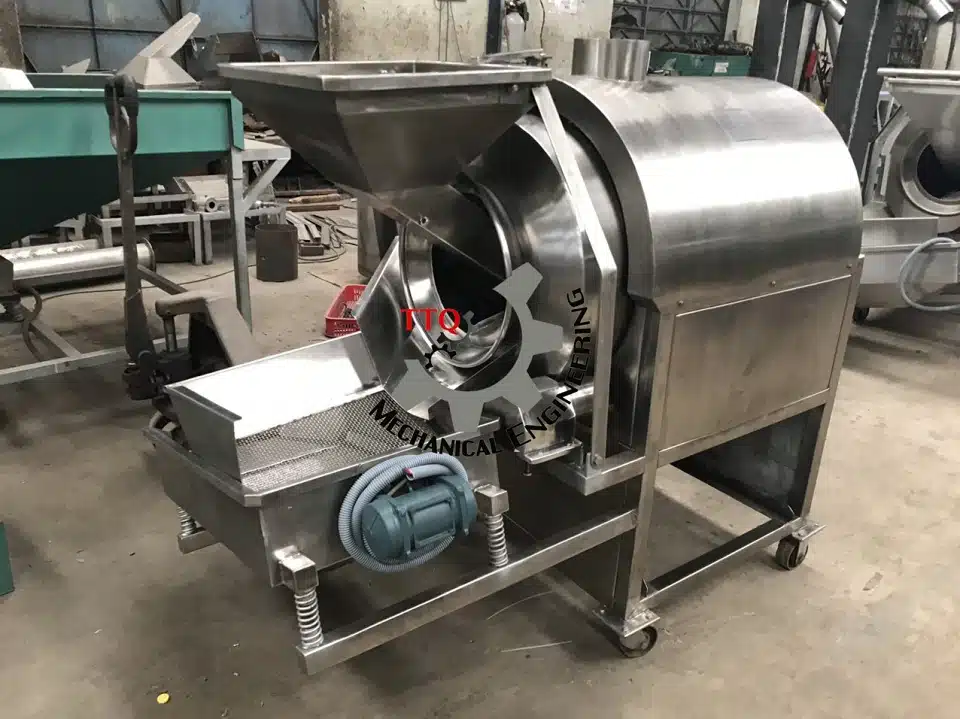
Cashew Shell-Fired RCN Roaster / Cooker (No Boiler Needed)
Steam generation for the rest of the line.
Detailed specifications for this machine are still being finalized on our end. Contact us directly for current pricing and capacity options.
Before steam boilers, processors conditioned raw cashew nuts by roasting them over fire — in a rotating drum or an open pan — and this method is still widely used across Kerala, parts of Africa, and Brazil because it needs no boiler and can burn the cashew shells themselves as fuel. Cashew Tech builds a purpose-built shell-fired roaster/cooker that does this traditional job in a controlled, safer, more consistent way — softening the shell and readying the nut for cutting without a steam plant.
To be honest about intent: this is not an attempt to out-optimise the universal steam boiler — that is a commodity fight already won by steam. It is a machine for the large, under-served audience that already cooks by fire and has never been offered a proper product for it. The trade-offs around CNSL and control are real, but the headline is simple: almost nobody else makes this.
How RCN is traditionally cooked
Two old methods dominate. The rotating drum tumbles raw nuts over a fire until the shells char and soften; the open pan roasts them in a shallow tray. Both use direct heat, both are cheap to start, and both have historically burned the shells’ own oil as part of the fire.
Why roast instead of steam
The pull is capital and fuel. A steam boiler and its steaming machine are the modern standard, but they need investment, water treatment and skilled operation. A shell-fired roaster needs none of that and runs on a fuel the plant already produces — the cashew shell itself, the same logic behind the shell burner.
Who still uses this method
Historically Kerala and Panruti in India, drum roasters in Brazil, and open-pan operations across parts of Africa. For many small and traditional processors it has never stopped being the practical choice.
Roasting vs steam conditioning — an honest comparison
| Factor | Shell-fired roasting | Steam boiler conditioning |
|---|---|---|
| Capex | Low | Higher |
| Boiler needed | No | Yes |
| Fuel | Cashew shell | Boiler fuel |
| CNSL | Largely flared / lost | Retained for extraction |
| Kernel quality & control | Harder to control | More consistent |
| Typical users | Kerala / Africa / Brazil traditional | Modern plants |
Steam tends to give cleaner kernels and retains the CNSL for shell-liquid extraction; open-fire roasting flares much of that oil off. See boiling/steam conditioning for the modern method and roasting process for kernel-stage roasting — a different job from this raw-nut conditioning.
CNSL, safety & quality considerations
Open roasting releases CNSL fumes, which are caustic and a worker-safety concern, and it loses the oil that a steam plant would capture. A purpose-built, enclosed roaster is the case for doing this traditional method properly — better fume control, more even heat, and repeatable results than an improvised drum or pan.
Who this machine is for
Traditional processors in Kerala, Africa and Brazil, and low-capex new entrants who want to start cutting without a boiler. It conditions raw, in-shell RCN by fire — distinct from the steaming machine and from kernel-stage roasting. Where it fits the wider line is shown in the manufacturing process; for pricing and specification, contact us.
Frequently asked questions
How were cashews cooked before steam boilers?
Before boilers, processors conditioned raw cashew nuts by roasting them over fire — in a rotating drum or an open pan — which softens the shell for cutting and can burn the cashew shells themselves as fuel, with no boiler required.
Can I process cashews without a boiler?
Yes. A shell-fired roaster/cooker conditions raw cashew nuts by direct heat instead of steam, so a plant can start cutting without the capital and complexity of a steam boiler — the traditional route still used across Kerala, parts of Africa and Brazil.
Is roasting or steaming better for raw cashew nuts?
Each has trade-offs. Steam conditioning gives more consistent kernels and retains the shell liquid (CNSL) for extraction, but needs a boiler. Fire-roasting has low capital cost and uses shells as fuel, but is harder to control and tends to flare off the CNSL.
Who still roasts raw cashew nuts?
Traditional and low-capex processors — historically Kerala and Panruti in India, drum roasters in Brazil, and open-pan operations across parts of Africa. It remains widespread wherever a boiler is impractical or unaffordable.