A cashew nut is the seed of Anacardium occidentale, a tropical tree native to Brazil and now grown across Africa and Asia. Unusually, the nut grows on the outside of the fruit — hanging beneath the fleshy cashew apple rather than inside it. It is sold in two forms: as a raw cashew nut (RCN), still inside its hard shell, or as the familiar ivory-white kernel after processing. The shell can never be eaten, because it holds a caustic oil — cashew nut shell liquid (CNSL) — that has to be neutralised and removed first. This guide covers what a cashew nut is, the tree and apple it comes from, the difference between raw and processed, the main varieties and uses, and a quick nutrition snapshot, with links to deeper pages on the kernel and the shell.
What Is a Cashew Nut
Botanically the cashew is a seed, not a true nut. It sits in a kidney-shaped hard shell attached to the bottom of the cashew apple, a swollen stalk (pseudofruit) that ripens yellow or red. Each apple carries a single nut. Inside the shell, cushioned in a honeycomb layer that holds CNSL, is the edible kernel protected by a thin red-brown skin called the testa.
The Cashew Tree and Cashew Apple
The cashew tree is an evergreen that thrives in hot, dry tropical climates. It flowers, sets fruit, and drops mature nuts to the ground, where they are collected rather than picked green — see cashew before harvest for the crop cycle. The cashew apple is edible and sweet-astringent, used for juice and drinks, though it is highly perishable and is often left in the field where the nut, not the apple, is the traded commodity.
Raw vs Processed Cashews
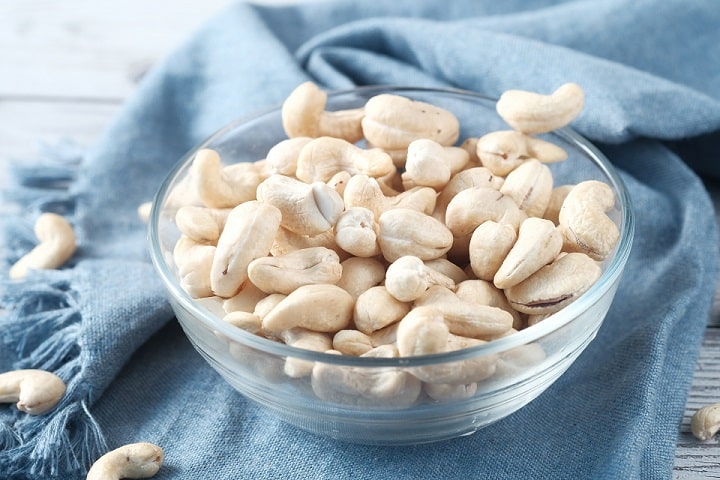
A raw cashew in shell cannot be eaten straight from the tree — the shell’s CNSL irritates skin and mouth. The nut is steamed or roasted to make the shell brittle and neutralise the oil, then shelled, dried, peeled and graded into clean white kernels. So the “raw cashews” sold in shops are really processed (shelled and peeled) kernels, just not roasted or salted. See the benefits of cashew in shell for why in-shell nuts are never sold to consumers.
The Parts of a Cashew
| Part | What it is | Main use |
|---|---|---|
| Cashew apple | Swollen stalk (pseudofruit) the nut hangs from | Juice, drinks (perishable) |
| Shell | Hard outer casing holding CNSL | Fuel; CNSL extraction |
| Testa | Thin red-brown skin on the kernel | Removed in peeling; tannin/feed uses |
| Kernel | The edible ivory-white seed | Food — snacking, cooking, confectionery |
Cashew Varieties and Grades
Kernels are classified by colour, size and wholeness into grades — white wholes (W180 down to W500 by count per pound), scorched and dessert grades, and broken splits, butts and pieces. The full picture is on the cashew grades page; the benchmark trading grade is W320, with W240 the larger premium.
Common Uses
Cashew kernels are eaten roasted and salted as a snack, used whole or as splits and pieces in confectionery, bakery and cooking, and ground into cashew butter and dairy-alternative milks. Broken grades go into cheaper culinary and ingredient uses. By-products add value too: the shell becomes fuel or CNSL, and the testa has feed and extract uses.
Nutrition Snapshot
Cashew kernels are calorie-dense but nutrient-rich, supplying protein, unsaturated fats and minerals such as magnesium, copper and zinc. A 28 g (1 oz) serving of raw cashews provides about 155 calories, 5 g protein and 12 g fat. For the full picture and health cautions, see are cashew nuts good for you.
Where Cashews Come From
Cashews are grown across the tropics. The leading producers and processors today include India, Vietnam and Côte d’Ivoire, with a fast-growing base across West and East Africa. See cashew nut producing countries for the global picture.
Frequently Asked Questions
Is a cashew a nut or a seed? Botanically it is a seed — the single seed of the cashew fruit — though it is sold and eaten as a culinary nut. It grows on the outside of the cashew apple, not inside a hard fruit like a true nut.
Can you eat raw cashews? Not straight from the shell. The shell contains caustic CNSL, so the nut must be steamed or roasted and then shelled and peeled. The “raw” cashews sold in shops are already shelled and peeled, just not roasted.
What is the cashew apple used for? The cashew apple is the sweet, astringent pseudofruit the nut hangs from. It is pressed into juice and drinks, but is highly perishable, so in many origins only the nut is traded.
Where do most cashews come from? The leading producers and processors are India, Vietnam and Côte d’Ivoire, with rapidly growing volumes across West and East Africa.