Côte d’Ivoire is the world’s largest producer of raw cashew nuts — around 1.04 million tonnes — followed by India (~782,000 t) and Vietnam (~348,000 t), the last of which is also the top processor and importer of African raw nuts. That is the industry’s defining split: most raw cashew (RCN) is grown in Africa but processed in Asia, so much of the value is captured far from where the crop grows. This is now changing — West African processing rose about 51% in 2025 as origins add local capacity. This page ranks the top producing countries and links to each market. (Figures are approximate/recent-year — confirm current data via FAOSTAT.)
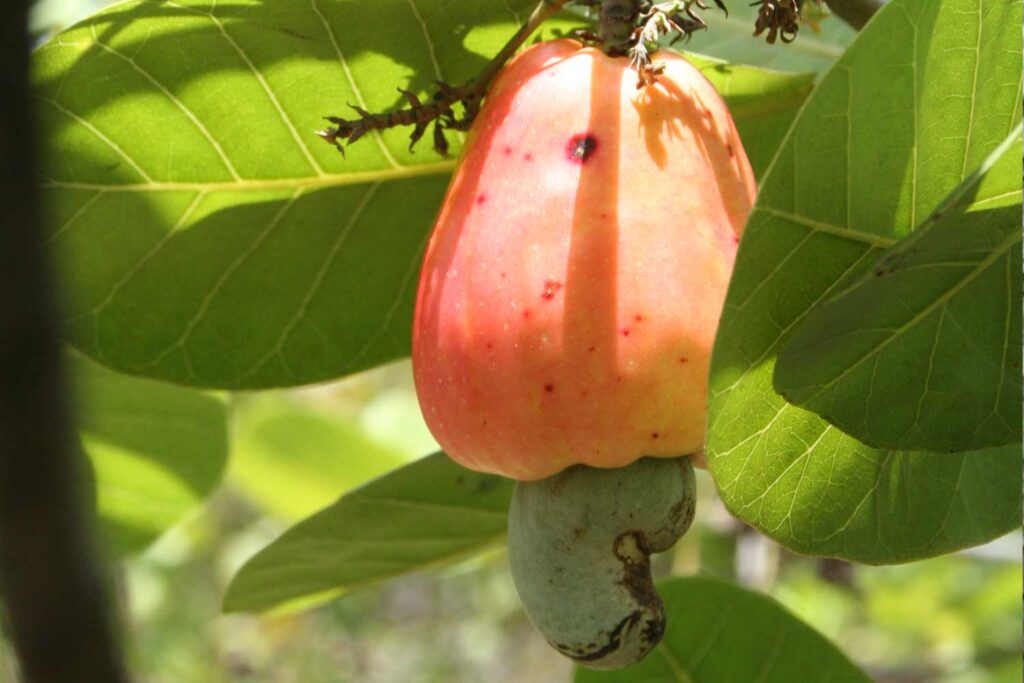
Top Producing Countries at a Glance
| Rank | Country | Region | ~Annual RCN (t) | Role |
|---|---|---|---|---|
| 1 | Côte d’Ivoire | W. Africa | ~1,044,000 | Grower (rising processor) |
| 2 | India | Asia | ~782,000 | Grower + major processor |
| 3 | Vietnam | Asia | ~348,000 grown | #1 processor/importer |
| 4 | Benin | W. Africa | ~204,000 | Grower |
| 5 | Tanzania | E. Africa | ~189,000* | Grower |
| 6 | Indonesia | Asia | ~164,000 | Grower |
| 7 | Mozambique | E. Africa | ~157,000 | Grower |
| 8 | Brazil | S. America | ~130,000 | Grower + processor |
| 9 | Ghana | W. Africa | ~116,000 | Grower |
| 10 | Guinea-Bissau | W. Africa | ~115,000 | Grower |
| — | Nigeria | W. Africa | ~88,000 | Grower |
| — | Cambodia | Asia | large grower | Re-exporter to Vietnam |
*Tanzania’s 2024/25 season reached over 500,000 t — recent national figures run well above the older ~189,000 t.
Africa: The Raw-Cashew Heartland
Africa grows over half the world’s raw cashews, led by Côte d’Ivoire and spread across some 20 countries — Benin, Tanzania, Guinea-Bissau, Ghana, Mozambique, Nigeria and more. Historically most of this crop shipped out raw, but momentum toward local processing is strong — see West Africa cashew processing and raw cashew processing in Africa.
Asia: The Processing Powerhouses
Vietnam and India dominate processing: Vietnam is the world’s top kernel exporter and a major importer of African RCN, while India both grows and processes at scale. Between them they historically shelled the large majority of Africa’s raw crop — see Vietnam cashew nut prices and cashew machines for Vietnam.
Growers vs Processors — the Value Gap
The core imbalance: kernels are worth far more than raw nuts, yet the raw crop is grown in Africa and the value-adding processing has been done in Asia. Closing that gap by processing at origin is the opportunity driving new plants across Africa — and increasingly in emerging Asian origins like Indonesia, Sri Lanka and Bangladesh.
Where Processing Is Shifting
Export bans and local-purchase policies (Benin’s 2024 raw-export ban, Côte d’Ivoire’s purchasing windows) are keeping more crop at home, and West African processing jumped ~51% in 2025. Cambodia, a large grower that re-exports to Vietnam, is another emerging processing frontier — see cashew factory in Cambodia.
Frequently Asked Questions
Which country produces the most cashews? Côte d’Ivoire, at roughly 1.04 million tonnes of raw cashew nuts a year — the world’s largest producer, ahead of India and Vietnam.
Which country processes the most cashews? Vietnam is the world’s largest cashew processor and kernel exporter, and a major importer of African raw nuts. India is the other big processing hub.
Where are cashews grown in Africa? Across about 20 countries, led by Côte d’Ivoire, with major volumes from Benin, Tanzania, Guinea-Bissau, Ghana, Mozambique and Nigeria.
Why is raw cashew grown in Africa but processed in Asia? Historically Africa lacked local processing capacity, so it exported raw nuts to Vietnam and India, which built large, low-cost shelling industries. That value gap is now driving Africa to process more of its own crop.