Cashew Peeling Machine
Separating kernel from shell, then skin from kernel.
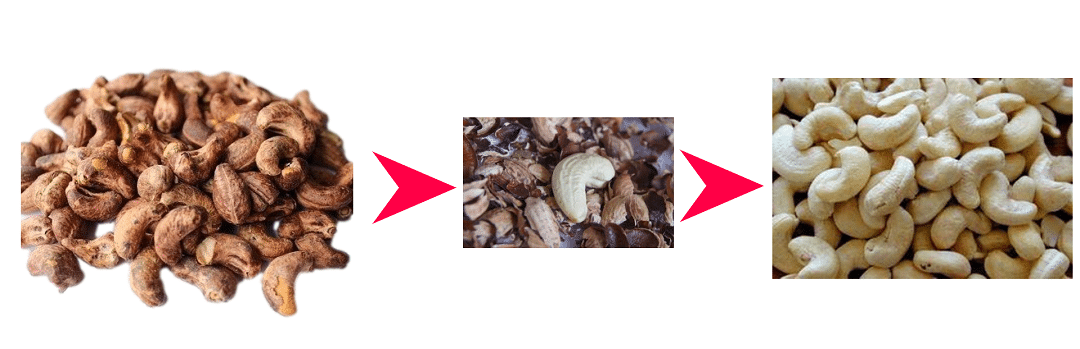
A cashew peeling machine strips the thin red-brown skin — the testa — off dried kernels to leave the clean white cashew that buyers pay a premium for. After shelling and drying, every kernel still wears this papery layer, and removing it by hand is one of the slowest, most labour-heavy jobs in the plant: a single worker manually peels only around 10 to 12 kg of kernels a day. A machine does it far faster — kernels are scrubbed between a rotating drum and a steel brush to loosen the testa, then blasted with high-pressure air that carries the skin away. CASHEW TECH supplies models from 100 to 400 kg per hour by head count, each matched to an air compressor, running at a 98% peeling rate. This page covers how peeling works, capacity by head count, the compressor that makes it efficient, and how to choose the right machine for your line.
Peeling is where whole-kernel value is finally locked in or lost: a gentle, well-tuned machine keeps the fragile kernels whole, while cheap, poorly-built equipment can break up to 30% of them.
What a Cashew Peeling Machine Does
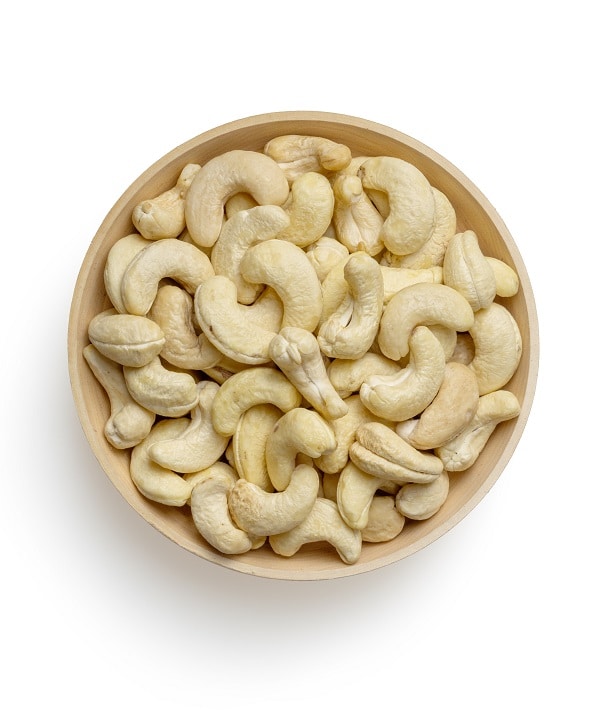
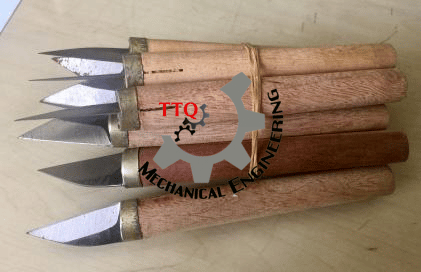
The job is precise — lift a skin thinner than paper without cracking the kernel underneath. Once the shell is off and the kernel is dried, the testa clings tightly, and it has to go before the kernel can be graded and sold, because the market wants a clean white kernel, not a skin-flecked one. A cashew peeling machine loosens and removes that testa in a continuous flow, turning out kernels ready for grading and packing. The output feeds straight into sorting, so the quality of peeling sets the grade — and the price — of everything that follows. On a well-run machine, around 80–85% of output comes through as white wholes; the remainder that the machine can’t fully clear is finished by hand with a blade.
How the Machine Lifts and Removes the Testa
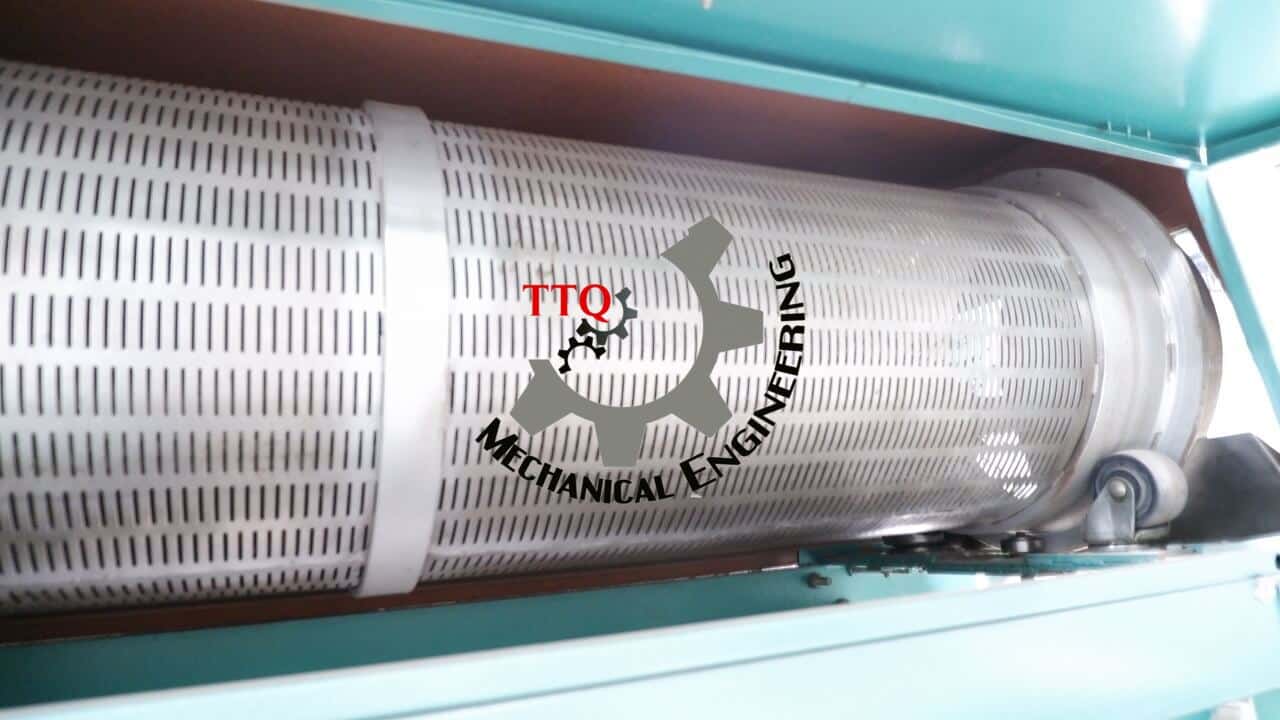
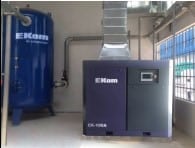
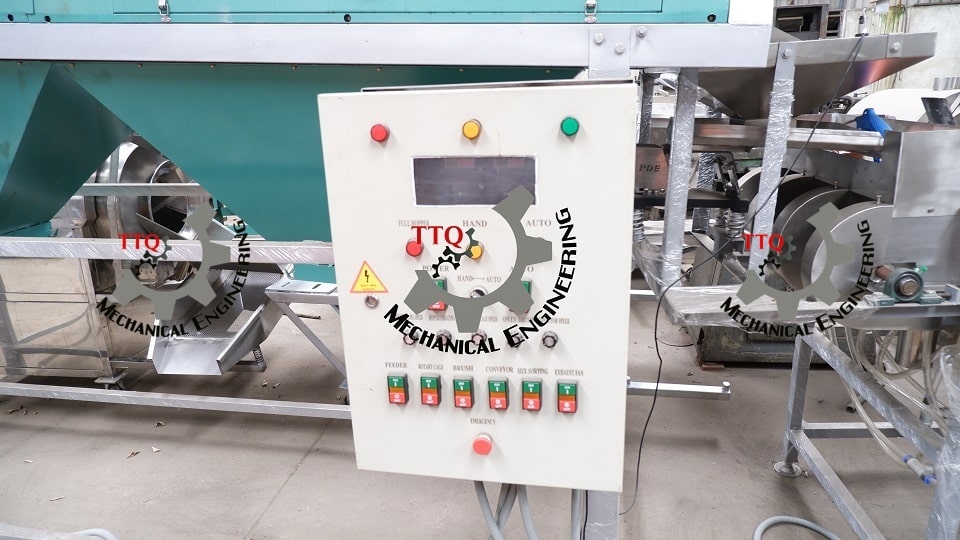
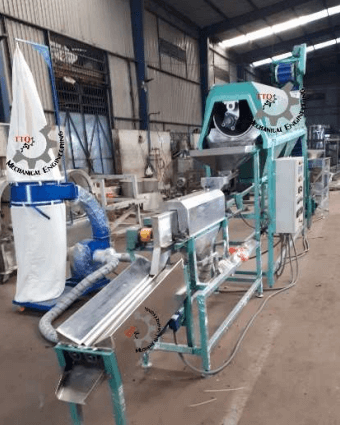
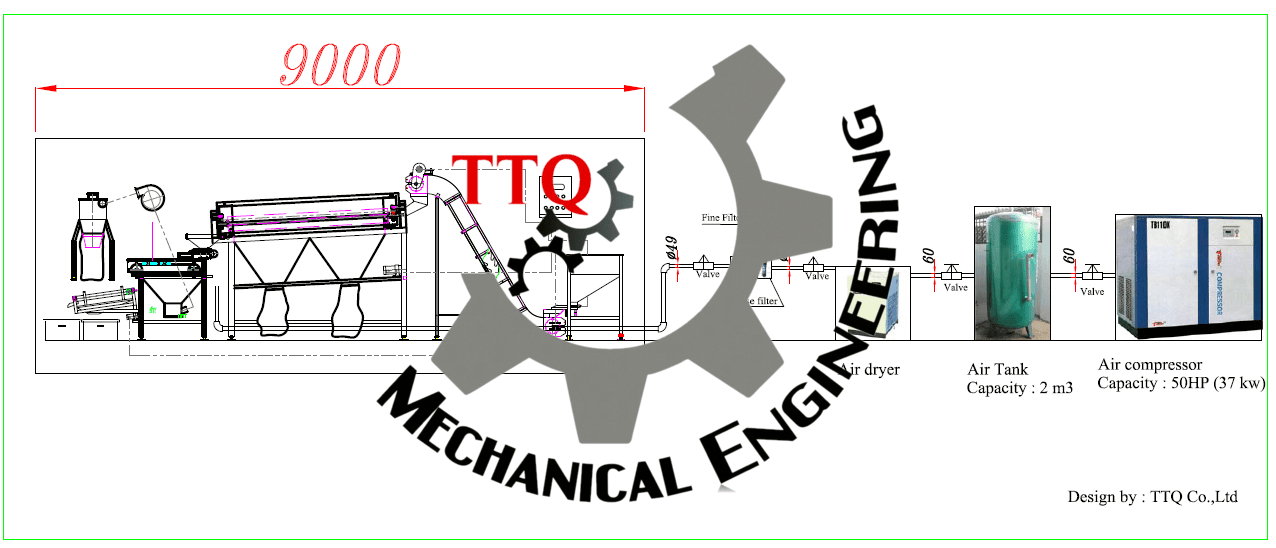
The mechanism has two stages: scrub, then blow. Kernels are rubbed between a rotating drum and a steel brush, which loosens the testa without gripping the kernel hard enough to crack it. Then high-pressure air, fed by a compressor, blows the loosened skin off the kernel and carries it away for collection. The air stage is not optional — without a compressor a peeler will still run, but much of the skin stays stuck to the kernel and the output needs heavy hand touch-up, which defeats the purpose.
Preparation upstream matters too: kernels are dried, then lightly humidified before peeling, which reduces brittleness so the skin lifts cleanly and fewer kernels crack in the drum. A peeler is judged as much on how few kernels it cracks as on how fast it runs — the breakage rate on well-built equipment stays under 10%, while cheap, poorly-built machinery can run as high as 30%.
Capacity and Air Compressor by Head Count
Peeling throughput scales with the number of heads, and each rating needs a matched compressor to supply the air.
| Configuration | Peeling capacity | Air compressor |
|---|---|---|
| 1-head | 100–150 kg/hr | 30 HP |
| 2-head | 200–250 kg/hr | 50 HP |
| 3-head | 250–300 kg/hr | 75 HP |
| 4-head | 300–350 kg/hr | 100 HP |
The compressor is as important as the peeler itself — undersize it and the air blast is too weak to strip the skin cleanly, so factor it into both the budget and the power plan. Across CASHEW TECH’s own range, that works out to roughly one horsepower of compressor for every three to four kilograms of hourly output. Match the machine’s rating to your drying and sorting throughput so the stage neither starves nor floods its neighbours.
Where Peeling Fits: After Drying, Before Grading
In the process flow, peeling sits between drying and grading. Kernels come off the automatic cashew shelling machine, pass through the cashew dryer machine to bring moisture to the right level, and then reach the peeler, which strips the testa. From there the clean white kernels move to the cashew nut sorting machine for grading by size and colour before packing. Because peeling quality decides how many wholes survive to grading, it is tuned together with the drying ahead of it. For the wider picture, see how the testa is handled in the cashew husk and testa reference, the grades peeled kernels are sorted into in the cashew kernels guide, and the whole sequence in the cashew manufacturing process.
Choosing the Right Machine
Choosing a peeler comes down to four things:
Capacity: match the machine’s rating to your line, sized against your drying and sorting rates with a little headroom.
Air compressor: specify it properly — it is the component most often undersized, and a weak air supply is the most common reason a peeler under-performs.
Breakage rate: weigh it above the sticker price, because a machine that breaks fewer kernels pays for itself in higher grades within a season.
Hygiene: peeled kernels are handled bare, so a well-lit, clean peeling room and basic hand-hygiene practice for staff matter as much as the machine itself.
A cashew peeling machine chosen on these points, and paired with the right compressor, holds both its grade and its output for years rather than months. For buyers planning the whole factory, the cost of a cashew processing plant and the blueprint for a modern cashew processing unit put the peeling stage in context, and the cashew machines hub shows how it sits in the line.
Request a Quote
Tell us your target capacity and whether you run a compressor on site, and we’ll size the right peeler and quote it. Request a quote or book a consultation, or message us directly on WhatsApp from the button in the corner of any page.
Watch it in action