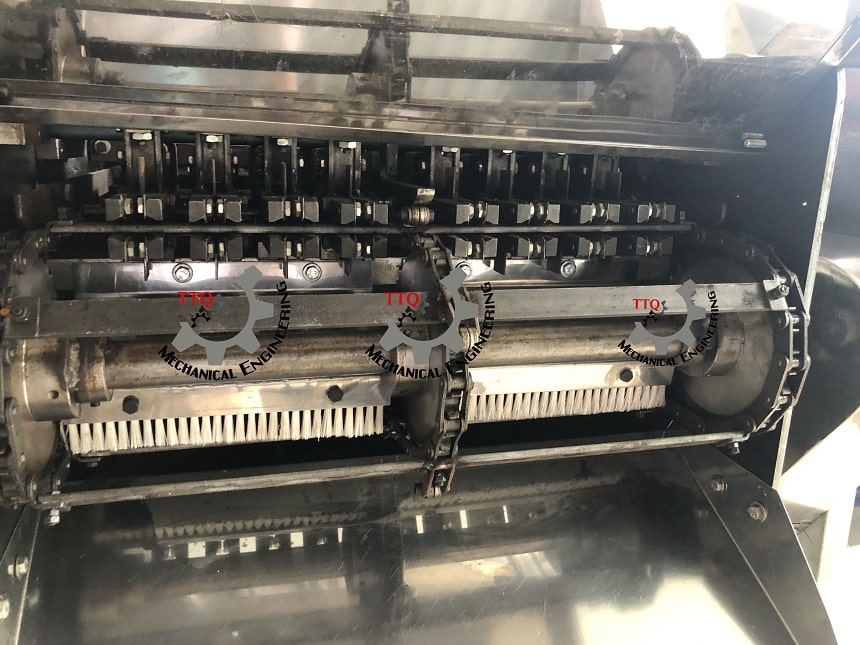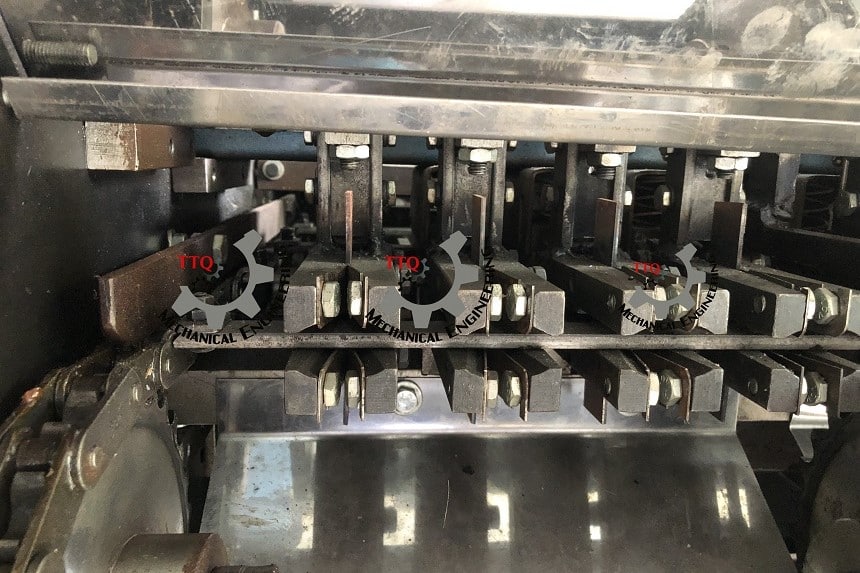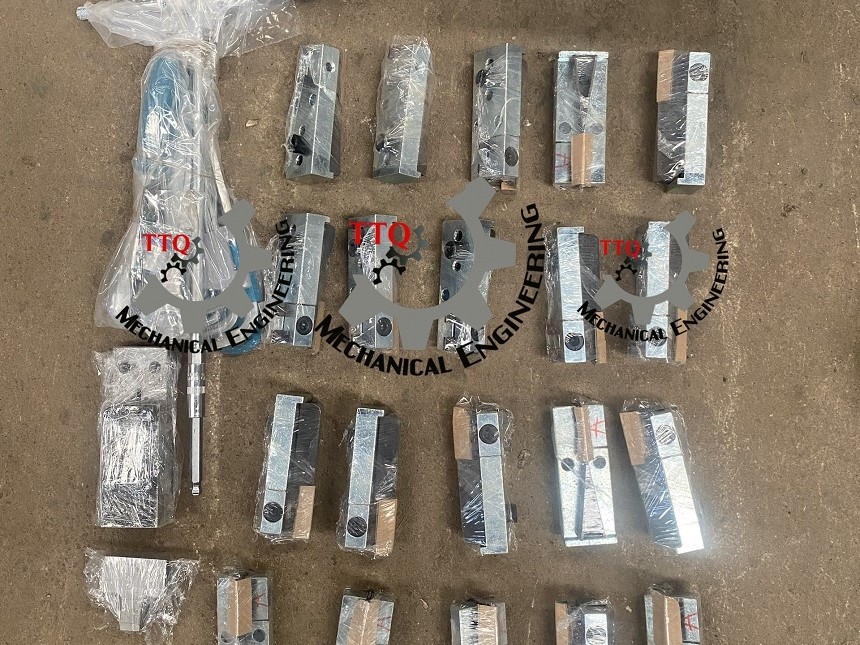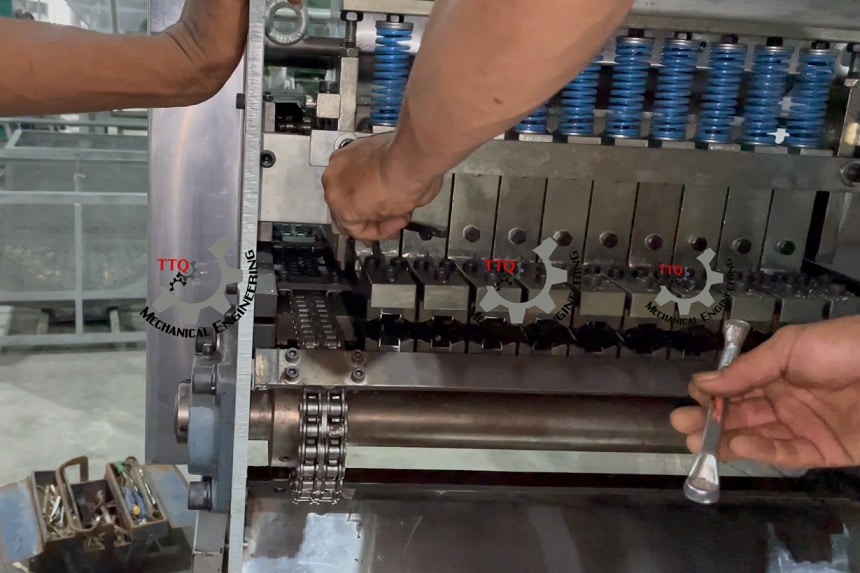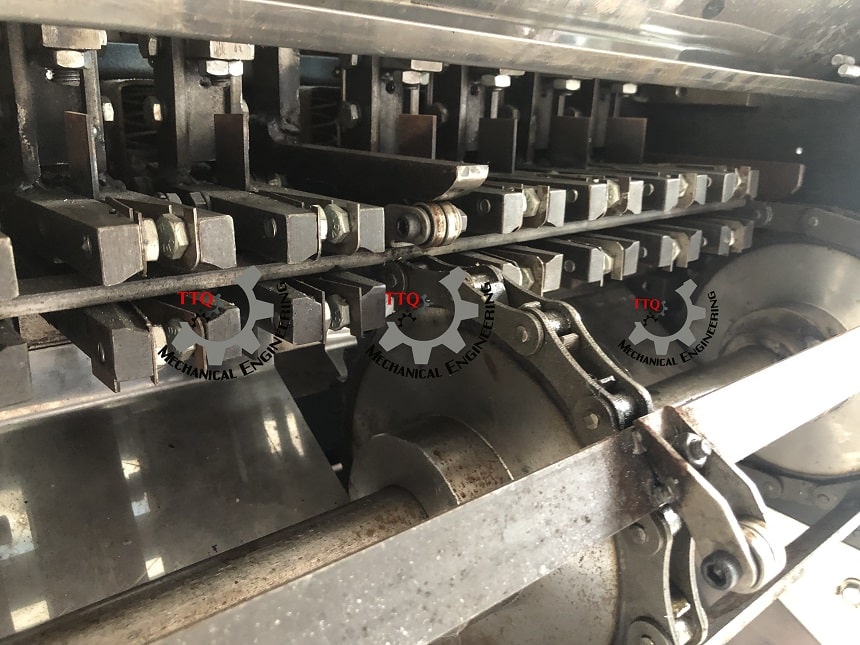
A cashew cutting blade is the hardened steel blade inside a cashew cutting/shelling machine that splits the hard shell of a steamed raw cashew nut along its natural curved seam, so the kernel can be released whole rather than broken. It is not a knife for the cashew apple (the fruit) — it is the precision tool that opens the shell at the shelling stage. Because it takes the wear of every cut, the blade is a consumable spare, and its condition directly sets your whole-kernel recovery.
How the blade cuts the shell
Cashew shells are tough, curved and lined with caustic CNSL. In a cutter, the nut is held with its seam aligned and two blades close on it from both sides, tracing the shell’s natural joint to score and split it without slicing into the kernel. A pin or scoop then lifts the two shell halves clear. Blades therefore come as a matched pair, profiled to the nut’s curvature — the shape is what keeps the cut on the shell and off the kernel.
Why hardened steel
The shell is abrasive and oily, so blades are made from high-carbon or alloy tool steel, hardened and precision-ground. That combination gives a keen edge that survives the shell’s grit and the CNSL without dulling too fast — the difference between a clean split and a crushed, contaminated kernel.
Matching blades to nut size
A blade set is tuned to a nut-size band. This is exactly why raw cashew is size-sorted before cutting: matched nut and blade give the cleanest split and the highest share of unbroken wholes. Feed a range of sizes through one setting and both the broken rate and the unshelled rate climb.
| Attribute | Cashew cutting blade |
|---|---|
| Function | Splits the RCN shell to release the kernel whole |
| Material | Hardened high-carbon / alloy tool steel |
| Configuration | Matched pair, profiled to nut curvature |
| Sized to | A specific nut-size band (sort before cutting) |
| Nature | Consumable spare — wears, then replaced |
| Fits | Cashew cutting / shelling machines, hand cutters |
Blade wear and your outturn
A sharp, correctly matched blade is one of the cheapest levers on whole-kernel recovery. As edges dull or chip, cuts wander off the seam — breaking kernels and smearing CNSL onto them — so blades are replaced on a schedule set by throughput, nut hardness and moisture. CASHEW TECH supplies cutting blades and spares sized to your machines; contact us with your cutter model and nut grades for the right set.
Frequently asked questions
What is a cashew cutting blade?
It is the hardened steel blade in a cashew cutting or shelling machine that splits the hard shell of a steamed raw cashew nut along its natural curve, so the kernel can be lifted out whole. Blades work as a matched pair shaped to the nut.
What are cashew cutting blades made of?
High-carbon or alloy tool steel, hardened and ground to a keen edge, so they cut the tough, oily shell cleanly and hold their edge through thousands of cuts before needing replacement.
Do the blades need to match the nut size?
Yes. A set of blades is profiled for a particular nut size band, which is why raw cashew is size-sorted before cutting. Feeding unsorted nuts to one blade set raises breakage and unshelled rates.
How often do cutting blades need replacing?
Blades are a consumable — they dull and chip with use and are changed on a schedule that depends on throughput, nut hardness and moisture. Running blunt blades increases broken kernels and CNSL smearing, so timely replacement protects your whole-kernel outturn.
Watch it in action