Cashew kernel prices per kg are set mainly by grade: larger whole grades like W180 and W240 cost more per kg than smaller wholes like W320 and W450, and far more than broken grades (splits, butts, pieces). On top of grade, wholesale/bulk prices sit well below retail, and the whole market moves with the raw-nut crop, origin, the US dollar, freight and demand. Because kernel prices change daily, this page explains the drivers and the price hierarchy rather than quoting a number that would be stale tomorrow — for a firm figure, request a current quote.
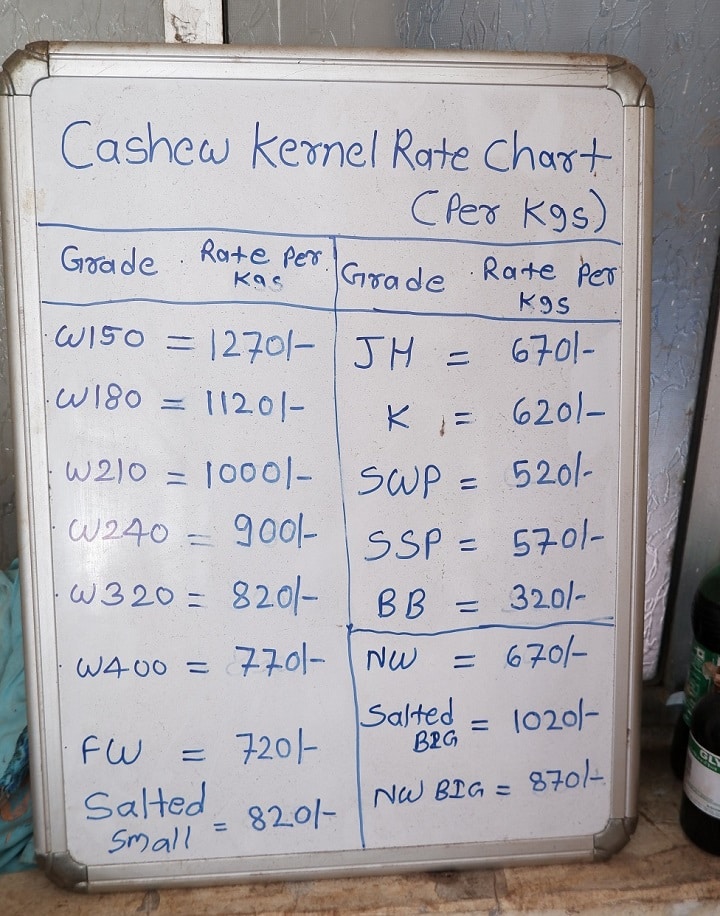
What Drives Cashew Kernel Prices
Several forces set the price at any moment:
- Grade — size and colour; whole whites command the most, brokens the least.
- The raw-nut (RCN) crop — a big harvest lowers input costs; a short crop raises them.
- Currency — kernels trade in US dollars, so exchange rates move landed cost.
- Freight and demand — shipping costs and seasonal buying (festivals, year-end) swing prices.
- Benchmark origins — Vietnam and India processing volumes set the tone for global kernel prices.
Price by Grade (the Hierarchy)
Grade sets the ladder. Relative to the benchmark W320, larger grades carry a premium and smaller or broken grades a discount.
| Grade | Count per lb | Relative price |
|---|---|---|
| W180 | ~170–180 | Highest |
| W240 | ~220–240 | Premium |
| W320 | ~300–320 | Benchmark |
| W450 | ~400–450 | Below W320 |
| Splits / Butts | broken wholes | Discount to wholes |
| Pieces (LWP/SWP) | broken | Lowest |
As a broad, indicative guide, whole white grades trade in the mid-to-high single digits of US dollars per kg wholesale, with brokens lower and retail well above — but treat any figure as dated and confirm the current market.
Wholesale vs Retail
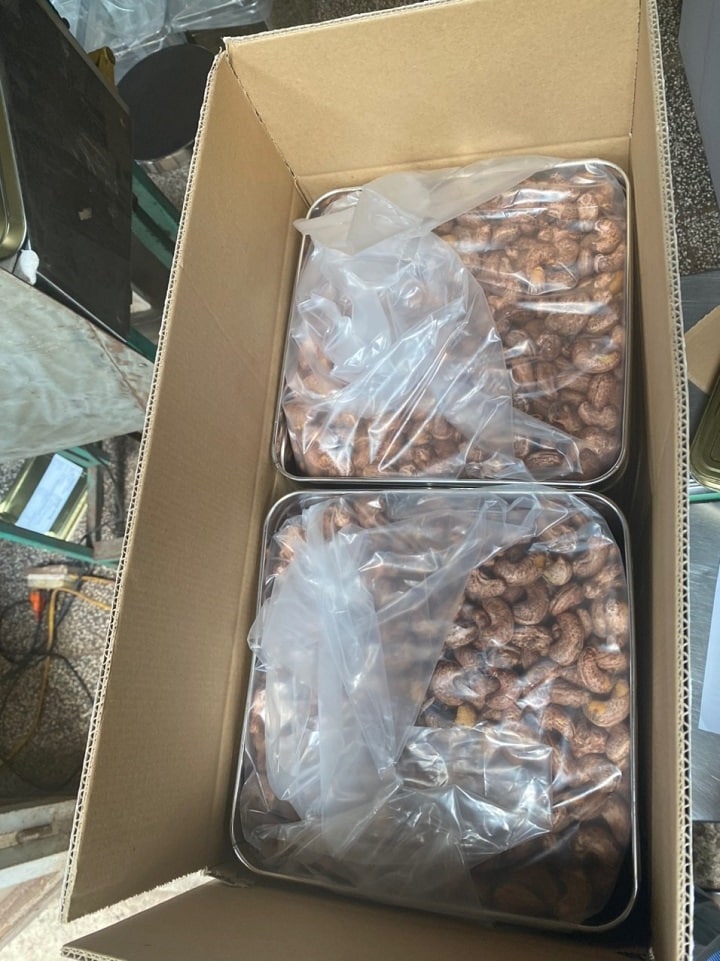
Bulk export prices (per 22.68 kg tin, FOB or CIF) are considerably lower per kg than the small retail packs consumers buy, which carry packaging, branding, distribution and margin. When comparing “the cashew price,” always check whether a quote is wholesale FOB or retail — they are not the same market.
Origin & Currency Effects
The same grade can be priced differently by origin (Vietnam, India, Africa) depending on processing cost, quality reputation and freight to the buyer. Because trade is dollar-denominated, a buyer’s local-currency cost also shifts with exchange rates independent of the kernel price itself.
How to Read a Cashew Price Quote
A proper quote names the grade (e.g. WW320), the price and unit (USD per lb or per kg), the basis (FOB origin or CIF destination), the pack (e.g. 22.68 kg vacuum tin) and the shipment period. “WW320 @ x USD/lb, FOB, 50 lb tins” is a complete quote; a bare “cashews at $y” is not.
Getting a Current Quote
Because prices move daily, the reliable number is a live one. Tell us the grade, quantity, destination and pack you need and we will return a current quote. For the by-product side of plant economics, see CNSL price; for Vietnam-specific pricing, Vietnam cashew nut prices; and for classification codes, cashew kernels HS code.
Frequently Asked Questions
How much do cashew kernels cost per kg? It depends on grade, whether you buy wholesale or retail, and the current market. As a broad guide, whole white grades trade in the mid-to-high single digits of USD per kg wholesale, with retail higher and brokens lower — always confirm a live quote, as prices change daily.
Why is W240 more expensive than W320 per kg? W240 kernels are larger and scarcer, so they carry a premium over the benchmark W320. Larger whole grades generally cost more per kg than smaller ones.
What is the difference between wholesale and retail cashew prices? Wholesale/bulk prices (large tins, FOB/CIF) are much lower per kg than retail packs, which add packaging, branding and distribution margin. Compare like with like when reading a price.
What makes cashew prices go up or down? The size of the raw-nut crop, the US dollar, freight costs, seasonal demand, and processing volumes in benchmark origins like Vietnam and India. A short crop or strong demand pushes prices up; a big crop pushes them down.