The cashew shell is the hard, kidney-shaped outer casing of the raw cashew nut, removed before the kernel can be eaten. It is layered, with a spongy honeycomb (mesocarp) that holds cashew nut shell liquid (CNSL) — a caustic, phenolic oil making up roughly 25–35% of the shell’s weight. The shell is inedible and its liquid irritates skin, which is why the nut is steamed or roasted before shelling. Far from being pure waste, the modern shell is a resource: it burns as a biomass fuel and yields CNSL, a valuable industrial oil. This page covers the shell’s structure, its CNSL content, why it is caustic, and how it is turned from waste into value.
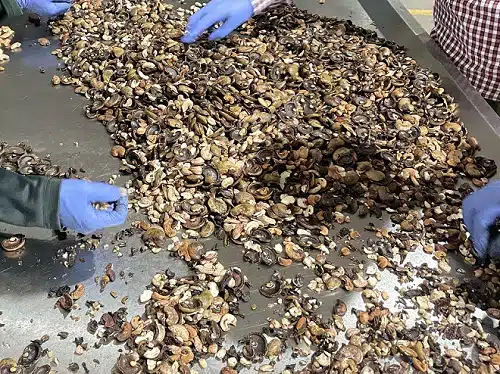
What Is the Cashew Shell
The shell is the pericarp of the cashew fruit — the tough case surrounding the seed (kernel). Each raw cashew nut is a single seed in this shell, attached to the base of the cashew apple. Because the shell is hard and its oil is caustic, opening it cleanly without contaminating the kernel is the central challenge of processing.
Structure and Layers
The shell has three zones: a leathery outer skin (epicarp), a middle honeycomb layer (mesocarp) riddled with cells that store CNSL, and a hard inner shell (endocarp) against the kernel. The kernel itself sits inside, wrapped in its thin testa. It is the honeycomb mesocarp that makes the shell valuable — and messy — because that is where the oil is held.
CNSL: The Liquid Inside
CNSL is a dark, viscous oil rich in anacardic acid, which converts under heat into cardanol (with cardol also present). At roughly 25–35% of shell weight, it is a genuine industrial feedstock used in resins, coatings, friction materials and bio-based chemistry. Its market and grades are covered on the CNSL price page, and the recovery methods on the shell-liquid extraction process page.
Why the Shell Is Caustic
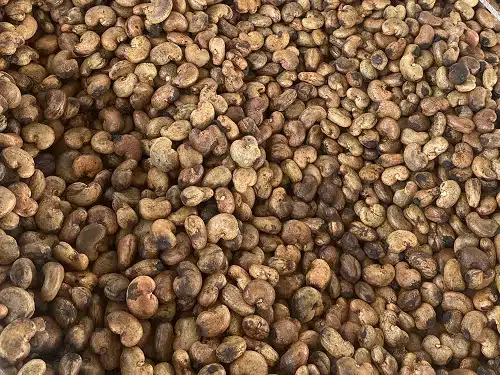
The anacardic acid and cardol in CNSL are phenolic compounds in the same chemical family as urushiol, the irritant in poison ivy. Contact can cause skin burns and blistering, so raw shells must be handled with care and the nut conditioned (steamed or roasted) to neutralise and contain the oil before shelling. This is also why cashews are never sold to consumers in the shell — see the benefits of cashew in shell.
From Waste to Value: Fuel and CNSL
A processing plant produces far more shell than it can pay to dump, so the shell is put to work.
| Shell use | Description | Value driver |
|---|---|---|
| Fuel | Whole or de-oiled shell burned for process heat | Free on-site energy; replaces bought fuel |
| CNSL extraction | Oil recovered before or instead of burning | Saleable industrial bio-oil |
| De-oiled shell cake | Residue after CNSL removal | Still burns as a drier, cleaner fuel |
The shell’s energy density makes it an ideal biomass fuel for a plant’s own steaming and drying — see the cashew shell burner. Many plants extract CNSL first, then burn the de-oiled cake, capturing both revenue streams from one shell.
Handling and Disposal
Raw shell should not be burned in open fires, as the CNSL fumes irritate the airways; it is fired in a purpose-built furnace instead. Where it is not used for fuel or CNSL, shell can be composted or processed into board and briquettes, but on-site energy recovery is now the standard, cleanest route.
Frequently Asked Questions
What is inside a cashew shell? A honeycomb layer holding cashew nut shell liquid (CNSL) — a caustic phenolic oil rich in anacardic acid — surrounding the edible kernel, which is itself wrapped in a thin red-brown testa.
How much CNSL is in cashew shell? Roughly 25–35% of the shell’s weight, which is what gives the shell its high energy value and its commercial appeal as a bio-oil source.
Can cashew shells be burned for fuel? Yes. Cashew shell is an energy-dense biomass fuel, burned in a purpose-built shell burner to raise steam and hot air for the plant’s steaming and drying stages — not in open fires, because of the CNSL fumes.
Why is the cashew shell dangerous to touch? Its CNSL contains anacardic acid and cardol, phenols in the same family as poison-ivy urushiol, which can cause skin irritation and blistering. That is why nuts are conditioned before shelling.