Buying the machines is only the start — a cashew plant needs installation and commissioning, operator and maintenance training, and an ongoing preventive-maintenance programme to actually run at its rated capacity and outturn. The service arc is: install and connect the line, commission it with trial runs and calibration, train operators and maintenance staff, then keep it running with scheduled upkeep (blade replacement, lubrication, boiler and dryer checks) and a reliable spares supply. Proper install and training directly protect whole-kernel yield and uptime. CASHEW TECH provides this as part of turnkey delivery or as standalone support.

Installation & Commissioning
Installation places and connects every machine to the plant layout, with electricals, steam and utilities hooked up and each unit levelled and aligned. Commissioning then powers the line up, checks mechanical and electrical function, and runs it to prove it works as one — supervised by an experienced engineer.
Trial Runs & Calibration
Before handover, the line is run on real nuts and calibrated: cutter gaps set to nut size, steaming and drying parameters tuned, and the whole line balanced so no stage starves or bottlenecks the next. Trial runs confirm the plant hits its rated capacity and target outturn, not just that the motors turn.
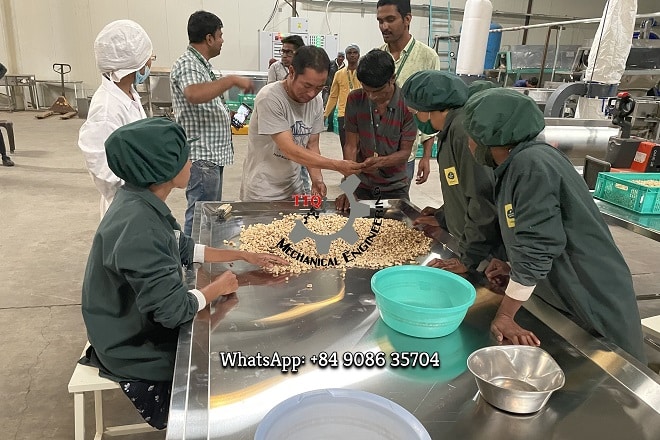
Operator Training
Operators are trained hands-on to run each stage — feeding and calibration, steaming cycles, cutting and peeling technique, grading, and safe handling of caustic CNSL. Well-trained operators are one of the biggest protectors of whole-kernel yield, since technique at cutting and peeling directly affects breakage.
Maintenance Training
Maintenance staff are trained to keep the line healthy: blade replacement and gap adjustment, lubrication, boiler and dryer servicing, and control-panel/PLC checks. The aim is a team that can prevent and fix common faults without waiting on outside help.
Preventive Maintenance Schedule
| Component | Task | Frequency |
|---|---|---|
| Cutter blades | Sharpen / replace, adjust gap | As they wear (regularly) |
| Moving parts | Lubricate (food-grade) | Routine / per shift |
| Boiler | Inspect, blow down, service | Scheduled / annual |
| Dryer & fans | Clean, check airflow | Routine |
| Electrical panel / PLC | Inspect connections, test | Periodic |
| Whole machine | Clean (CNSL is corrosive) | Daily |
Cleaning daily and replacing blades on time are the two habits that most protect both hygiene and yield.
Spare Parts & Consumables
A stock of blades, belts, seals and common wear parts keeps a fault from becoming downtime — especially in a remote plant. Confirm spares availability with your supplier and hold a working buffer; CASHEW TECH ships spares and offers remote support.
Troubleshooting & Support
Most problems trace to a few causes — worn blades, mis-set gaps, over- or under-conditioning, or over-drying — and a trained team plus remote support resolves them quickly. Persistent yield or throughput issues are exactly what a processing consultancy audit addresses.
Service Options (Turnkey vs Standalone)
Installation, commissioning, training and maintenance come built into a turnkey plant, or as standalone support for operators who bought machines separately or need help lifting an existing line’s performance. Browse the equipment on the product list, and contact us to scope install, training or a maintenance plan.
Frequently Asked Questions
How is a cashew processing machine installed? It is placed to the plant layout, connected to power, steam and utilities, levelled and aligned, then commissioned with trial runs and calibration — supervised by an experienced engineer — until it hits its rated capacity and outturn.
What training do operators need? Hands-on training on every stage: feeding and calibration, steaming, cutting and peeling technique, grading, and safe CNSL handling. Operator technique strongly affects breakage, so training directly protects yield.
How often do cutting blades need replacing? On a wear-based schedule — worn blades tear kernels and force a wider gap, so processors adjust gaps and replace blades regularly. Daily cleaning and food-grade lubrication extend their life.
What maintenance does a cashew plant require? Daily cleaning (CNSL is corrosive), routine lubrication, regular blade replacement, scheduled boiler and dryer servicing, and periodic electrical/PLC checks — plus a spare-parts buffer to avoid downtime.