Cashew nut shell liquid (CNSL) is a valuable phenolic bio-oil held in the honeycomb layer of the cashew shell, at roughly 25–35% of shell weight. It is extracted by three main routes: hot-oil-bath (roasting) extraction, mechanical/expeller pressing, and solvent extraction. Natural CNSL is rich in anacardic acid; heating decarboxylates it into cardanol, the workhorse molecule of technical CNSL. The method chosen trades yield against quality and capital cost. This page explains what CNSL is, the three extraction methods, natural versus technical grades, and the equipment involved — the by-product market itself is covered on the CNSL price page.
What Is CNSL & Why Extract It
CNSL is a dark, viscous, non-edible phenolic oil whose main constituents are anacardic acid (the majority in natural CNSL), cardol and cardanol, plus polymeric material. Its thermal stability, friction and wear resistance and compatibility with polymers make it a renewable substitute for petroleum phenols — so recovering it turns shell “waste” into a revenue stream. See cashew shell for the material.
Hot-Oil-Bath (Roasting) Method
The most common route: shells (or whole in-shell nuts) are passed through a bath of hot oil — usually CNSL itself — at about 180–200 °C. The heat drives CNSL out of the shells into the bath; the mixture is cooled and the denser CNSL separated by decantation or centrifuge, then refined. It is simple and high-yielding, but energy-intensive and needs fire safety given the flammable oil.
Mechanical / Expeller Pressing
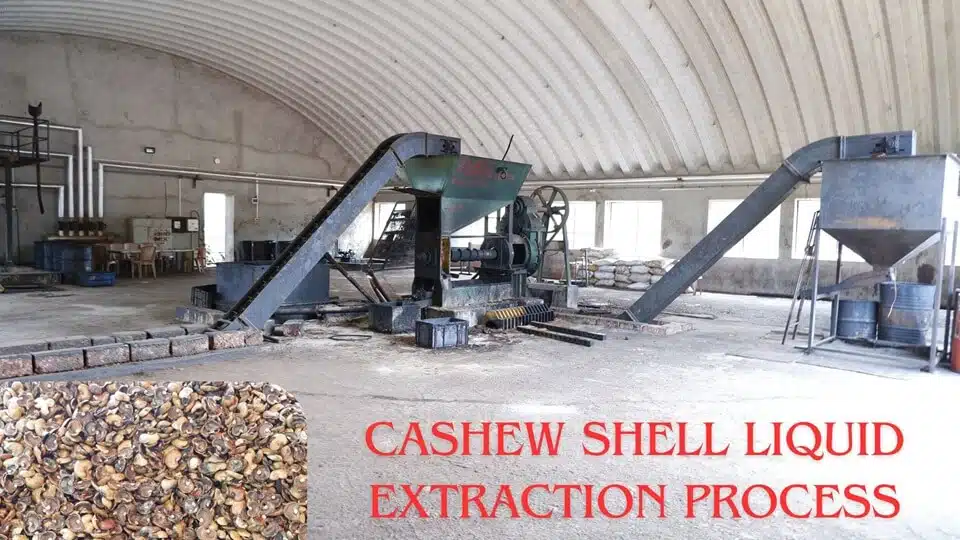
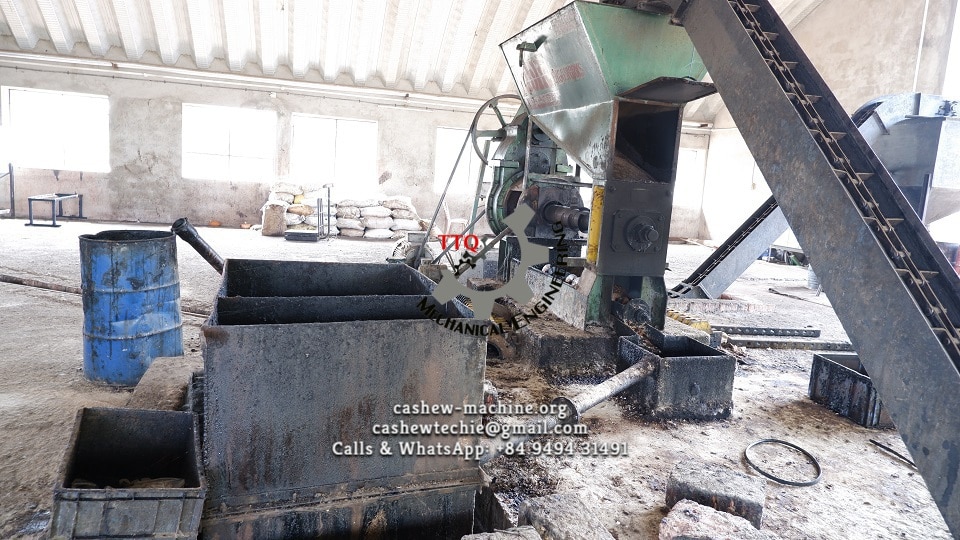
Shells are fed by elevator into an expeller (shell press) that crushes them under force, squeezing out the liquid while de-oiled shell cake exits the other end. The raw pressed liquid is impure (it carries sulphur and particulates) and is settled with inhibitors before refining. The de-oiled cake still burns as fuel — see the cashew shell burner.
Solvent Extraction
Shells are ground to a powder and mixed with a solvent (hexane, petroleum ether or acetone); the CNSL dissolves, the shell particles are filtered off, and the solvent is recovered by distillation for re-use. Solvent extraction runs at lower temperature (less thermal degradation) and gives high, selective yields, but adds capital cost, solvent-recovery systems and safety/environmental handling.
Natural vs Technical CNSL (Cardanol)
Natural CNSL — as pressed or solvent-extracted at low heat — is rich in anacardic acid. Technical CNSL is heat-processed so the anacardic acid decarboxylates into cardanol; further distillation removes cardol to leave distilled cardanol, the highest-value fraction used in coatings and resins.
Yields & Quality
| Method | Yield | CNSL quality | Capex | Notes |
|---|---|---|---|---|
| Hot-oil bath | High | Good (technical) | Moderate | Energy-intensive; fire risk |
| Mechanical expeller | Moderate | Impure, needs refining | Lower | De-oiled cake burns as fuel |
| Solvent | High, selective | High (near-natural) | Higher | Needs solvent recovery |
Many plants combine methods — primary extraction by hot oil or expeller, then solvent refining or distillation for purity and fractionation.
Equipment Overview
A CNSL plant typically pairs a shell press/expeller with bucket elevators and conveyors, a reaction/settling vessel, a wood- or shell-fired steam boiler, storage tanks and a control panel. The buy-side detail is on the shell oil extraction machine page.
Frequently Asked Questions
How is CNSL extracted from cashew shells? By three main methods: a hot-oil bath at 180–200 °C that drives the oil out of the shells, a mechanical expeller that presses it out, or solvent extraction from ground shells. Each is followed by refining.
How much CNSL is in a cashew shell? Roughly 25–35% of the shell’s weight, held in the spongy honeycomb layer around the kernel.
What is the difference between natural and technical CNSL? Natural CNSL is rich in anacardic acid; heating decarboxylates that into cardanol, giving technical CNSL. Distilling further yields cardanol, the highest-value grade.
What is CNSL used for? As a renewable phenol substitute in friction materials (brake linings), coatings and paints (phenalkamine curing agents), resins and specialty chemicals. See CNSL price & market.