Before a cashew is harvested it passes through a clear pre-harvest cycle: the tree flowers (in panicles), sets fruit, then grows the nut and cashew apple to maturity. Readiness is judged not by picking green fruit but by waiting for the apple to colour (yellow, orange or red), the nut’s shell to turn grey-brown, and the mature nut to detach and fall — the nuts are then collected from the ground. Timing matters because maturity drives kernel quality and outturn. A cashew tree typically begins bearing fruit 2–3 years after planting. This page covers the tree’s cycle, the maturity signs, and how readiness is judged.
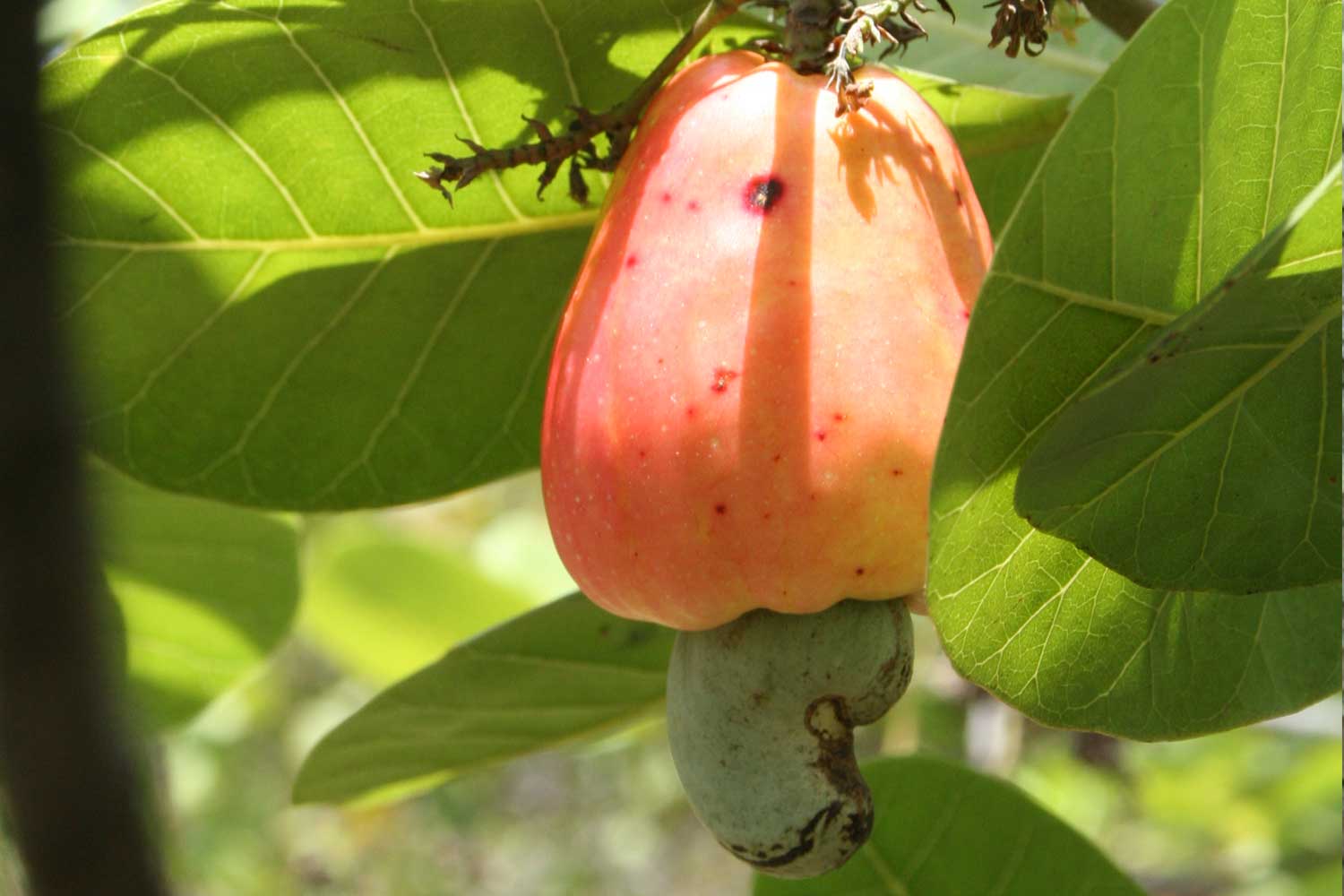
The Cashew Tree Cycle
The cashew (Anacardium occidentale) is an evergreen that, once established, follows an annual cycle of flowering, fruit set, nut development and harvest, tied to the local dry season. Good orchard management before harvest — pruning for light and air, weeding, and pest and disease control — sets up a healthy, higher-yielding crop.
Flowering & Panicles
The tree flowers in clusters called panicles, carrying small male and bisexual flowers pollinated by insects and wind. Successful pollination of the bisexual flowers is what sets the fruit, so flowering weather has a large effect on the eventual crop size.
Fruit Set & the Apple
After pollination, each fertilised flower develops the cashew apple — a fleshy, swollen stalk (a pseudofruit) — with the true fruit, the nut, forming at its base. The apple enlarges and colours as it ripens, while the nut grows and hardens inside its shell.
Nut Development & Maturity Signs
As the crop matures, several signs appear together: the apple turns a vibrant, even colour; the nut’s shell changes from green to grey or greyish-brown; and a gently shaken apple rattles as the mature nut loosens from the wall. A mature nut finally detaches and drops with the apple — the clearest signal it is ready.
| Stage | Visual sign | Approx. timing |
|---|---|---|
| Flowering | Panicles of small flowers | Start of dry season |
| Fruit set | Apple begins to swell | Weeks after flowering |
| Development | Apple green, nut filling | Following weeks |
| Maturity | Apple coloured, nut grey, rattles | Nut detaches and drops |
Judging Readiness
Harvest readiness is judged by fallen, fully mature nuts, not by picking green — cashews are collected from the ground after they drop, not plucked early. Picking immature nuts lowers kernel size, outturn and quality, so most growers wait for natural detachment. Local variety and climate shift the exact signs, so experienced judgement helps.
Pre-Harvest Factors Affecting Quality
Quality is partly decided before harvest: orchard health, adequate water during fruit development, and pest control all shape nut size and fill. Moisture at collection also matters — nuts are dried after gathering to a safe storage moisture to prevent mould. Where mechanisation helps, a fruit separator or harvesting machine speeds handling.
Link to Harvest Season
When all this happens depends on origin — the harvest calendar runs at different times around the world. See cashew season for the country-by-country timing, and cashew nuts for the botany.
Frequently Asked Questions
How do you know when cashews are ready to harvest? When the cashew apple has coloured fully, the nut’s shell has turned grey-brown, and the mature nut detaches and drops. Cashews are collected after they fall, not picked green.
What is the cashew apple? The fleshy, swollen stalk (a pseudofruit) that the nut hangs beneath. It colours yellow, orange or red as it ripens and is edible but highly perishable, often used for juice.
How long from flower to nut? After pollination the apple and nut develop over the following weeks to maturity, varying with variety and climate, before the mature nut detaches and drops.
Are cashews picked or collected from the ground? Collected. Mature nuts drop with the apple and are gathered from the ground; picking green nuts lowers kernel size, outturn and quality.