Buying your first cashew cutting machine comes down to four decisions: your target capacity (kg of raw nuts per day), manual/semi-automatic vs automatic, the number of cutting heads/stations, and your budget — including blades and spares, not just the machine. For most first-time and small processors, a semi-automatic cutter is the sweet spot: high whole-kernel recovery and low capital, unless labour is scarce or you are already at export volumes. Buy from a supplier that provides calibration, blades and training, because the machine is only as good as the feed and setup around it. This page walks the four decisions and a recommended starter setup.
Before You Buy (Capacity & RCN Sizing)
Start from your secured raw-nut supply and target daily throughput, not the shiniest machine. Size the cutter to the nuts you can actually buy and process, and remember that cutting only works well on calibrated, sized nuts — budget for a size sorter in front of it.
Manual vs Semi-Auto vs Automatic
| Type | Throughput | Best for | Relative capex |
|---|---|---|---|
| Manual | ~30–50 kg RCN/hr | Small scale, cheap labour, highest WKR control | Lowest |
| Semi-automatic | ~80–120 kg/hr | Growing units with skilled operators | Moderate |
| Automatic | ~180–200+ kg/hr (lines far more) | Export scale, scarce labour | Highest |
The trade-offs are detailed in automatic vs manual cutting.
How Many Heads / Stations
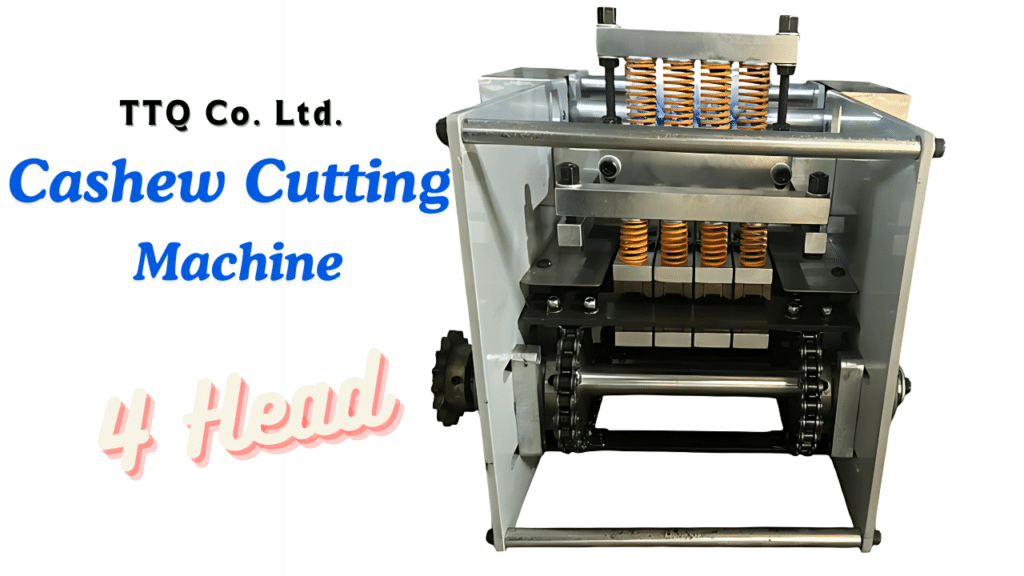
Throughput scales with cutting heads/stations — more heads, more nuts per hour, but more operators (semi-auto) and cost. Match the head count to your daily target, and choose a machine you can add stations to rather than replace as you grow.
Budget & Running Costs
Plan capital and running cost together. As an indicative guide (confirm current pricing): manual systems run roughly a few thousand dollars, semi-automatic in the low tens of thousands, and automatic systems higher again, plus power, labour and quarterly blade replacement. A cheap machine that breaks kernels or needs constant spares is no bargain — model the whole cost, not just the sticker.
Blades, Spares & Consumables
Blades are consumables that wear and directly affect whole-kernel recovery, so factor in a stock of spare blades and their replacement cadence. Confirm blade availability and cost with the supplier up front — a machine you can’t get blades for is a stranded asset. See cashew cutting blade.
Supplier, Install & Training
Buy from a supplier who calibrates the machine, supplies blades, and trains your operators — see training, installation & maintenance. Good after-sales support and spares are worth more over the machine’s life than a small saving on price.
Common First-Buyer Mistakes
The usual traps: buying on price alone; sizing the machine to ambition rather than secured supply; skipping the size sorter (so cutting breaks kernels); ignoring blade availability; and forgetting operator training. Each quietly erodes whole-kernel outturn — the number that actually pays.
Recommended Starter Setup
For most first buyers: a semi-automatic cutter matched to a size sorter, a stock of spare blades, and supplier training — high WKR, modest capex, and room to add heads as you grow. When you’re ready to scale, step up to an automatic cutting line, or have the whole line built as a turnkey plant.
Frequently Asked Questions
What cashew cutting machine should a beginner buy? For most beginners, a semi-automatic cutter matched to a size sorter — it gives high whole-kernel recovery at modest cost, with room to grow. Go manual only at very small scale, or automatic only at export volumes.
Manual or automatic for a small plant? For a small plant with available labour, manual or semi-automatic keeps capital low and whole-kernel recovery high. Automatic lines make sense once capacity or labour cost justifies the investment.
How much does a cashew cutting machine cost? Indicatively, manual systems cost a few thousand dollars, semi-automatic in the low tens of thousands, and automatic systems higher — plus blades, power and labour. Confirm current pricing, and budget for spares and a size sorter.
How many cutting heads do I need? Enough to hit your daily target: more heads means more throughput but more operators and cost. Size to your secured raw-nut supply, and pick a machine you can add heads to as you grow.