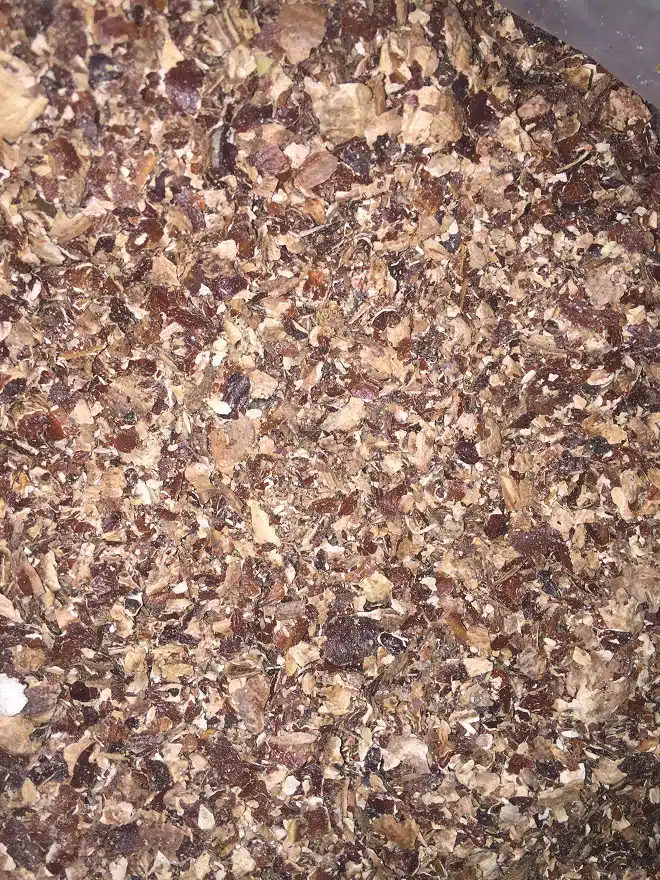
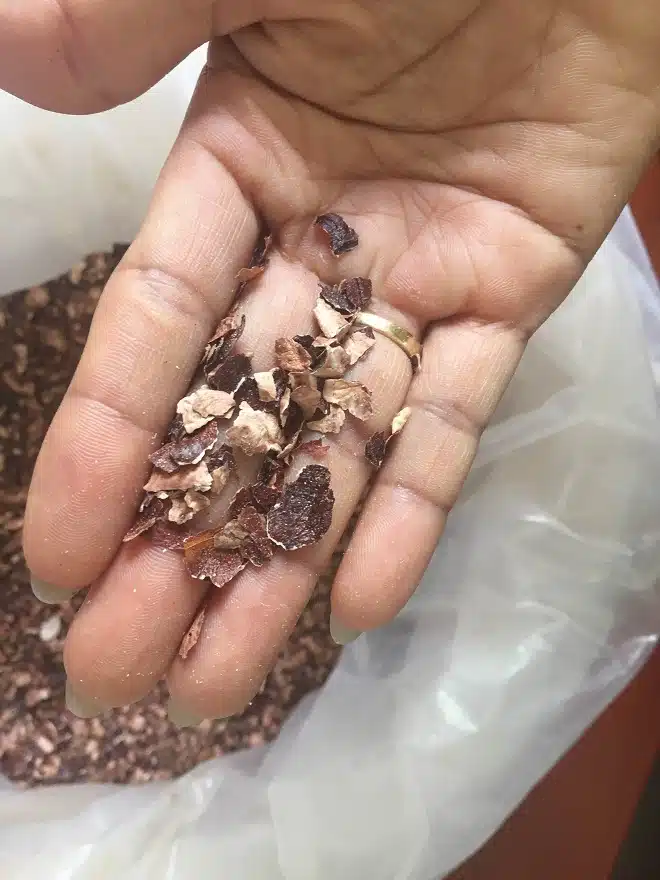
The cashew testa is the thin, red-brown skin that clings to the cashew kernel after the hard shell is removed — sometimes loosely called the husk or the cashew skin. It is a seed coat, quite distinct from the hard outer shell: the shell is the tough case around the whole nut, while the testa is the papery layer directly on the kernel. The testa is removed by peeling to produce the clean white kernels buyers want, and the removed skin, which is rich in tannins and antioxidants, has uses in animal feed and natural extracts. This page explains what the testa is, how it differs from the shell, why and how it is removed, and what becomes of it.
What Is the Cashew Testa
The testa is the seed coat of the cashew — a thin membrane wrapping the ivory kernel inside the shell. When a raw nut is shelled, the kernel comes out still covered in this red-brown skin. Only after the testa is peeled away is the kernel a “white whole” ready for grading. Its colour and how cleanly it is removed both affect the final grade.
Testa vs Husk vs Shell
These terms are often muddled, so it helps to separate them clearly.
| Term | What it is | Removed by |
|---|---|---|
| Shell | The hard outer casing of the whole nut, holding CNSL | Shelling / cutting |
| Testa (husk/skin) | The thin red-brown seed coat on the kernel | Peeling |
| Kernel | The edible white seed itself | — (the product) |
So “husk” and “testa” refer to the same thin skin on the kernel; the hard shell is a different, outer layer.
Why the Testa Is Removed
Buyers pay most for clean, uniform white kernels, so the red-brown testa must come off. Beyond appearance, peeling lets graders judge kernel colour accurately and removes a slightly astringent skin. Kernels sold with the skin left on are a niche “with testa” product; the mainstream trade is peeled white wholes and grades.
How the Testa Is Peeled Off
Peeling works best after the kernel is dried, which shrinks the kernel slightly and loosens the skin. The kernels then pass through a cashew peeling machine that rubs or air-blasts the testa away with minimal breakage, often finished by a light hand-pick. Getting drying and moisture right is what keeps peeling from cracking the kernel — see the cashew dryer machine.
Uses of Removed Testa
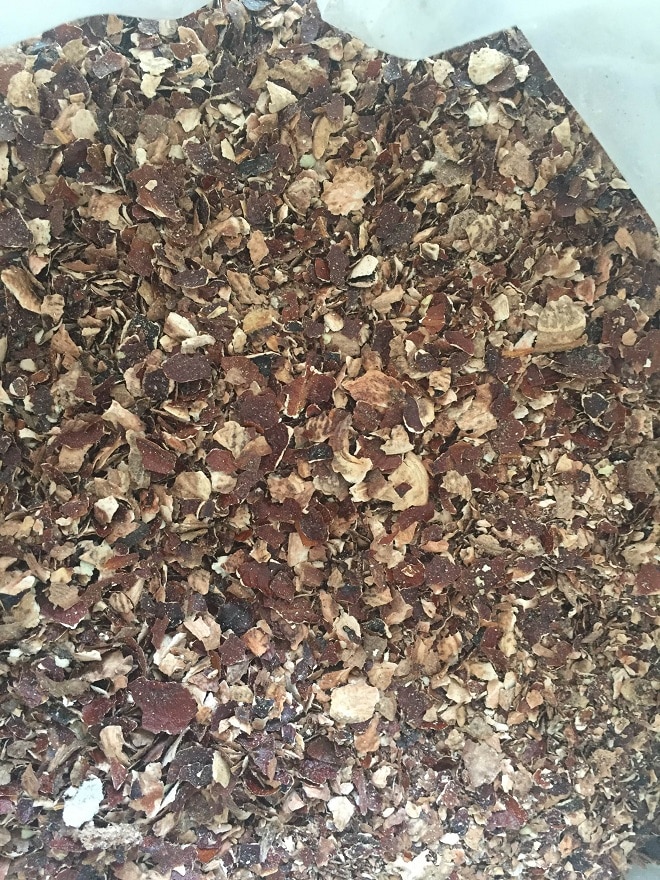
The peeled testa is not waste. It carries a meaningful tannin content (commonly cited around 5% or more) plus antioxidants, giving it several outlets: as a tannin source for leather re-tanning, as an antioxidant-rich additive, and as a fibre component in animal feed. Suppliers in India, Vietnam and Brazil bag and export it, so the skin adds a small by-product revenue line to a plant.
Testa and Kernel Grade
Because grade depends on colour and cleanliness, thorough testa removal directly protects value: patches of clinging skin downgrade a white whole. Careful drying, peeling and a final sort keep the highest-value grades clean — which ties back into overall yield optimisation.
Frequently Asked Questions
What is the red skin on cashews called? It is the testa — the thin red-brown seed coat on the kernel, sometimes called the cashew husk or skin. It is removed by peeling to give clean white kernels.
Is cashew testa the same as the shell? No. The shell is the hard outer casing of the whole nut and holds caustic CNSL; the testa is the thin papery skin directly on the kernel. They are removed at different stages — shelling, then peeling.
Can you eat cashew testa? The skin is edible but astringent, and most kernels are peeled for appearance and grade. Some products are sold “with testa,” but the mainstream trade is peeled white kernels.
Why is the testa removed from cashews? To produce clean, uniform white kernels that grade higher and look better, and to let graders judge kernel colour. The removed testa is then used for tannins, antioxidants and feed.