A cashew shelling machine is engineered to split the hard shell and release the kernel without cracking it — the design problem being that the shell is hard, oddly shaped and full of caustic CNSL, while the kernel inside is soft and valuable. The core mechanism is a pair of shaped blades (or contoured plates) that match the nut’s curved seam, actuated by a cam or lever, with the nut precisely calibrated to size and the blade gap adjustable for wear. Good design maximises whole-kernel recovery and keeps CNSL off the kernel. This page walks through the mechanism, blade design, calibration, the manual/semi-auto/automatic options, and maintenance.
How Shelling / Cutting Works
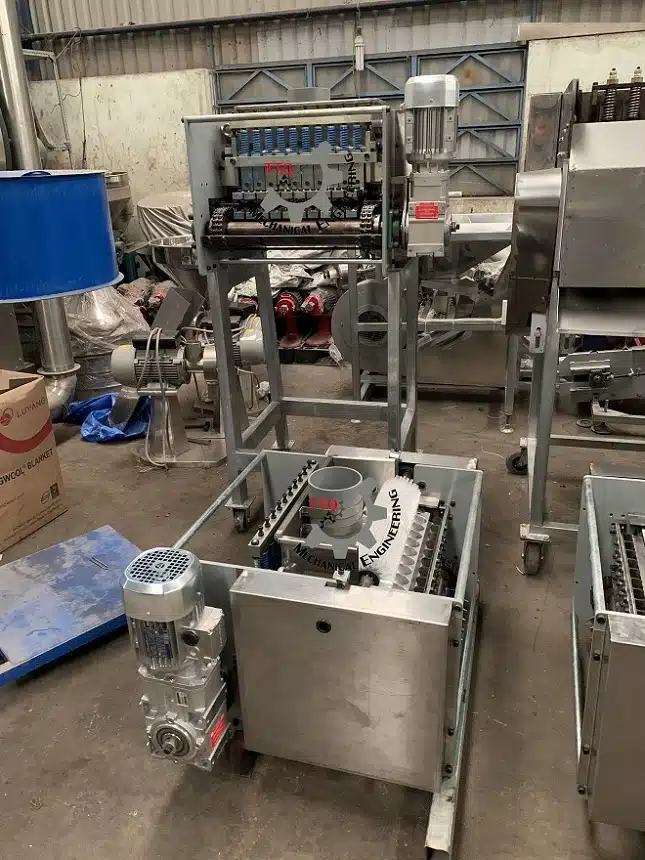
The machine picks a single conditioned nut, aligns it seam-up, and brings paired blades or contoured plates together to slit the shell along its natural curve, then separates the shell halves from the kernel. Feeding is one nut at a time — via a split feeding groove and reciprocating pusher — so each nut is positioned before the blades close. A hopper feeds the nuts; a shell separator (airflow or mechanical) then splits shell from kernel; kernels are collected separately.
Cutting Mechanism & Actuation
The heart of the machine is the twin-blade cutter, actuated by a cam or lever that closes the blades on the seam. The action must be firm enough to fracture the shell but controlled enough not to crush the kernel — which is why the blade path and the stop position are engineered to the nut, not just powered.
Blade Profile & Material
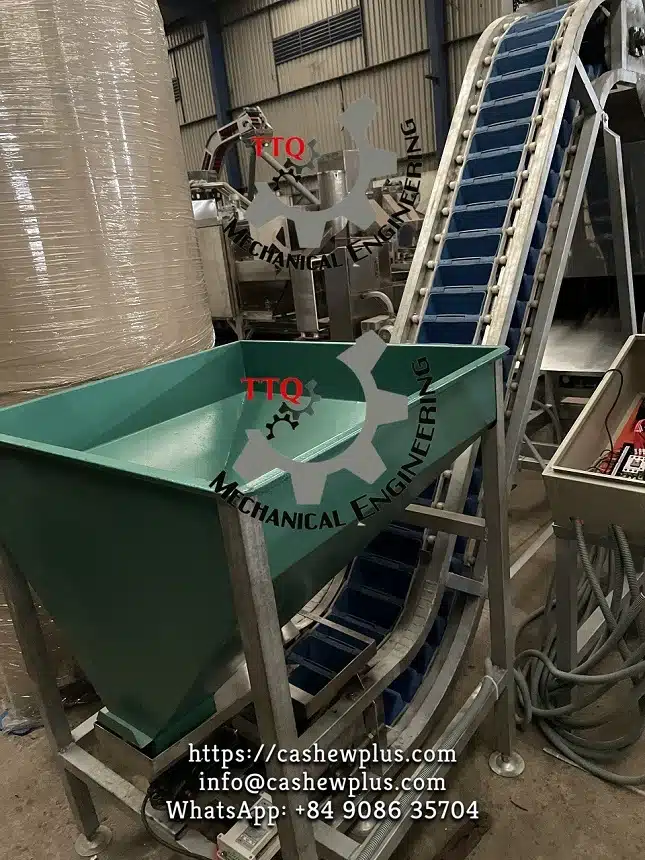
Blades are shaped to mirror the kidney curve of the nut so the cut follows the seam. They are made from hardened steel or stainless steel for edge life and hygiene; a sharp, correctly profiled blade splits cleanly, while a worn or wrong-profile blade tears and breaks kernels. Blades are consumables — see cashew cutting blade.
Calibration to Nut Size (Why Grading Matters)
A shelling machine only works on a narrow size band — commonly nuts of roughly 18–22 mm — because the blade gap is set for that size. Feed it random sizes and small nuts escape the blade uncut while large ones jam and crush. That is why raw nuts are calibrated on a size sorter before shelling; the machine is only as good as the grading in front of it.
Gap Adjustment & Wear
As blades wear, the cutting gap drifts, so the design allows the operator to adjust the gap to hold a clean cut. Regular adjustment and timely blade replacement are what keep whole-kernel recovery from falling over a shift.
Manual vs Semi-Auto vs Automatic Designs
Designs run from manual/pedal cutters (one nut per stroke, high WKR, high labour, ~30–40 kg RCN/worker/day) through semi-automatic machines to fully automatic lines that pick, orient, cut and separate continuously at high capacity. The trade-offs are covered in automatic vs manual cutting.
Design Factors Affecting WKR
| Design element | Function | Effect on yield/quality |
|---|---|---|
| Blade profile | Follows the nut’s seam | Clean split vs torn kernel |
| Calibration/feed | One sized nut, aligned | Fewer missed/crushed nuts |
| Gap adjustment | Compensates for wear | Holds WKR across a shift |
| Actuation control | Firm but controlled cut | Fractures shell, spares kernel |
| Materials | Hardened/stainless steel | Blade life, hygiene, low CNSL carryover |
Well-designed machines are cited at cracking efficiencies around 90% and whole-kernel recovery around 85%, though real figures depend on feed quality.
Maintenance & Blade Replacement
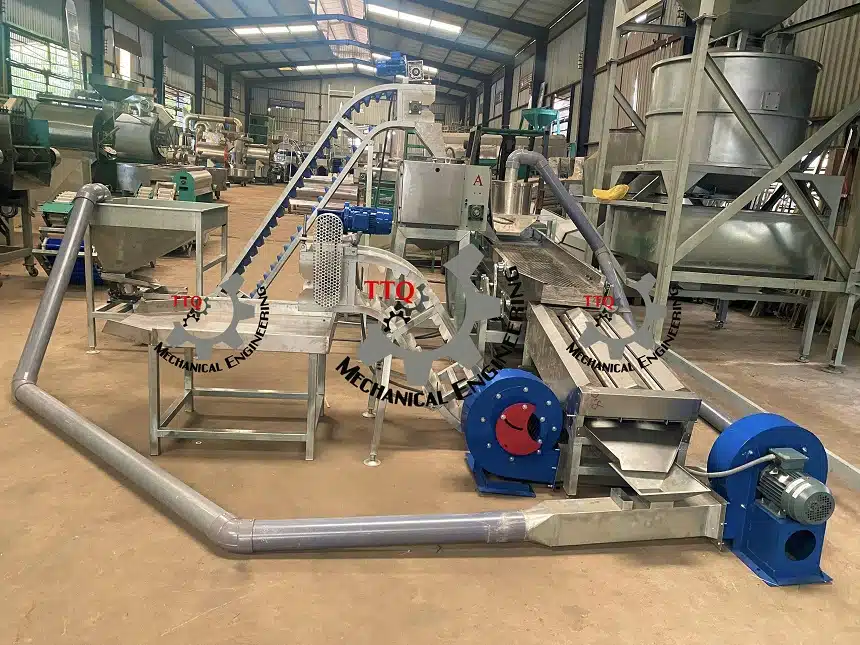
Because CNSL is corrosive and oily, machines are cleaned daily, lubricated with food-grade oil, and their blades kept sharp and replaced on schedule. Good maintenance protects both hygiene (no shell-oil carryover onto kernels) and yield. Odd-sized nuts outside the machine’s band are still hand-cut.
Frequently Asked Questions
How does a cashew shelling machine work? It aligns a single conditioned nut seam-up and closes paired shaped blades on the seam to split the shell without crushing the kernel, then separates shell from kernel by airflow or mechanically.
Why must nuts be graded before shelling? Because each machine’s blade gap is set for a narrow size band. Un-graded nuts jam and crush (too large) or escape the blade uncut (too small), so calibration on a size sorter comes first.
What are cashew cutting blades made of? Hardened or stainless steel, profiled to the nut’s kidney curve for a clean cut along the seam and for edge life and hygiene. They are consumables, replaced as they wear.
How often are blades replaced? On a schedule set by wear — worn blades tear kernels and need a wider gap, so processors adjust the gap and replace blades regularly to hold whole-kernel recovery.