Burkina Faso is a notable landlocked West African cashew origin — producing roughly 100,000 tonnes of raw cashew a year from around 45,000 producers on some 65,800 hectares — with an established base of small and medium processing units and clear room to grow value addition. Much of the crop still moves raw to neighbouring ports and on to Asia, so processing at home (shelling, peeling, grading) captures more value and jobs domestically. CASHEW TECH supplies machines and turnkey plants suited to Burkinabè conditions. This page covers the sector, the landlocked-logistics angle, the small-unit base, and the processing opportunity.
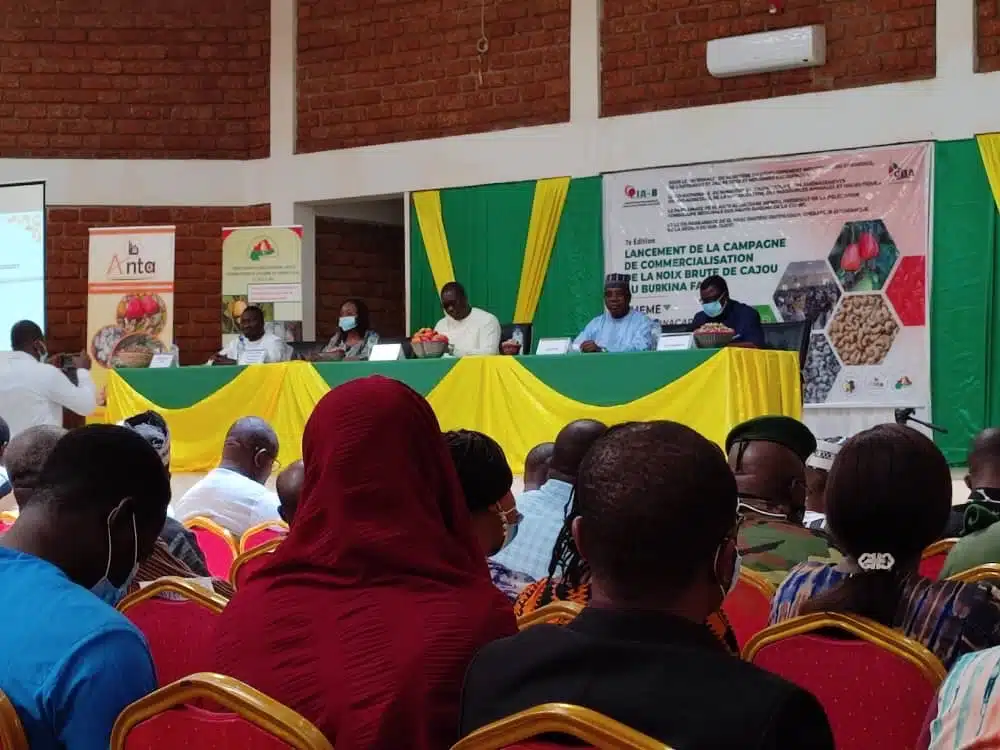
Burkina Faso’s Cashew Sector
Cashew is an important crop in Burkina Faso’s western regions and a key income source for tens of thousands of smallholder families. The industry has historically been small and export-oriented, but it is growing, supported by producer unions and development programmes (such as those run with the National Union of Cashew Producers) that build cooperatives and processing skills — often with a strong focus on women’s economic empowerment.
Landlocked Logistics & the Raw-Export Challenge
As a landlocked country, Burkina Faso ships its raw nuts out through neighbouring ports, which adds cost and hands the value-adding processing to buyers in Asia. That freight and value leakage is exactly why local processing pays: every tonne shelled at home avoids exporting bulky raw nuts and keeps the kernel margin in-country.
Small-Scale Processing Units
The domestic base is built on small and medium units — some cooperatives process on the order of a thousand-plus tonnes of raw nuts a year into ready-to-eat kernels, often year-round. These units are the seed of a larger industry, and mechanising and scaling them is the growth path.
The Processing Opportunity
| Metric | Burkina Faso status |
|---|---|
| Raw cashew production | ~100,000 t/yr |
| Growers | ~45,000 producers |
| Processing base | Small/medium units, growing |
| Export route | Raw, via neighbouring ports |
| Opportunity | Local shelling → captured value & jobs |
Burkina Faso anchors the inland side of the wider West Africa cashew processing boom alongside Côte d’Ivoire and Ghana.
Machinery & Turnkey Options
CASHEW TECH supplies the full line — cutting/shelling, drying, peeling, grading and packing — as individual machines, a compact small-scale line for new units, or a complete turnkey plant. Given the landlocked setting and small-unit base, many first movers start small and scale. For the how-it’s-done story, see raw cashew processing in Africa; contact us for a quote.
Frequently Asked Questions
Does Burkina Faso process its own cashews? Partly — it has a base of small and medium processing units, some running year-round, but much of the ~100,000-tonne crop is still exported raw. Growing local processing is the clear opportunity.
How big is Burkina Faso’s cashew industry? Around 100,000 tonnes of raw cashew a year from roughly 45,000 producers on about 65,800 hectares, with a small but growing processing sector concentrated in the western regions.
How do I start a cashew processing unit in Burkina Faso? Secure raw-nut supply and capital, choose a capacity (many start small-scale), select machinery, and install and train — a compact line suits the landlocked, small-unit context. See the how-to-start guide.
Where does Burkina Faso export cashews? As a landlocked country, it exports mostly raw nuts through neighbouring West African ports, historically to Asia (India) for processing — which is the value leakage local processing aims to capture.