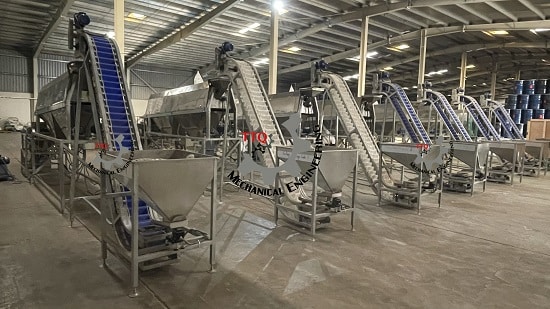
An ultra-modern cashew processing unit chains automated stages into one controlled line: calibration/sizing → steam conditioning → automatic cutting with scooping → borma drying → humidification → peeling → grading → fumigation/inspection → vacuum/nitrogen packing, tied together by conveyors and a central electrical control panel with PLC automation. The point is consistency, lower labour, traceability and food-safety-ready design — the plant is engineered to hit a high whole-kernel outturn repeatably, and is usually delivered as a turnkey project. This page is the blueprint: what makes a unit “ultra-modern”, the machine-by-machine flow, the controls and utilities behind it, and the automation-vs-labour economics. For the energy side — and whether solar fits — see should you go solar?
What Makes a Plant “Ultra-Modern”
Not just automation for its own sake, but a balanced, controlled, traceable line: mechanical calibration so cutting runs clean, steam conditioning, automatic cutting integrated with scooping, controlled drying and humidification, mechanised peeling and grading, and atmosphere-controlled packing — all monitored and food-safety-ready. Raw nuts are bought on quality (KOR of 48–55 is satisfactory for export) and processed to protect the ivory kernel whole.
Process Flow & Automation
The line runs one-directional from dirty (intake, steaming, shelling) to clean (drying, peeling, grading, packing). Automatic cutting lines integrate shell separation (scooping), though ~3–5% of kernels still need hand separation, and grading pairs mechanical size sorting with optional colour sorting. Continuous conveyors move product stage to stage.
Key Machines & Controls
| Stage | Machine | Automation level | Output |
|---|---|---|---|
| Calibration | Raw-nut size sorter | Automatic | Nuts in 3–5 size bands (18–24 mm+) |
| Conditioning | Steaming machine + boiler | Automatic | Brittle shell, ~15–16 h rest |
| Cutting | Automatic cutting line + scooping | Automatic | Kernels + shell separated |
| Drying | Borma dryer | Semi/auto | ~5% moisture, 10–12 h |
| Peeling | Peeling machine | Semi/auto | Testa removed (+ hand finish) |
| Grading | Sorting machine | Automatic | W-grades (optional colour sort) |
| Packing | Vacuum packing machine | Automatic | N₂/CO₂ tins (25/50 lb) |
Electrical Control & Monitoring
An ultra-modern unit is run from a central electrical control panel with PLC automation, which sequences and interlocks the stages, handles alarms and trips, and gives operators one control station. This is what makes fully automatic operation practical on a small crew, and it supports the data logging that food-safety traceability needs.
Layout & Material Flow
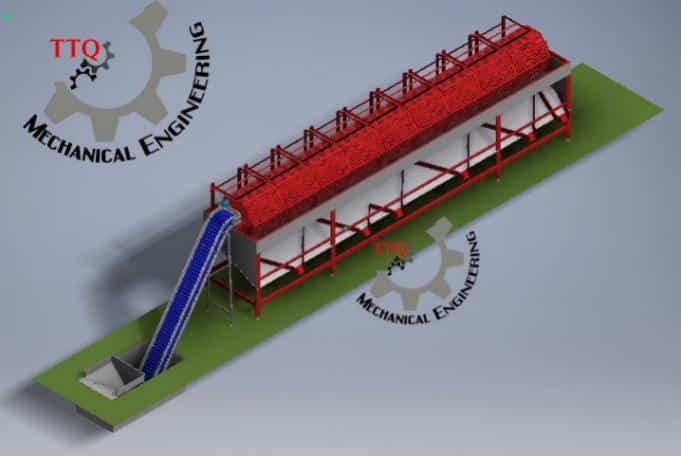
The building is designed around the process — one-directional flow, clean/dirty zoning, warehousing for a full year’s raw nuts (bought during the 3–4 month season, stacked on pallets a metre off the walls), and reserved expansion space. This is the factory layout & plant design service, and it underpins HACCP certification.
Utilities (Steam, Power, Effluent)
Steam for conditioning and drying comes from a boiler or shell burner fired on the plant’s own shell waste; power runs through the control panel and cabling; and effluent/CNSL is routed clear of clean zones. Getting utilities right is what keeps an automated line reliable.
Automation vs Labour Economics
Automation lifts consistency and cuts headcount, but calibrated feed and conditioning still matter — and some hand-finishing (kernel separation, peeling touch-up, top-grade sorting) remains. The right level of automation depends on labour cost and capacity; the trade-offs mirror those in automatic vs manual cutting.
Turnkey Delivery
Because the value is in the integration — machines, power, steam, layout and controls working as one — an ultra-modern unit is best delivered as a turnkey cashew processing plant: designed, installed, commissioned to rated outturn, and handed over with training.
Frequently Asked Questions
What is a modern cashew processing plant? A balanced, automated line — calibration, steam conditioning, automatic cutting, borma drying, peeling, grading and vacuum/N₂ packing — run from a central control panel, designed for consistency, low labour, traceability and a high whole-kernel outturn.
How automated can cashew processing be? Most stages can be automated and conveyor-linked, though calibrated feed, conditioning and some hand-finishing (kernel separation, peeling touch-up, top grades) still matter. Fully automatic operation on a small crew is practical with PLC control.
What machines are in an automated cashew line? A raw-nut size sorter, steaming machine and boiler, automatic cutting line with scooping, borma dryer, peeling machine, grading/sorting machine, and a vacuum packing machine — plus the electrical control panel that ties them together.
Is automation worth it for cashews? It depends on labour cost and scale. Automation raises consistency and cuts headcount, paying back where labour is scarce or expensive and where export-grade consistency is required — but calibrated feed and conditioning remain essential to protect yield.