Cashew classification is the framework used to sort kernels into grades along three axes: colour (white/first quality, scorched, dessert), size (the count of kernels per pound), and wholeness (wholes, splits, butts, pieces). Each grade gets a code built from a letter prefix and, for wholes, a size number — for example W320 (white whole, ~300–320 per lb) or SW240 (scorched whole). These families are codified by internationally recognised standards: the AFI specification in North America and India’s BIS grade designations and CEPCI framework. This is the “why and how” of grading — distinct from the grade chart itself, which lists every grade.
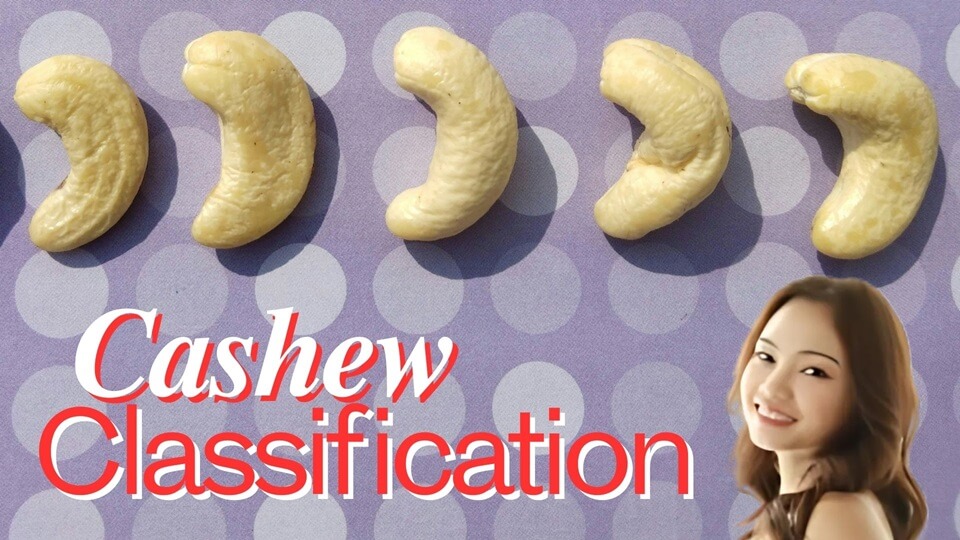
What Cashew Classification Means
Classification is the systematic sorting of kernels by measurable quality parameters — size, colour, wholeness, defects and moisture — so a lot can be described with a single grade code that any buyer understands. It sets the commercial value: whole white kernels command premiums, while scorched, blemished and broken grades step down in price.
The Three Axes
- Colour — first-quality white, scorched (heat-darkened), or dessert (deep-coloured/blemished).
- Size — measured as count per pound; the lower the count, the larger the kernel (W180 is largest, W500 smallest).
- Wholeness — intact wholes, then splits (lengthwise), butts (crosswise), large/small pieces and baby bits.
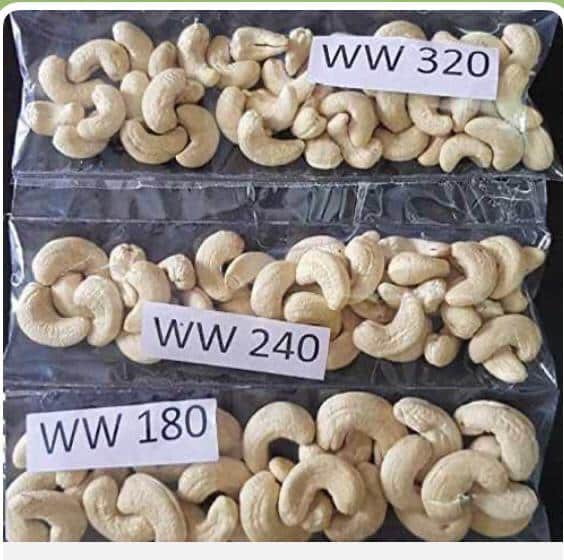
Grade Families & Code Prefixes
The code prefix carries the colour-and-wholeness meaning, and a number carries size:
| Prefix | Meaning | Example |
|---|---|---|
| W | White whole | W320 |
| SW / SSW | Scorched whole / seconds | SW240 |
| DW | Dessert whole | DW |
| S / B | Splits / Butts | S, B |
| LWP / SWP | Large / small white pieces | LWP |
| BB | Baby bits | BB |
So “W320” reads as white, whole, ~320 kernels per pound, and “SW180” as scorched, whole, ~170–180 per pound.
Standards Bodies: AFI, BIS, CEPC
Three frameworks codify these grades. The AFI (Association of Food Industries) standard is the North American reference. India’s BIS issues the IS grade designations, and the CEPC (Cashew Export Promotion Council of India) supports export grading. They share the grade names, so a lot classified in one system is intelligible in the others.
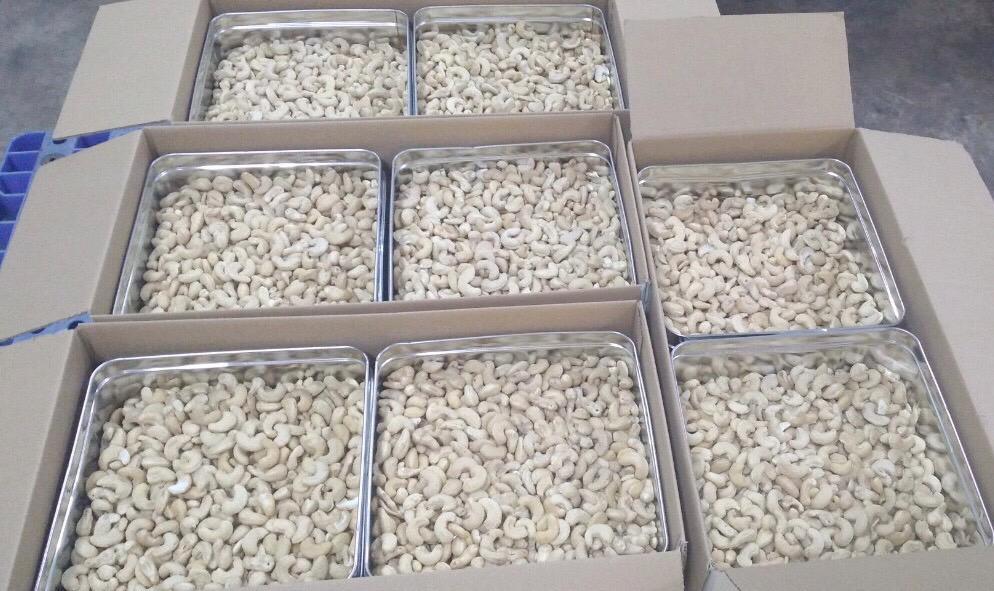
How Classification Is Done
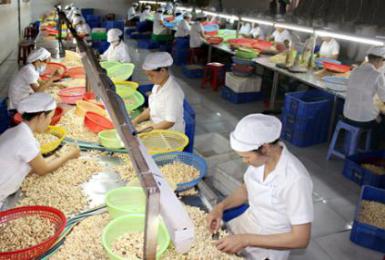
Historically classification was manual — skilled sorters on well-lit, blanket-covered tables separating kernels by eye and verifying counts by sample weighing. Modern lines add size grading on sieves and an optional optical colour sorter for consistency and speed, though hand-picking still finishes the top grades. The equipment side is covered on the cashew nut sorting machine and the buyer’s guide to choosing a grading machine.
How Classification Differs From a Grade Chart
Classification is the logic — the axes, prefixes and standards that produce a grade. The cashew grades page is the result — the full count-per-lb chart with a photo of each grade. Use this page to understand the coding, and the grades page to look up a specific grade.
Frequently Asked Questions
What is the cashew classification system? It is the framework that sorts kernels by colour, size (count per pound) and wholeness into coded grades — W for white wholes, SW for scorched, DW for dessert, plus splits, butts and pieces — codified by standards such as AFI and BIS.
Who sets cashew grade standards? The main bodies are the AFI (Association of Food Industries) in North America and, in India, BIS (which issues the IS grade designations) and the CEPC. They share the grade names across systems.
What do the letters before the grade number mean? The prefix gives colour and wholeness: W = white whole, SW = scorched whole, DW = dessert whole, S = splits, B = butts, LWP/SWP = pieces, BB = baby bits. The number is the count per pound.
Is classification the same as grading? Grading is the act of sorting a batch; classification is the underlying system of axes, codes and standards that defines what each grade is. In everyday use the terms overlap, but this page covers the framework.